English
 Arabic
 French
 Spanish
 Portuguese
 Deutsch
 Turkish
 Dutch
Dutch
 Italiano
 Russian
 Romaian
 Portuguese (Brazil)
 Greek
Greek
German Language Course
Other |
2026-08-07 12:49:10
 Advertise With Us
 About Us
 Terms And Conditions
 سياسة الخصوصية
عرض كل النتائج
سياسة الخصوصية
عرض كل النتائج

ترقية الحساب
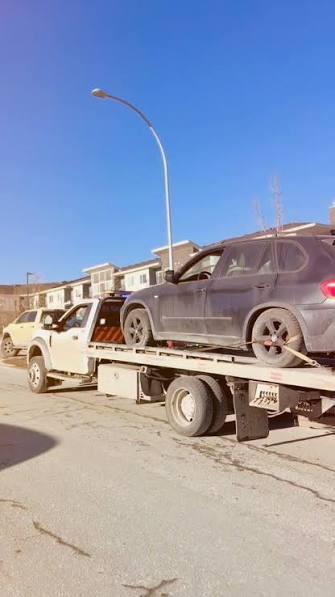
Yes, you can sell an EV with a damaged battery in Calgary. However, the sale requires more care than selling a regular used car. A damaged high voltage battery can affect the vehicle’s safety, transport options, insurance status, and resale value.
You may be able to sell the electric vehicle privately, trade it to a dealership, accept an insurance settlement, or contact a Calgary cash for cars buyer. The right choice depends on why the battery failed, whether the car can move safely, and how much the remaining vehicle is worth.
Before advertising it, arrange a professional assessment. Do not attempt to inspect, disconnect, open, or repair the battery pack yourself.
A damaged EV battery does not always mean a completely dead vehicle. Battery problems range from normal capacity loss to severe physical damage.
Common warning signs include:
Gradual range loss may result from battery degradation rather than immediate physical damage. A technician may find that only a sensor, control module, cooling component, or small section of the pack needs attention.
Collision damage, punctures, overheating, and water intrusion present greater risks. Lithium ion batteries can become hazardous when damaged, misused, or handled incorrectly. Health Canada warns that these batteries can cause fires and serious harm when they are not managed safely.
Do not continue driving simply because the car still moves.
Stop using the vehicle when you notice smoke, strong chemical smells, unusual heat, crackling sounds, leaking fluid, or a damaged battery casing. Move away from the vehicle and contact emergency services when there is an immediate fire risk.
For less obvious problems, call the manufacturer, dealership, insurer, or an EV qualified repair facility. Give them the warning messages and explain what happened before the problem appeared.
Avoid parking a suspected damaged EV inside an attached garage or close to buildings until a qualified professional assesses it. Do not charge the vehicle unless the manufacturer or technician confirms that charging is safe.
A buyer cannot provide a reliable offer when nobody knows whether the issue involves minor battery degradation or serious pack damage. A proper diagnostic report can protect your safety and help you avoid selling the EV for much less than its actual value.
Many EV battery packs have separate warranties from the rest of the vehicle. Your battery problem may qualify for repair or replacement when the vehicle remains within the required age, mileage, and capacity limits.
Find the original warranty booklet or check the manufacturer’s owner portal. Ask the dealership whether the vehicle identification number shows active battery coverage.
The warranty may not cover every type of damage. Collision damage, flooding, unauthorized modifications, improper lifting, or outside impact may be excluded. Capacity loss may also need to fall below a specific level before warranty support applies.
Get the manufacturer’s decision in writing. A confirmed warranty repair can change the vehicle from a difficult sale into a normal used EV. Even a rejected claim provides useful information for potential buyers.
Contact your insurer when the battery damage followed a collision, flood, fire, road debris impact, vandalism, or another insured event.
Do not authorize major repairs or sell the EV before the insurer completes its assessment. The company may need photographs, diagnostic results, towing records, and an inspection.
An insurer may choose to repair the car or declare it a total loss. That decision depends on the vehicle’s value, repair costs, expected hidden damage, parts availability, and safety requirements.
Ask the adjuster:
Vehicle branding matters. A salvage vehicle may be repairable, but it cannot return to normal road use until it meets the required inspection process. A non repairable or irreparable vehicle can only be used for parts or scrap.
Battery replacement may make sense when the EV is fairly new, has low mileage, remains in good condition, and has strong resale demand.
Start with three numbers:
Imagine that a working EV is worth $24,000. A complete battery repair costs $5,500, while a buyer offers $11,000 for the vehicle as it sits. Repairing it may produce a better result if the diagnosis is reliable and no other expensive work is needed.
Now imagine the repair estimate is $19,000 and the EV has body damage, worn suspension, and an outstanding loan. Selling it without repair may be the more sensible choice.
Ask whether the estimate covers labour, programming, cooling components, testing, taxes, transport, and the return or recycling of the old battery. A low initial quote can grow once additional damage is found.
Different buyers accept different levels of risk.
A private buyer may purchase the car as a repair project or source of parts. This route could produce a stronger offer, but it takes time and requires complete disclosure.
Provide the diagnostic report, warning messages, battery condition, collision history, repair estimate, and vehicle status. Never advertise a damaged EV as having a minor charging problem when you do not know the real cause.
A dealership may consider the vehicle when the battery can be repaired under warranty or when the car has strong trade value. EV specialists may also understand the value of usable modules, motors, electronics, charging equipment, and body parts.
Some businesses will decline severely damaged batteries because they lack the equipment, storage space, or transport arrangements required for safe handling.
A cash for cars company may purchase an EV that is damaged, non running, written off, or too expensive to repair. This can remove the need to advertise, meet private buyers, or pay for repairs before selling.
Not every scrap car buyer handles electric vehicles. Ask whether the company has experience with high voltage systems and damaged lithium ion batteries.
The City of Calgary does not accept EV batteries through its regular disposal programs. It advises owners to contact the dealership or an approved battery recycling provider for proper handling.
A failed battery does not make every other component worthless.
The vehicle may still contain a valuable electric motor, inverter, onboard charger, charging port, control modules, cameras, sensors, wheels, doors, seats, glass, suspension parts, and body panels.
The battery itself may also contain usable modules or recoverable materials. However, its value depends on the chemistry, physical condition, remaining capacity, model compatibility, and recycler’s requirements.
A professional buyer will usually consider:
Collect several offers. One buyer may price the EV as scrap metal, while another may recognize the value of its specialized components.
Do not assume that any tow truck can move the vehicle safely.
The towing method depends on the EV model, drivetrain, battery condition, and collision damage. Incorrect towing can damage the motor, electrical system, or battery pack.
Tell the towing company that the vehicle is electric and that the high voltage battery may be damaged. Share the make, model, location, wheel condition, and nature of the incident.
A battery removed from the vehicle may be regulated differently from a complete vehicle. Transport Canada states that damaged or defective lithium ion batteries require specific packaging under dangerous goods rules.
Do not remove the high voltage pack to make transportation easier. Battery removal should be handled by trained professionals with suitable equipment and safety procedures.
Gather the vehicle registration, identification, service records, charging cables, warranty documents, diagnostic report, insurance papers, and repair estimates.
Order an Alberta Vehicle Information Report using the VIN. The report can show the fuel type, registration history, vehicle status, odometer information, and number of Alberta liens. Detailed lien information requires a separate Personal Property Registry search.
Remove personal information from the infotainment system. Delete paired phones, navigation destinations, digital keys, charging accounts, garage controls, and manufacturer app access.
Use a detailed Alberta bill of sale and state the known battery issue clearly. Record the sale price, VIN, mileage, vehicle status, payment method, and both parties’ information.
Never open the battery casing to prove that the damage is minor. Do not conceal dashboard warnings or erase fault codes without sharing the diagnosis.
Avoid paying for a battery replacement before comparing the repaired value with the as is offers. You should also avoid releasing a financed EV until the lender explains how the lien will be cleared.
Be careful with buyers who demand ownership documents before confirming their identity. Do not accept an unverified payment, and never leave blank spaces on the bill of sale.
You can sell an EV with a damaged battery in Calgary, but the battery problem must be handled honestly and safely.
Start with a professional diagnosis. Check the warranty, contact the insurer when the damage followed an insured event, and confirm the vehicle’s registration status. Then compare the cost of repair with dealership, private buyer, recycler, and cash for cars offers.
A damaged EV may still carry meaningful value through its motor, electronics, body, charging equipment, and reusable parts. The best outcome comes from understanding that value before accepting the first offer.
Safety should remain the priority. Do not charge, drive, dismantle, or transport a suspected damaged battery without qualified guidance. A careful sale protects you, the buyer, the towing company, and everyone who handles the vehicle after it leaves your property.