English
 Arabic
 French
 Spanish
 Portuguese
 Deutsch
 Turkish
 Dutch
Dutch
 Italiano
 Russian
 Romaian
 Portuguese (Brazil)
 Greek
Greek
The Complete Guide to Hand Rejuvenation Procedures in Riyadh
Health |
2026-06-22 18:53:59
 Advertise With Us
 About Us
 Terms And Conditions
 Privacy Policy
Mostra tutti i risultati
Privacy Policy
Mostra tutti i risultati

Passa a Pro
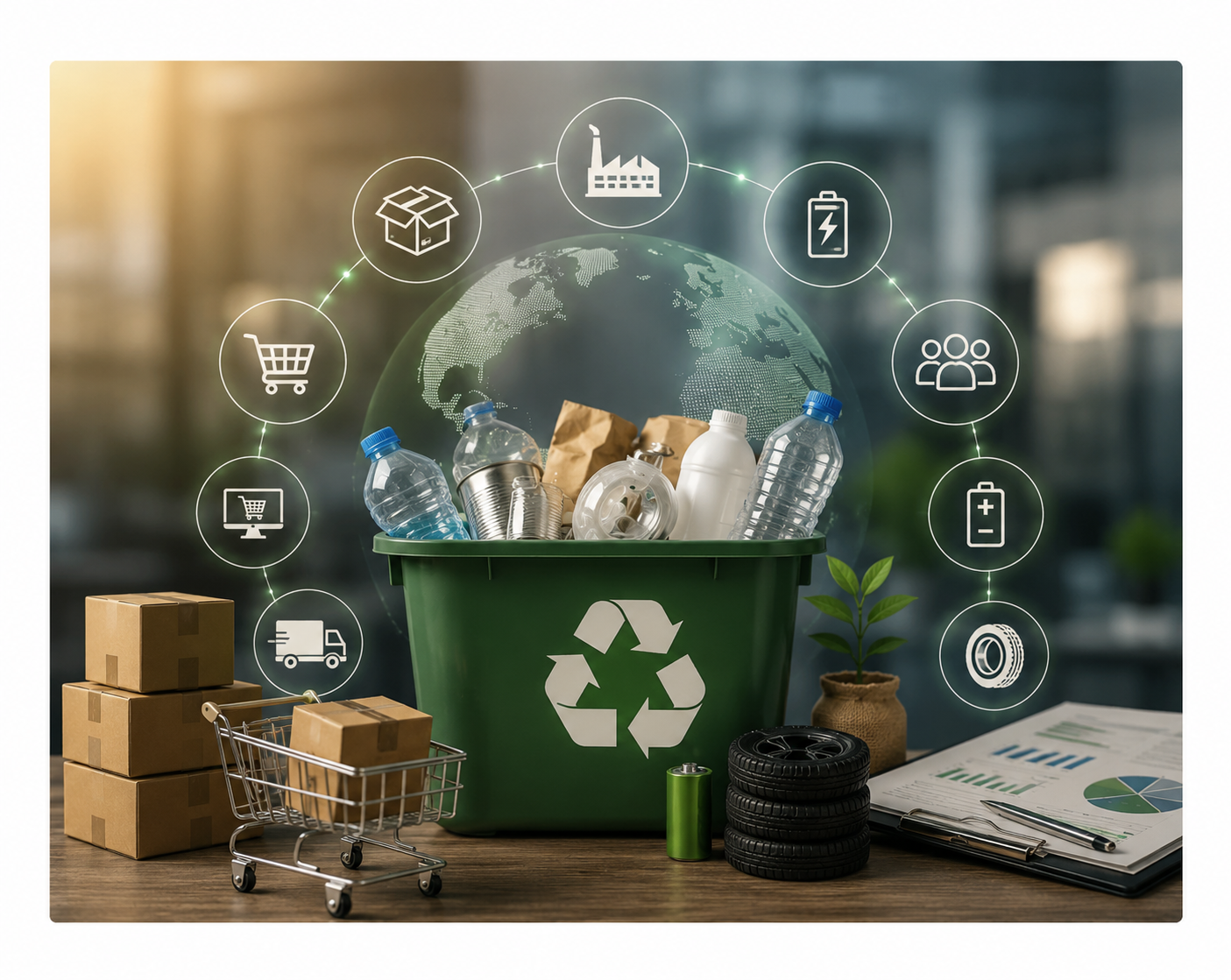
An EPR Consultant can help businesses understand, manage, and complete their Extended Producer Responsibility obligations without confusion. For many brands, importers, manufacturers, and producers, EPR is no longer just an environmental term—it has become an important part of responsible business operations in India.
Imagine a growing company that sells packaged consumer products across multiple states. Sales are increasing, distributors are expanding, and online orders are rising. But behind that growth comes a serious question: what happens to the plastic packaging, batteries, electronics, or other waste after the product reaches the customer?
That is where EPR becomes important.
Extended Producer Responsibility is a policy approach where businesses are responsible for managing the waste generated from their products or packaging after consumer use. In India, CPCB operates online EPR portals for categories such as plastic packaging, e-waste, battery waste, waste tyres, used oil, and end-of-life vehicles.
Many companies think EPR is only about getting a registration number. In reality, it also involves documentation, category identification, target calculation, recycler coordination, certificate management, reporting, and ongoing compliance.
This is why businesses often look for an EPR Consultant In India who can simplify the process and reduce errors.
Companies may need EPR Registration in India if they are producers, importers, brand owners, manufacturers, recyclers, or refurbishers under applicable waste management categories.
For example, businesses dealing with plastic packaging may use the centralized CPCB portal for plastic packaging, while battery-related producers, recyclers, and refurbishers are required to register through the centralized battery EPR portal.
EPR may apply to:
The exact requirement depends on product type, business activity, waste category, and applicable rules.
The EPR registration process can feel complex at first, but it becomes easier when broken into clear steps.
A business must first determine whether its products fall under plastic packaging, e-waste, batteries, tyres, used oil, or another regulated category.
Common documents may include company registration details, GST information, product details, manufacturing or import data, authorization documents, and waste-related declarations.
CPCB has separate EPR portals for different waste streams, so choosing the correct portal is important. E-waste registration, for example, is handled through the E-Waste Management System under the E-Waste Management Rules, 2022.
Authorities may raise queries if information is incomplete, inconsistent, or unclear. A careful response helps prevent unnecessary delays.
Approval is not the end of the process. Businesses must continue tracking obligations, arranging fulfillment, maintaining records, and submitting reports where required.
An EPR Certificate is generally used as proof that a certain quantity of waste has been collected, recycled, processed, or managed through authorized channels. It helps businesses demonstrate that they have fulfilled their responsibility for the waste linked to their products or packaging.
Certificates support transparency and accountability. They also help businesses show that their waste obligations are not just promised on paper but backed by documented action through approved systems.
EPR compliance is not only about avoiding penalties. It can also improve brand trust, supply chain discipline, and environmental responsibility.
Customers today are more aware of sustainability. A compliant business appears more responsible and future-ready.
Large companies, marketplaces, exporters, and institutional buyers often prefer working with vendors who maintain proper compliance records.
When records, certificates, and filings are properly maintained, businesses are better prepared for audits, inspections, or official queries.
EPR Fulfillment refers to the practical execution of EPR obligations. This may include calculating waste responsibility, coordinating with registered recyclers, obtaining certificates, maintaining records, and completing required reporting.
For businesses that want structured support, this resource on EPR Fulfillment explains how organized compliance management can help companies handle their obligations more efficiently.
Incorrect quantity data can create problems later. Maintain clear records of packaging material, product categories, imports, production volume, and sales.
EPR work involves documentation, portal submission, verification, and coordination. Starting early helps avoid rushed mistakes.
Unverified recyclers or informal documentation may create compliance risk. Always check whether the recycler is properly registered under the relevant system.
EPR is an ongoing responsibility. Schedule periodic reviews to ensure targets, certificates, and reports are aligned.
Some businesses operate across multiple waste categories. Missing one category may create future compliance problems.
Small errors in documents, product details, or business information can delay approval.
Registration is only the beginning. Ongoing tracking and fulfillment are equally important.
EPR processes can change. Businesses should stay updated with official portal notices and requirements.
A knowledgeable consultant can help businesses understand obligations, prepare documents, coordinate submissions, manage certificates, and maintain compliance records.
Instead of guessing requirements, businesses receive structured guidance based on their industry and waste category.
Teams can focus on operations while compliance experts handle documentation and process coordination.
Professional review reduces the risk of missing documents, incorrect category selection, or delayed responses.
EPR is becoming an essential part of responsible business in India. Whether a company deals with packaging, electronics, batteries, or other regulated products, it must understand its environmental responsibilities and act with proper documentation.
With the right approach, EPR Registration in India, certificate management, and long-term compliance become manageable. Businesses that take EPR seriously not only meet legal expectations but also build a stronger, cleaner, and more trustworthy brand for the future.