English
 Arabic
 French
 Spanish
 Portuguese
 Deutsch
 Turkish
 Dutch
Dutch
 Italiano
 Russian
 Romaian
 Portuguese (Brazil)
 Greek
Greek
Analog Front End Market Growth Accelerating with Rising Demand for Smart Devices
Networking |
2026-03-16 09:51:05
 Advertise With Us
 About Us
 Terms And Conditions
 Politique de confidentialité
Tout voir
Politique de confidentialité
Tout voir

Mise à niveau vers Pro
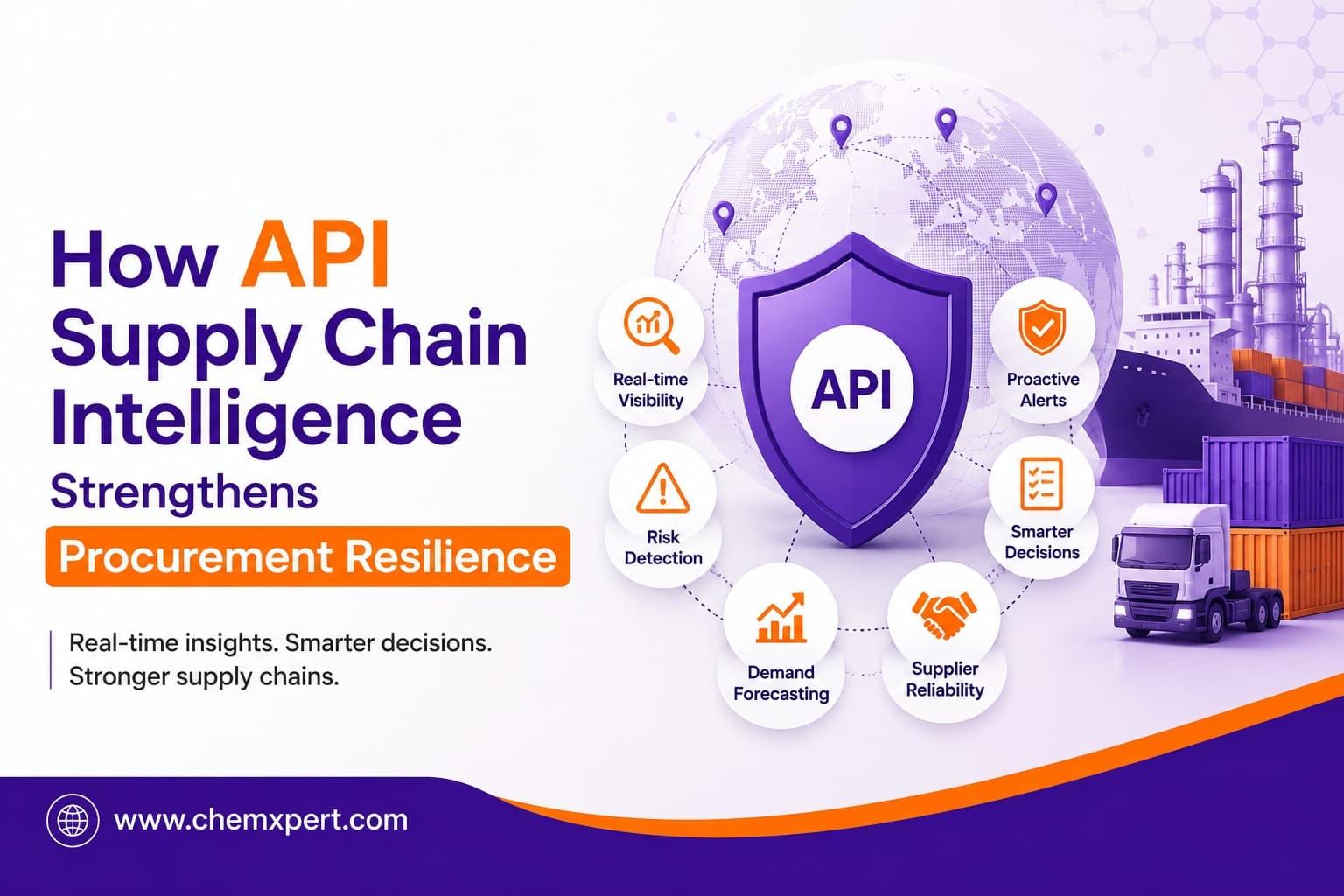
No other single thing brings more essentiality to the pharmaceutical industry than a reliable supply of materials. Pharmaceutical companies are unable to afford any disruptions to the supply of their Active Pharmaceutical Ingredients (APIs), be it to produce generic medicines or speciality or innovative therapies.
In recent years, procurement teams have been challenged like never before. Pharmaceutical supply chains have been identified as having vulnerabilities in the wake of global events such as supply chain disruptions, regulatory measures, raw material scarcity, transportation delays, and geopolitical uncertainty. Numerous organisations found they had limited suppliers and lacked visibility in their supply chain, which resulted in a major risk in the business.
Therefore, the utilization of API Supply Chain Intelligence is a trend that pharmaceutical companies are adopting as part of their strategy to ensure procurement and business continuity.
Instead of acting on the disturbances they experience, companies use intelligence based on the data to predict any risk and assess the supplier before hand.
API supply chain intelligence is the process of collecting and analyzing data about suppliers, manufacturing, regulatory issues, logistics and market information.
The solution provides procurement professionals with a complete view of the elements that determine availability of APIs and reliability of suppliers.
Supply chain intelligence can be used to gain a better understanding of the greater picture of the API manufacturing and distribution environment, rather than just considering suppliers as separate vendors.
This intelligence can comprise of:
This brings together all the information and enables procurement teams to be more responsive to market changes.
Procurement resilience is the ability of an organisation to keep delivering the essential materials required to run the business without disruption.
Resilience is especially significant in the pharmaceutical industry, as disruptions in the supply chain can impact production timelines, compliance with regulations and the availability of medicines for patients.
There are a number of reasons why procurement resiliency has become more significant:
Numerous pharmaceutical companies are depending on suppliers who are based in several countries that provide their APIs. This opens up supply potential but also exposes to geopolitical events, trade barriers and transportation issues.
Supplier availability can be severely affected by regulatory inspections, warning letters, import alerts and compliance issues.
An apparently trustworthy supplier can become a liability the following day if they're facing regulatory issues.Sourcing risks arise when a seemingly trusted supplier becomes a problem the next day because of regulatory issues.
A majority of the pharmaceutical companies rely on only a handful of suppliers to provide essential APIs. Poor performance by one supplier can impact the supply chain as a whole.
There are times when the availability and price of APIs can change drastically due to demand fluctuation, raw material shortages, and manufacturing constraints.
It can be difficult for organizations not to be aware of these changes to act swiftly.
That's why procurement resilience has emerged as a key strategic objective for pharmaceutical procurement teams.
Identification of supplier risks, both at the outset and throughout the process.
The best thing about API Supply Chain Intelligence is that it gives you the power to foresee risks that can negatively impact your operations.
Procurement teams are able to track metrics like:
Organizations can prevent learning about problems after supply interruption and instead plan contingencies.
This proactive approach will markedly decrease operational risk.
Most pharmaceutical firms have a limited view of the supply chain beyond their suppliers.
But the supply disruptions can come from further down the line.
API Supply Chain Intelligence enables procurement teams to gain insights into:
The wider visibility enables organizations to detect vulnerabilities and enhance the continuity of their supplies.
For instance, when there are several suppliers that rely on the same manufacturing area or raw material source, procurement teams can identify potential risks of concentration before they become a real problem.
Time is important in case of disruptions.
Organizations that are able to quickly recognize qualified alternatives will be in a better position to sustain production and prevent shortages.
A well-cared-for global API supplier List gives procurement groups a access to a wider network of qualified suppliers from other parts of the world.
Companies can begin supplier searches during the crisis without having to start from scratch as they would when a crisis isn't in play.
This capability is becoming more relevant with the increasingly uncertain pharmaceutical supply chains.
Price comparison is not the only thing you need to consider when choosing the best supplier.
The procurement team needs to consider the following:
API Supply Chain Intelligence deliverables the information necessary to make informed qualification decisions.
Organizations can assess suppliers on various grounds and mitigate qualification risk, instead of using limited information.
This helps to build better supplier relationships and improve the sourcing process.
A supply chain intelligence helps in improved planning throughout procurement operations.
Knowledge of both the market trends and the capabilities of suppliers, along with risk factors, can help organisations understand how they can:
Without proactive planning, there is a risk that you will end up with last minute sourcing decisions that are likely to be more costly and risky.
It can be difficult to manage supplier intelligence manually.
Procurement teams typically have a ton of information about suppliers, which is distributed through various mediums like spreadsheets, email, regulatory paperwork, and internal systems.
A top pharmaceutical API suppliers database can help to streamline and centralize this information.
A modern API sourcing platform is not just a directory of suppliers, it's a full intelligence environment for procurement professionals.
These databases usually contain:
The centralisation of key sourcing data on a single platform enables procurement teams to make quicker and more informed decisions.
A centralized system also enables diversification programs with suppliers by identifying new suppliers and tracking the alternative sourcing options available to the organizations.
For businesses with a procurement resilience focus, having a trusted supplier intelligence platform can be a key differentiator.
Procurement resilience cannot be done in one go. It demands continuous supplier transparency, risk management, and decision making based on intelligence.
There are several important areas an organisation should consider when trying to build its resilience.
An excessive reliance on any one supplier can mean a higher risk of downside.
Having multiple qualified suppliers helps to provide a greater level of sourcing flexibility and decreases dependency.
The process of supplier qualification shouldn't stop once the supplier is on board.
Companies can identify potential risks by reviewing the performance of suppliers, their regulatory status and their operational expertise.
Having the right information from your suppliers leads to quick decision-making and improved risk management.
Intelligence platforms can help to make sure procurement teams have access to correct and updated data.
Sometimes it is not possible to avoid disruption in the supply process.
Contingency sourcing plans need to be made ahead of time and alternative sources to your regular supplier need to be found.
Smart procurement organisations are the ones that understand the importance of using intelligence in decision-making.
Data-driven sourcing increases visibility, decreases uncertainty and enhances the long-term procurement performance.
The pharmaceutical world is no longer in a time where procurement resilience can be considered a luxury. Risk management is an important element of sourcing due to the problems associated with supply chain disruption, regulatory challenges and market volatility.
Providing the procurement team with visibility of the supply chain, API Supply Chain Intelligence allows them to think ahead about identifying potential risks, qualified suppliers, alternatives and making decisions.
Supply chain intelligence that combines information about suppliers, regulation, markets and provides supply chain visibility makes it possible for organizations to move from the reactive sourcing approach to the proactive one.
The ability to use the top pharmaceutical API suppliers database and global API supplier list is an additional advantage in this process.
Pharma intelligent procurement will help organizations continue to develop their pharmacy procurement operations into resilient, reliable, and competitive operations as the industry's supply chain continues to evolve.