English
 Arabic
 French
 Spanish
 Portuguese
 Deutsch
 Turkish
 Dutch
Dutch
 Italiano
 Russian
 Romaian
 Portuguese (Brazil)
 Greek
Greek
Digital Marketing Company Tips for Building a Strong Online Presence
Other |
2026-07-23 16:55:01
 Advertise With Us
 About Us
 Terms And Conditions
 Privacy Policy
Mostra tutti i risultati
Privacy Policy
Mostra tutti i risultati

Passa a Pro
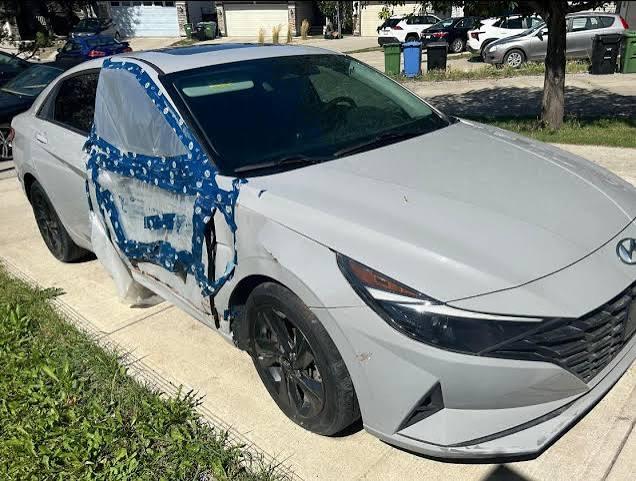
You've handed over the keys. The tow truck has pulled away. Your driveway looks bigger than it has in years. But somewhere in the back of your mind, a question is nagging at you — what actually happens to that car now?
It's a question more people have than you'd think. And the answer is genuinely fascinating. Your old car doesn't just disappear into a mysterious lot somewhere. It goes through a precise, multi-stage process that recovers value at every step — from working parts to raw metal — and ultimately feeds back into the manufacturing cycle in ways most people never consider.
Here's the full story, start to finish.
When your vehicle arrives at a scrap yard, the first thing that happens is an assessment. A trained evaluator looks over the car and makes a decision that shapes everything that follows: Is this car worth parting out, or does it go straight to crush?
This decision comes down to a few factors — the make and model, the condition of major components, the demand for parts from that specific vehicle, and the current scrap metal price. A 2012 Honda Civic with a running engine gets treated very differently than a 1998 sedan with a seized motor and rotted floor pans.
If the car has salvage value, it moves to disassembly. If not, it heads directly toward depollution.
Before anything else happens to the vehicle — before a single part is pulled — the car must be depolluted. This is a legally required process in most provinces and states, and it's one of the most important parts of responsible vehicle recycling.
Depollution means removing all hazardous fluids and materials from the vehicle. This includes:
Every drop of fluid that comes out of that car gets handled according to environmental regulations. Reputable scrap yards keep detailed records of this process. It's not just good practice — it's the law.
This stage is what separates a legitimate, licensed scrap yard from a rogue operation that just crushes cars in a field and lets fluids drain into the ground. When you choose a reputable buyer, you're choosing a yard that takes this process seriously.
Once the car is depolluted, the disassembly begins — and this is where things get interesting.
Skilled dismantlers work through the vehicle systematically, pulling every component that has resale value. This is a nuanced process. Experienced dismantlers know which parts move quickly, which models are in high demand, and which components are worth the labor to remove.
Commonly harvested parts include:
These parts get cleaned, tested where applicable, tagged with the vehicle's information, and entered into the yard's inventory system. Many scrap yards now have sophisticated online catalogues where mechanics and DIY repairers can search for specific parts from specific vehicles.
This is the circular economy at work. The alternator from your old car becomes the part that keeps someone else's car running for another three years.
Once everything of salvage value has been removed, what's left is essentially a steel shell — body panels, frame, subframe, and whatever structural components remain.
This shell gets sent to the vehicle crusher — a massive hydraulic press that compresses the entire car body into a compact cube or flat slab. These crushed blocks are dense, stackable, and easy to transport.
The crushing process itself takes about a minute. A car that was once 14 feet long becomes a roughly 18-inch-thick block of compressed metal.
Crushed car blocks don't go straight to the steel mill — they go to a shredder first. Industrial auto shredders are enormous machines that tear crushed vehicles into fist-sized chunks of mixed material in seconds.
What comes out of the shredder is a mixture of steel, aluminum, copper, plastic, rubber, foam, and glass — collectively called auto shredder residue (ASR) or "fluff." The valuable part is the metal, which gets separated using a combination of:
The result is sorted streams of steel, aluminum, and copper — clean commodity materials ready for the next step.
Sorted metals go to steel mills, aluminum smelters, and copper refineries, where they're melted down and reformed into new raw material.
Recycled steel becomes rebar, structural beams, new vehicle panels, appliances, and countless other products. Recycled aluminum goes back into vehicle manufacturing, packaging, and construction. Copper gets drawn into new wiring and electrical components.
Here's a number worth sitting with: approximately 80% of a vehicle by weight is recycled. The automotive industry is one of the most mature recycling loops in the world. The steel in a new car almost certainly contains recycled content from old cars just like yours.
The remaining 20% — the plastics, rubber, foam, and glass that can't be economically recovered — has historically gone to landfill, though the industry is actively working to improve this number through better material separation technology and new recycling pathways for mixed plastics.
Understanding what happens to your car after it leaves your driveway does more than satisfy curiosity — it helps you make smarter decisions.
Choose a licensed, reputable yard. The depollution step is what separates responsible recyclers from environmental bad actors. A yard that cuts corners on fluid removal isn't just breaking the law — it's contaminating soil and groundwater. Check for proper licensing and don't be afraid to ask about their process.
Know that your car's value is real. The multi-stage recovery process means there's genuine economic value being extracted from your vehicle at every step. That's why scrap yards can pay you cash — they're not doing you a favor, they're buying a commodity.
The parts live on. If it matters to you where your car ends up — the engine that powered your daily drive for 12 years might be keeping someone else's vehicle on the road for years to come. There's something quietly satisfying about that.
Your old car doesn't just disappear. It gets assessed, depolluted, disassembled, crushed, shredded, sorted, and ultimately reborn as raw material for new products. It's a surprisingly sophisticated process — one that recovers most of the vehicle's material value and keeps millions of tons of metal out of landfills every year.
The scrap yard isn't the end of your car's story. It's just the beginning of its next one.