English
 Arabic
 French
 Spanish
 Portuguese
 Deutsch
 Turkish
 Dutch
Dutch
 Italiano
 Russian
 Romaian
 Portuguese (Brazil)
 Greek
Greek
Sulfite Free Wine: What to Look for Before Buying
Drinks |
2026-08-07 05:23:55
 Advertise With Us
 About Us
 Terms And Conditions
 Política de privacidade
Ver todos
Política de privacidade
Ver todos

Atualizar para Plus
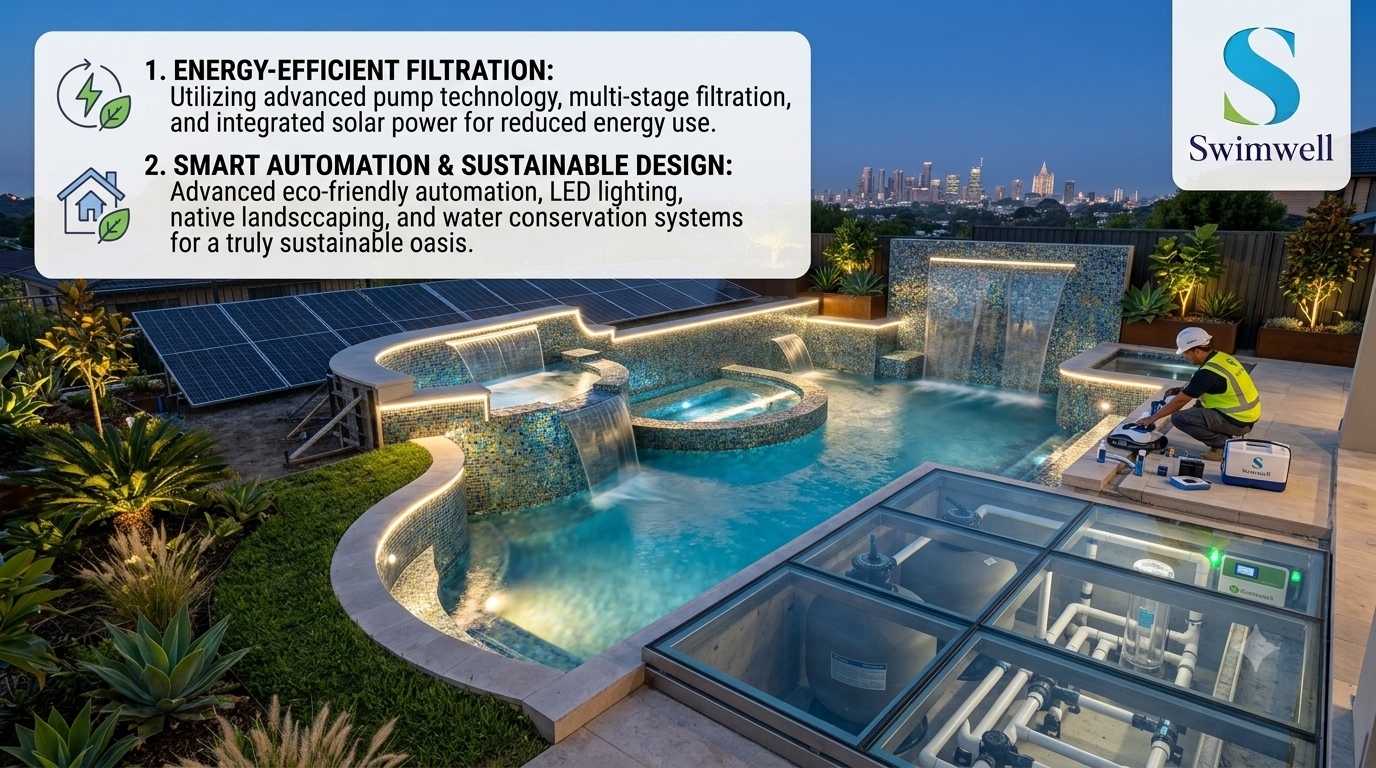
Swimming pool construction has evolved significantly in recent years as homeowners, hotels, resorts, schools, clubs, and commercial properties increasingly seek sustainable solutions. Modern pools are no longer designed only for aesthetics and recreation; they are also planned with environmental responsibility in mind. Eco-friendly pool systems help reduce water consumption, improve energy efficiency, minimize chemical usage, and create healthier swimming environments.
Sustainable swimming pools combine innovative engineering, smart technology, and environmentally conscious materials to deliver excellent performance while reducing their ecological footprint. Whether building a residential backyard pool or a large commercial aquatic facility, integrating eco-friendly features during the construction phase makes it easier to achieve long-term efficiency and reliable operation.
This guide explores how eco-friendly systems can be incorporated into swimming pool construction and the many advantages they provide.
Eco-friendly pool systems are technologies, materials, and construction practices designed to reduce environmental impact while maintaining excellent water quality and user comfort.
These systems focus on several important objectives:
By considering sustainability during the initial planning stage, every component of a swimming pool can contribute toward greener operation.
Environmental awareness has become an important factor in construction projects worldwide. Swimming pools require water circulation, filtration, lighting, and maintenance, making efficiency an important consideration.
Eco-friendly construction offers benefits such as:
These benefits make sustainable pools an excellent investment for both residential and commercial developments.
Sustainability begins before excavation starts. Proper planning helps maximize efficiency throughout the life of the pool.
Important planning considerations include:
Choosing the right location allows natural sunlight to warm the pool while reducing unnecessary energy usage.
Natural landscaping helps reduce water evaporation by shielding the pool from strong winds.
Simple geometric designs often improve water circulation and reduce hydraulic resistance.
Avoiding unnecessary depth minimizes water volume while maintaining functionality.
Water conservation is one of the biggest goals of sustainable pool construction.
Construction professionals can improve efficiency through:
Quality waterproofing systems and durable construction materials reduce the risk of leaks that waste thousands of liters of water over time.
Modern overflow systems capture excess water and redirect it back into circulation.
Smart sensors maintain proper water levels without excessive refilling.
Collected rainwater may be treated and used to supplement pool water depending on local regulations and system design.
Energy consumption represents one of the largest environmental impacts of swimming pools.
Several eco-friendly technologies significantly improve efficiency.
Unlike traditional pumps that operate continuously at full speed, variable-speed pumps automatically adjust performance according to demand.
Benefits include:
Modern filtration systems require less energy while providing excellent water clarity.
Popular options include:
These systems reduce water wastage during cleaning while maintaining excellent filtration quality.
LED lighting has become a standard feature in sustainable pool construction.
Advantages include:
Automation has become an essential component of environmentally responsible swimming pools.
Smart systems monitor:
Automation ensures equipment operates only when necessary, improving efficiency while maintaining water quality.
Pool heating can be designed for better energy efficiency using sustainable technologies.
Popular options include:
Solar collectors use natural sunlight to warm pool water without relying heavily on conventional energy sources.
Advantages include:
Heat pumps transfer heat from surrounding air into pool water, making them more efficient than traditional heating methods.
Benefits include:
Construction materials also contribute to sustainability.
Eco-friendly finish options include:
These finishes offer durability while reducing environmental impact.
The surrounding landscape plays an important role in sustainability.
Recommended features include:
Proper landscaping reduces evaporation while improving the overall appearance of the pool area.
Traditional pools often rely heavily on chemicals for sanitation.
Modern eco-friendly systems reduce chemical usage through advanced treatment technologies.
Examples include:
Ultraviolet systems deactivate harmful microorganisms without adding excessive chemicals.
Benefits include:
Ozone provides powerful oxidation that improves water clarity while lowering sanitizer requirements.
Advantages include:
Saltwater pools generate chlorine naturally from dissolved salt.
Benefits include:
Environmentally responsible construction also focuses on selecting durable materials.
Examples include:
Durable materials reduce future repairs and replacement needs.
Proper hydraulic design improves overall efficiency.
Good circulation provides:
Efficient plumbing layouts minimize resistance and improve system performance.
Although often considered an accessory, pool covers are an important sustainability feature.
Benefits include:
Installing cover systems during construction allows seamless integration.
Pool surroundings can also support sustainable design.
Popular materials include:
These materials improve drainage while enhancing visual appeal.
Sustainable pools provide long-lasting value beyond environmental benefits.
Owners often enjoy:
As technology continues to advance, eco-friendly systems are becoming increasingly practical for projects of every size.
The future of swimming pool construction continues to embrace innovation.
Emerging trends include:
These innovations will continue making swimming pools cleaner, smarter, and more environmentally friendly.
Eco-friendly systems have become an essential part of modern Swimming pool construction, offering an effective way to create sustainable, efficient, and high-performing aquatic spaces. From smart automation and advanced filtration to water conservation methods, energy-efficient equipment, and environmentally responsible materials, sustainable planning benefits both pool owners and the environment. Integrating these features during the construction phase ensures better long-term performance, healthier swimming conditions, and responsible resource management. Whether for residential or commercial projects, working with experienced professionals helps deliver future-ready solutions. Swimwell Pools is committed to building innovative aquatic environments that embrace sustainability, while setting high standards among leading swimming pool companies.
Yes. Most sustainable technologies are easiest to integrate during the planning and construction phase, ensuring better efficiency and seamless installation.
Common features include energy-efficient pumps, LED lighting, advanced filtration systems, smart automation, water-saving technologies, sustainable materials, and environmentally friendly sanitation systems.
Yes. Technologies such as UV treatment, ozone systems, advanced filtration, and smart monitoring help maintain cleaner and healthier pool water.
Automation optimizes pump schedules, monitors water quality, controls lighting, manages heating, and reduces unnecessary energy and water usage.
Recycled glass tiles, sustainable decking, durable waterproofing systems, recycled steel, and long-lasting surface finishes are commonly used in eco-friendly pool construction.
Read Our Previous Blog------>What services does a swimming pool contractor typically provide?