English
 Arabic
 French
 Spanish
 Portuguese
 Deutsch
 Turkish
 Dutch
Dutch
 Italiano
 Russian
 Romaian
 Portuguese (Brazil)
 Greek
Greek
Top 5 Glucosamine Supplements Driving the Billion-Dollar Joint Health Market
Art |
2026-05-27 11:43:11
 Advertise With Us
 About Us
 Terms And Conditions
 Datenschutzbestimmungen
Alle anzeigen
Datenschutzbestimmungen
Alle anzeigen

Upgrade auf Pro
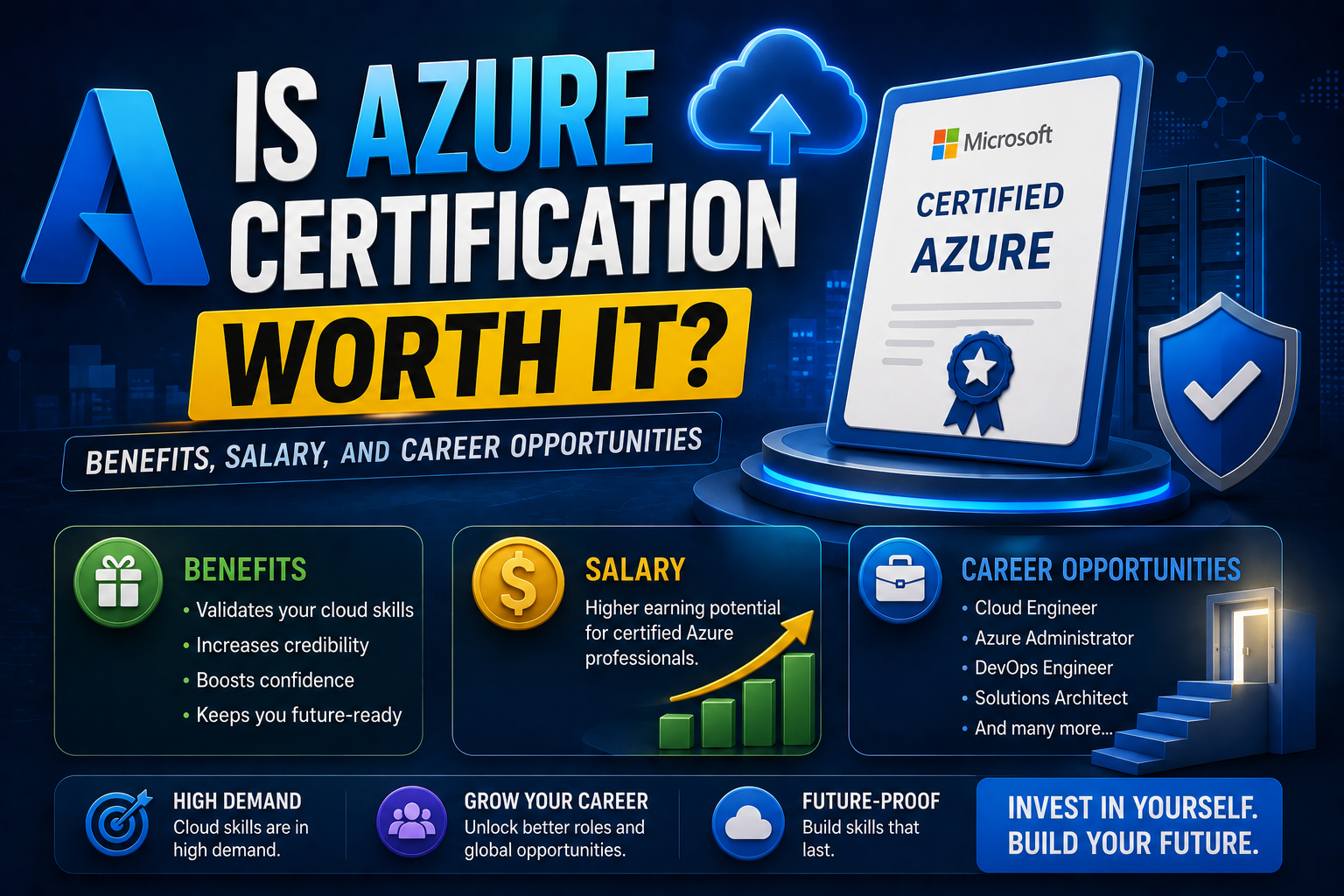
Cloud computing has become a core part of modern business operations, and Microsoft Azure continues to be one of the world's leading cloud platforms. Organizations of every size rely on Azure to host applications, secure data, manage virtual infrastructure, and support digital transformation initiatives. As Azure adoption grows, employers increasingly seek professionals who can deploy, manage, and optimize cloud environments.
For many IT professionals, one common question remains: Is Azure certification worth the investment? The answer depends on your career goals, current experience, and the type of role you want to pursue. While a certification alone does not guarantee employment or a higher salary, it can strengthen your professional profile and demonstrate verified cloud knowledge to employers.
This guide explores the benefits of Azure certification, its impact on salary potential, career opportunities, and why it continues to be a valuable credential in 2026.
Organizations are moving more applications and services to the cloud to improve scalability, reduce infrastructure costs, and support remote work. Microsoft Azure plays a significant role in this transition because it integrates closely with Windows Server, Microsoft 365, Microsoft Entra ID, SQL Server, and many other enterprise technologies.
As businesses modernize their infrastructure, they require professionals who understand cloud administration, security, networking, governance, automation, and application deployment. Azure certifications help demonstrate these capabilities and reassure employers that candidates understand Microsoft's cloud ecosystem.
The growing adoption of hybrid cloud environments has further increased the demand for Azure professionals across industries.
More details in Cert Empire YouTube video Azure Certification Path 2026
One of the biggest advantages of Azure certification is professional credibility.
Certified professionals demonstrate that they have studied Microsoft technologies using a structured learning path and understand industry-recognized cloud practices. This can improve confidence during interviews and strengthen a resume when applying for technical positions.
Additional benefits include:
Recognition by employers worldwide
Stronger cloud computing knowledge
Better understanding of Microsoft services
Improved career progression opportunities
Access to specialized cloud roles
Support for continuous professional development
Although practical experience remains essential, certification provides a solid foundation for building technical expertise.
Microsoft offers role-based certifications that support various technology careers.
|
Career Goal |
Recommended Certification |
|
Cloud Fundamentals |
AZ-900 |
|
Azure Administration |
AZ-104 |
|
Azure Solutions Architecture |
AZ-305 |
|
Azure Security |
AZ-500 |
|
Azure AI |
AI-102 |
|
Azure Data Engineering |
DP-700 or DP-203 (depending on the technology focus) |
This structured certification path allows professionals to begin with foundational concepts before progressing into advanced specializations that match their career objectives.
Salary depends on many factors, including professional experience, job responsibilities, location, employer, and technical specialization. Azure certification itself does not guarantee a specific salary, but it can improve eligibility for cloud-focused roles that often offer competitive compensation.
Professionals working as Azure Administrators, Cloud Engineers, Solutions Architects, Security Engineers, DevOps Engineers, and Cloud Consultants frequently command strong salaries because organizations depend on their expertise to manage business-critical cloud infrastructure.
Candidates who combine Azure certifications with hands-on project experience are generally more competitive during recruitment and promotion processes.
Azure certifications support a broad range of technology careers.
Common roles include:
Azure Administrator
Cloud Engineer
Solutions Architect
Cloud Support Engineer
Security Engineer
DevOps Engineer
Infrastructure Engineer
Cloud Consultant
Systems Administrator
Platform Engineer
These roles exist across industries such as healthcare, finance, education, manufacturing, telecommunications, retail, and government.
Because Microsoft technologies remain deeply integrated into enterprise environments, Azure-certified professionals continue finding opportunities within organizations of various sizes.
The best certification depends on your experience and career direction.
Beginners entering cloud computing often start with AZ-900 because it introduces Azure fundamentals without requiring extensive technical knowledge. Professionals responsible for managing cloud infrastructure commonly progress to AZ-104, while experienced cloud engineers interested in designing enterprise solutions frequently pursue AZ-305.
Candidates interested in cybersecurity, artificial intelligence, or data analytics can later specialize by selecting certifications aligned with those disciplines.
Following a structured learning path is usually more effective than attempting multiple unrelated certifications.
Certification preparation should always include hands-on experience.
Creating virtual machines, configuring storage accounts, managing networking resources, exploring Microsoft Entra ID, and using Azure monitoring tools all help reinforce theoretical knowledge.
Employers generally value candidates who can demonstrate both certification knowledge and practical cloud experience. Applying Azure concepts through personal projects, laboratory environments, or workplace responsibilities often strengthens long-term career prospects.
Many professionals also enhance their preparation through structured study resources and practice materials from Cert Empire alongside Microsoft's official documentation and practical Azure experience.
Cloud computing continues expanding as organizations invest in digital transformation, automation, artificial intelligence, and hybrid infrastructure. Microsoft Azure remains one of the leading enterprise cloud platforms, creating sustained demand for professionals with cloud administration, security, architecture, and engineering skills.
Professionals who continue learning, update their certifications when appropriate, and gain practical experience are well positioned for long-term success within the cloud computing industry.
Azure certifications should therefore be viewed as part of an ongoing professional development strategy rather than a one-time achievement.
Azure certification remains a worthwhile investment for professionals seeking careers in cloud computing. While certification alone cannot guarantee higher salaries or immediate employment, it strengthens technical credibility, supports career progression, and demonstrates commitment to continuous learning.
By selecting the Azure certification that aligns with your career goals, developing practical cloud experience, and continuing to expand your technical knowledge, you can build a strong foundation for long-term success in one of the fastest-growing areas of the technology industry.
Yes. Microsoft offers beginner-friendly certifications such as AZ-900 that introduce cloud concepts and Azure services, providing an excellent starting point for individuals entering cloud computing careers.
Azure certification may improve earning potential by helping professionals qualify for cloud-focused positions. Salary ultimately depends on experience, responsibilities, employer, location, and practical technical expertise.
Most beginners start with AZ-900 before progressing to role-based certifications such as AZ-104 or AZ-305 depending on their preferred cloud career path and professional interests.
Yes. Microsoft Azure certifications are recognized globally and are valued by organizations that use Microsoft cloud technologies across enterprise infrastructure, security, application development, and digital transformation projects.
Yes. Azure continues to be one of the world's leading cloud platforms, making Azure certifications valuable for professionals pursuing careers in cloud administration, architecture, cybersecurity, and cloud engineering.
Read More: https://picgiraffe.com/most-in-demand-azure-certification-exams-in-2026/