English
 Arabic
 French
 Spanish
 Portuguese
 Deutsch
 Turkish
 Dutch
Dutch
 Italiano
 Russian
 Romaian
 Portuguese (Brazil)
 Greek
Greek
Trending on BookTok Cabaret in Flames by Hache Pueyo
Sports |
2026-06-23 06:27:01
 Advertise With Us
 About Us
 Terms And Conditions
 سياسة الخصوصية
عرض كل النتائج
سياسة الخصوصية
عرض كل النتائج

ترقية الحساب
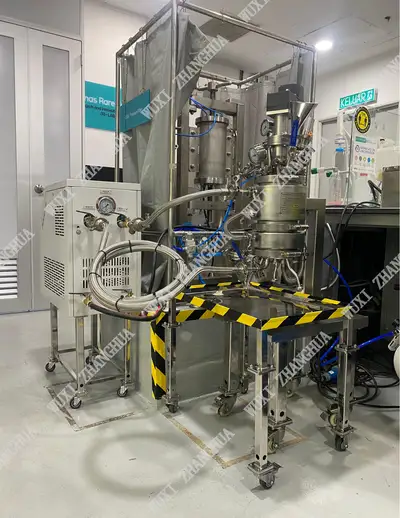
Understanding how this equipment is actually designed and how it performs in real production settings helps buyers make more informed decisions and helps operators get the most out of the equipment once it's installed and running regular production batches. An agitated nutsche filter dryer brings together several engineering disciplines, from vessel design and materials science to process control and mechanical engineering, into a single integrated system built to handle demanding solid-liquid separation and drying applications.
The vessel itself needs to withstand a combination of mechanical stress, chemical exposure, and temperature cycling throughout its operational life, which makes material selection one of the most important design decisions affecting long-term reliability and process compatibility for any given application. Standard stainless steel grades work well for many applications, but processes involving aggressive solvents, strong acids, or high-chloride environments often require more resistant alloys to prevent premature corrosion that could compromise both equipment integrity and product purity over time. Wall thickness, surface finish, and welding quality all factor into overall vessel durability as well, with polished internal surfaces particularly important for pharmaceutical applications where surface roughness can harbor contamination and complicate thorough cleaning between different production batches.
The agitator drive system needs to deliver reliable, controllable rotation across a wide range of operating conditions, from gentle mixing during delicate washing steps through to more vigorous action needed for breaking up dense, sticky cake material during the drying phase of processing. Variable speed drives allow operators to adjust agitation intensity throughout different phases of the batch cycle, matching mixing action to the specific requirements of filtration, washing, and drying rather than running at a single fixed speed that would inevitably be a compromise for at least some portion of the overall process. Seal design around the agitator shaft also matters significantly, since a poorly sealed shaft penetration can allow contamination into the vessel or, in the reverse direction, allow hazardous vapors to escape into the surrounding plant environment.
The vacuum and pressure system driving filtration performance needs to deliver consistent, controllable pressure differential across the filter medium to maintain steady filtration rates throughout the entire batch cycle without excessive fluctuation that could disrupt cake formation. Understanding agitated nutsche filter dryer system's vacuum capacity relative to your typical batch size and filtration area helps ensure the equipment can actually achieve the filtration rates needed for efficient production, rather than becoming a bottleneck that limits overall plant throughput. Pressure filtration capability adds valuable flexibility for materials that don't filter efficiently under vacuum alone, allowing operators to push liquid through more resistant cake structures when needed for particularly challenging process chemistries.
Getting the finished dry product out of the vessel efficiently, without excessive manual intervention or product loss, depends heavily on discharge valve design and how well it integrates with the agitator's ability to scrape the vessel walls clean during the final stage of processing. Bottom discharge designs that combine a properly sized valve opening with effective wall-scraping action from the agitator tend to achieve the cleanest discharge with the least residual product left behind, reducing both cleaning time and material loss between successive production batches. Some designs also incorporate features to prevent bridging or blockage during discharge, which can be a significant problem with certain sticky or cohesive materials that don't flow freely through a standard discharge opening without some form of mechanical assistance.
Beyond the specifications listed on a datasheet, real-world performance depends heavily on how well the equipment has been matched to the specific process chemistry and operational requirements of the facility running it day after day across a demanding production schedule. Factors like typical batch size variability, seasonal changes in raw material characteristics, and the skill level of operating staff all influence how consistently the equipment performs once it moves beyond initial commissioning and into routine daily production. Facilities that invest time in proper operator training and process optimization during commissioning tend to see meaningfully better long-term performance than those that simply install the equipment and expect it to perform optimally without any further attention to process fine-tuning. Buyers who understand these design and operational fundamentals going into a purchase are far better positioned to ask the right questions, evaluate competing proposals critically, and ultimately select equipment that will genuinely perform well within their specific production environment for years to come.