English
 Arabic
 French
 Spanish
 Portuguese
 Deutsch
 Turkish
 Dutch
Dutch
 Italiano
 Russian
 Romaian
 Portuguese (Brazil)
 Greek
Greek
Yellow Peel in Dubai: Ultimate Skin Transformation
Health |
2026-07-30 05:40:24
 Advertise With Us
 About Us
 Terms And Conditions
 سياسة الخصوصية
عرض كل النتائج
سياسة الخصوصية
عرض كل النتائج

ترقية الحساب
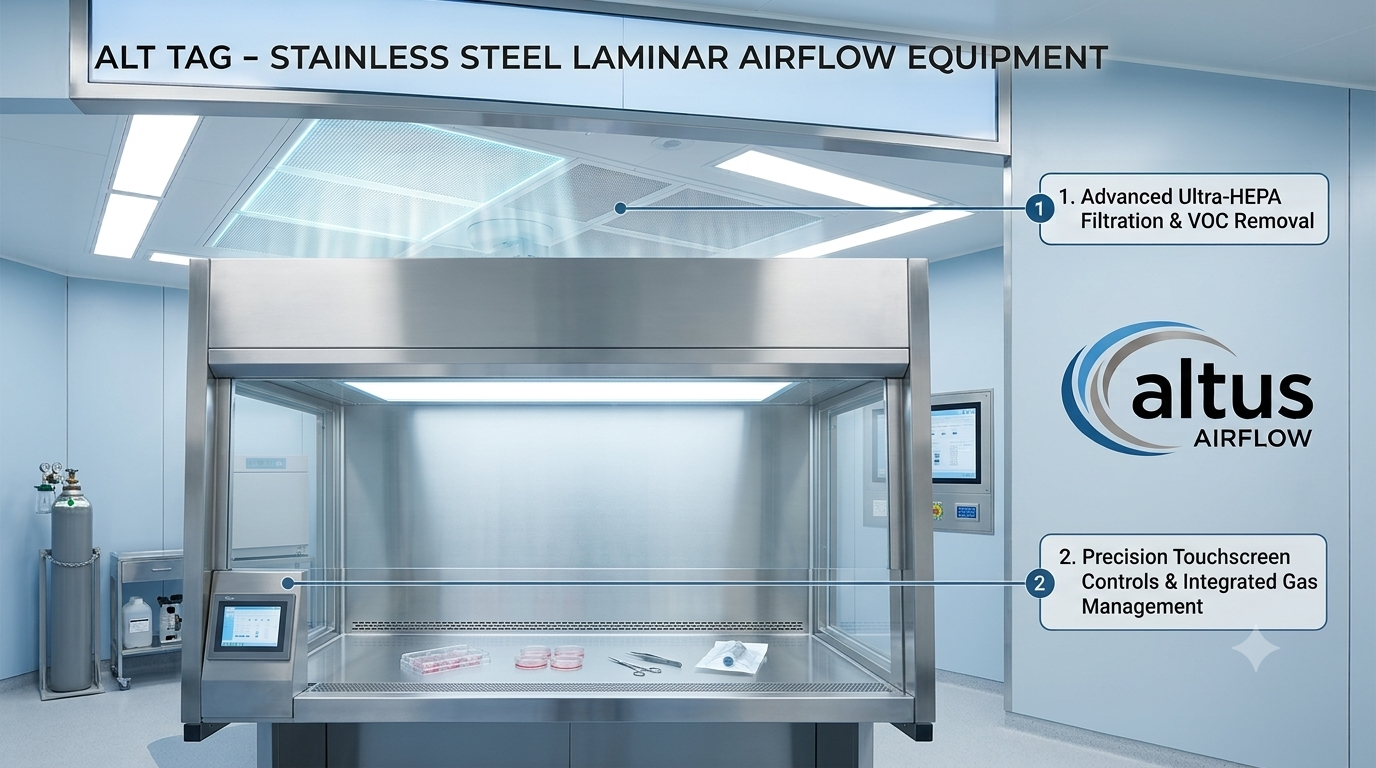
Modern cleanrooms, healthcare facilities, pharmaceutical manufacturing units, IVF laboratories, biotechnology centers, hospitals, and research laboratories depend on advanced contamination control systems to maintain sterile environments. Professional Laminar Airflow System Setup Services involve much more than installing a laminar airflow unit. They require carefully selected materials that ensure durability, hygiene, corrosion resistance, efficient airflow, and long-term operational reliability. Every material used in the system contributes to maintaining clean air, supporting regulatory compliance, and minimizing contamination risks.
The selection of materials directly affects system performance, maintenance requirements, and environmental stability. From galvanized steel ductwork and HEPA filters to modular cleanroom panels, stainless steel components, insulation materials, and intelligent control systems, every component is chosen to support the demanding requirements of clean environments. A properly engineered Laminar Airflow System Setup Services project combines these materials into an integrated solution that delivers reliable airflow, energy efficiency, and superior contamination control.
This article explains the common materials used in laminar airflow system installations and their role in creating high-performance clean environments.
Galvanized steel is one of the most widely used materials in laminar airflow installations.
Its advantages include:
Galvanized ducts efficiently transport conditioned air.
Stainless steel is commonly used in areas requiring superior hygiene.
Applications include:
Stainless steel provides excellent durability and easy cleaning.
Many airflow units use aluminum framing because it is:
Aluminum simplifies installation while maintaining durability.
HEPA filters form the heart of every Laminar Airflow System Setup Services installation.
Filter media typically consists of:
These filters remove microscopic airborne particles.
Ultra-Low Penetration Air (ULPA) filters use specialized filtration media capable of capturing extremely fine particles.
These filters are used in highly sensitive environments.
Activated carbon is widely used for VOC removal.
Carbon filtration helps eliminate:
Cleaner air supports laboratory performance.
HVAC ductwork requires thermal insulation.
Common insulation materials include:
Proper insulation improves energy efficiency.
Professional Laminar Airflow System Setup Services often include modular cleanroom construction.
Panel materials may include:
Modular panels simplify maintenance.
Powder-coated finishes improve:
Smooth finishes also support hygiene.
Many cleanrooms use specialized PVC flooring.
Benefits include:
Proper flooring improves contamination control.
Epoxy flooring is another popular material.
Advantages include:
Epoxy flooring withstands demanding environments.
Observation windows frequently use tempered safety glass.
Features include:
Glass improves operational monitoring.
Specialized silicone sealants create airtight joints.
Sealants help:
High-quality sealing supports environmental stability.
Rubber gaskets ensure airtight sealing.
Applications include:
Proper sealing improves airflow performance.
Air diffusers are typically manufactured using:
Durable diffusers provide uniform airflow distribution.
Return air grilles are commonly constructed from:
Proper grille materials improve airflow efficiency.
Copper piping is widely used in HVAC systems.
Copper provides:
Reliable piping supports cooling systems.
Electrical systems use certified copper conductors.
Quality wiring supports:
Safe electrical systems are essential.
Control panels are manufactured using:
Durable panels simplify system management.
Modern cleanrooms use energy-efficient LED fixtures.
Advantages include:
LED lighting supports energy savings.
Some cleanroom surfaces use antimicrobial paints.
Benefits include:
Special coatings improve hygiene.
AHU casings are typically manufactured from:
Durable casings protect internal components.
High-performance fans use:
Efficient fans improve airflow performance.
Pressure monitoring equipment includes:
Reliable sensors maintain environmental stability.
Temperature monitoring devices use precision electronic components.
Accurate sensors improve environmental control.
Modern Laminar Airflow System Setup Services increasingly include:
Automation improves efficiency.
Using premium materials offers several advantages.
These include:
Material quality directly affects system reliability.
Professional Laminar Airflow System Setup Services rely on carefully selected materials to create durable, hygienic, and efficient clean environments. Galvanized steel ductwork, stainless steel components, aluminum framing, HEPA and ULPA filtration media, activated carbon filters, modular cleanroom panels, seamless flooring, tempered glass, silicone sealants, insulated ducting, powder-coated finishes, advanced sensors, intelligent automation systems, and energy-efficient lighting all contribute to maintaining stable airflow, effective contamination control, and long-term operational reliability. Selecting high-quality materials not only improves cleanroom performance but also simplifies maintenance, supports regulatory compliance, reduces operating costs, and enhances system longevity. Through advanced engineering, cleanroom expertise, and premium material selection, Altus Airflow delivers dependable laminar airflow solutions that provide precision, efficiency, compliance, and sustainable long-term performance.
Laminar Airflow System Setup Services commonly use galvanized steel, stainless steel, aluminum, HEPA filters, activated carbon filters, modular cleanroom panels, insulated ductwork, and seamless flooring.
Stainless steel is widely used in Laminar Airflow System Setup Services because it offers excellent hygiene, corrosion resistance, durability, and easy cleaning.
Yes, professional Laminar Airflow System Setup Services always include HEPA filtration to remove airborne contaminants and maintain clean environments.
PVC and epoxy flooring are commonly installed through Laminar Airflow System Setup Services because they provide seamless, hygienic, and durable surfaces.
Premium materials improve contamination control, increase system lifespan, simplify maintenance, enhance energy efficiency, and support regulatory compliance in Laminar Airflow System Setup Services.
Read Our Previous Blog------>How does air quality management impact IVF Labs Design?