Understanding the Healing Stages After Breast Lift Surgery
Introduction
A breast lift, or mastopexy, is a cosmetic procedure that reshapes and raises sagging breasts to create a firmer, more youthful appearance. While the surgical technique plays a major role in the final outcome, the healing process after breast lift surgery is just as important. Breast lift surgery in Riyadh helps restore a firmer, more youthful breast shape while enhancing overall body proportions and confidence.
Recovery is not instant. The body goes through several predictable healing stages as swelling reduces, tissues settle, and scars mature. Understanding these stages helps patients know what is normal, what to expect at each phase, and how to care for themselves properly during recovery.
This guide explains the healing stages after breast lift surgery in detail, from the first few days to the final long-term results.
Stage 1: The First 24–72 Hours (Immediate Post-Surgery Phase)
The first few days after breast lift surgery are the most sensitive and important for initial healing.
What You May Experience
- Mild to moderate discomfort
- Tightness or pressure in the chest
- Swelling in the breast area
- Bruising around incision sites
- Fatigue from anesthesia
What Is Happening Internally
- The body begins clotting and sealing incisions
- Initial inflammatory response starts
- Tissues begin early repair process
Care During This Stage
- Rest as much as possible
- Keep upper body elevated while sleeping
- Take prescribed pain medication
- Avoid any physical strain or arm lifting
This stage is all about rest and protection.
Stage 2: Early Healing (First Week)
During the first week, the body begins stabilizing after surgery.
Common Symptoms
- Swelling and bruising remain visible
- Mild soreness or tenderness
- Tight sensation in the breasts
- Limited mobility in the upper body
Internal Healing
- Early tissue repair continues
- Skin edges begin to close and strengthen
- Blood circulation improves around surgical area
Important Care Steps
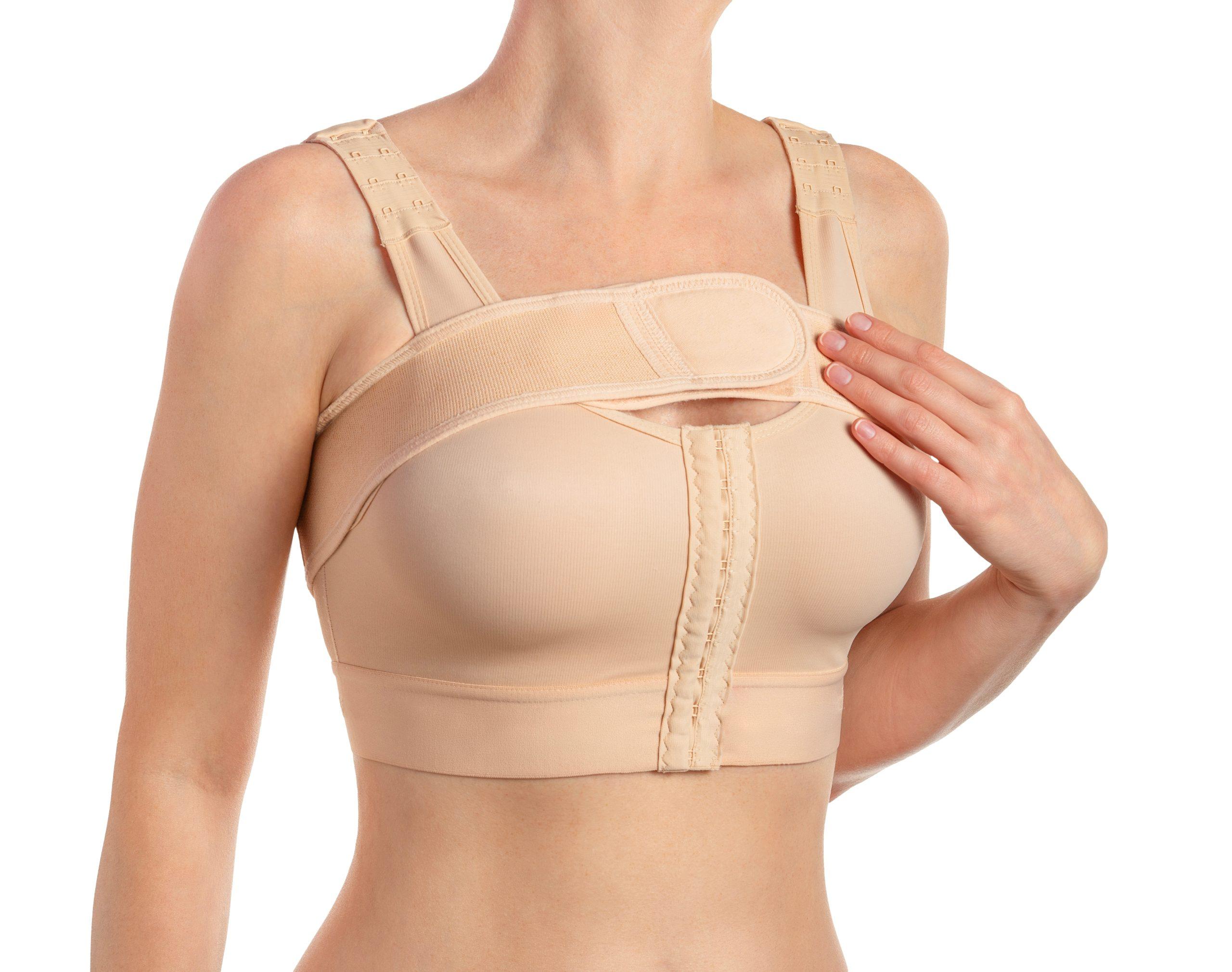
- Wear surgical support bra as instructed
- Avoid showering until permitted
- Do not lift heavy objects or raise arms excessively
- Attend early follow-up visits if scheduled
This stage requires careful protection of the surgical area.
Stage 3: Early Recovery (Weeks 2–3)
At this stage, noticeable improvement begins.
What You May Notice
- Reduced swelling
- Fading bruises
- Less discomfort
- Improved mobility
- Breasts start to feel more natural
What Is Happening Internally
- Tissue strengthening continues
- Inflammation significantly decreases
- Early scar formation begins
Activity Level
- Light daily activities are usually allowed
- Many patients return to desk jobs
- Strenuous exercise is still restricted
The body is transitioning from healing to recovery.
Stage 4: Intermediate Healing (Weeks 4–6)
This stage marks a significant milestone in recovery.
Physical Changes
- Most swelling has reduced
- Breast shape becomes more visible
- Discomfort is minimal or gone
- Scars may appear red or firm
Internal Healing
- Deeper tissue repair strengthens
- Skin continues to adjust to new position
- Scar tissue begins maturing
Activity Level
- Light to moderate activity may resume
- Exercise may be reintroduced gradually (with approval)
- Normal daily routines are mostly restored
Breasts are still settling but healing is progressing well.
Stage 5: Remodeling Phase (Months 2–3)
This is when the breasts begin to look more natural and refined.
Visible Improvements
- Breast shape becomes softer
- Position looks more natural
- Swelling continues to decrease
- Scars begin to fade slowly
Internal Processes
- Collagen remodeling strengthens tissues
- Skin adapts to new contour
- Scar tissue becomes less firm
Activity Level
- Most normal activities resumed
- Exercise routines usually return fully (with approval)
- Patients feel close to full recovery
This stage reflects major progress in final results.
Stage 6: Advanced Healing (Months 3–6)
At this stage, the breasts are closer to their final appearance.
What You Will Notice
- Final breast shape becomes clearer
- Scars lighten in color
- Skin feels softer and more natural
- Swelling is minimal or gone
Internal Healing
- Collagen continues restructuring
- Scar tissue matures and flattens
- Breast tissue stabilizes fully
Although results look close to final, subtle changes still occur.
Stage 7: Final Healing Stage (6–12 Months)
This is when long-term results become fully visible.
Final Results Include
- Fully settled breast shape
- Natural softness and symmetry
- Minimal swelling (if any)
- Faded, flat scars
Internal Completion
- Scar maturation completes
- Tissue fully stabilizes
- Skin elasticity adjusts to new shape
At this point, the results are considered long-term.
Healing of Scars Over Time
Scars go through a long healing process that continues even after the breasts look healed.
Early Stage (0–3 months)
- Red or pink appearance
- Slight firmness
- More visible
Middle Stage (3–6 months)
- Scars begin fading
- Softening of texture
- Reduced redness
Late Stage (6–12+ months)
- Scars become lighter and flatter
- Often blend with skin tone
- Less noticeable over time
Proper scar care improves long-term appearance significantly.
Factors That Influence Healing Speed
Healing time varies from person to person due to several factors:
1. Age
Younger patients often heal faster due to better skin elasticity.
2. Overall Health
Good health supports faster tissue repair.
3. Smoking and Nicotine Use
Smoking slows healing and increases complication risks.
4. Nutrition
Protein, vitamins, and hydration support recovery.
5. Surgical Technique
Less invasive techniques may result in quicker recovery.
6. Post-Operative Care
Following instructions carefully improves healing outcomes.
What Is Considered Normal During Healing
It is normal to experience:
- Swelling that lasts several weeks
- Mild discomfort or tightness
- Temporary changes in breast shape
- Numbness or sensitivity changes
- Gradual improvement over time
These symptoms usually resolve naturally during recovery.
Warning Signs to Watch For
Although complications are rare, patients should contact their surgeon if they notice:
- Severe or increasing pain
- Excessive swelling in one breast
- Signs of infection (fever, redness, discharge)
- Sudden changes in breast shape
- Delayed wound healing
Early medical attention ensures safe recovery.
Tips for Better Healing Results
To support smooth recovery:
- Wear surgical bra as instructed
- Sleep on your back with support
- Avoid heavy lifting early on
- Eat a nutrient-rich diet
- Stay hydrated
- Avoid smoking and alcohol
- Attend all follow-up appointments
Small habits greatly influence long-term results.
Conclusion
Healing after breast lift surgery is a gradual, multi-stage process that unfolds over several months. From the initial recovery phase in the first week to the final results seen after 6 to 12 months, each stage plays a vital role in shaping the outcome.
Understanding these healing stages helps patients set realistic expectations, reduce anxiety, and follow proper care instructions. With patience, good aftercare, and healthy habits, most patients achieve smooth healing and enjoy natural, lifted, and long-lasting breast results.
 English
 Arabic
 French
 Spanish
 Portuguese
 Deutsch
 Turkish
 Dutch
Dutch
 Italiano
 Russian
 Romaian
 Portuguese (Brazil)
 Greek
Greek
 Advertise With Us
 About Us
 Terms And Conditions
 Πολιτική Ιδιωτικότητας
δες τα όλα
Πολιτική Ιδιωτικότητας
δες τα όλα