English
 Arabic
 French
 Spanish
 Portuguese
 Deutsch
 Turkish
 Dutch
Dutch
 Italiano
 Russian
 Romaian
 Portuguese (Brazil)
 Greek
Greek
Recommended Title Honey in the Wound by Jiyoung Han
Sports |
2026-06-24 03:54:00
 Advertise With Us
 About Us
 Terms And Conditions
 Politique de confidentialité
Tout voir
Politique de confidentialité
Tout voir

Mise à niveau vers Pro
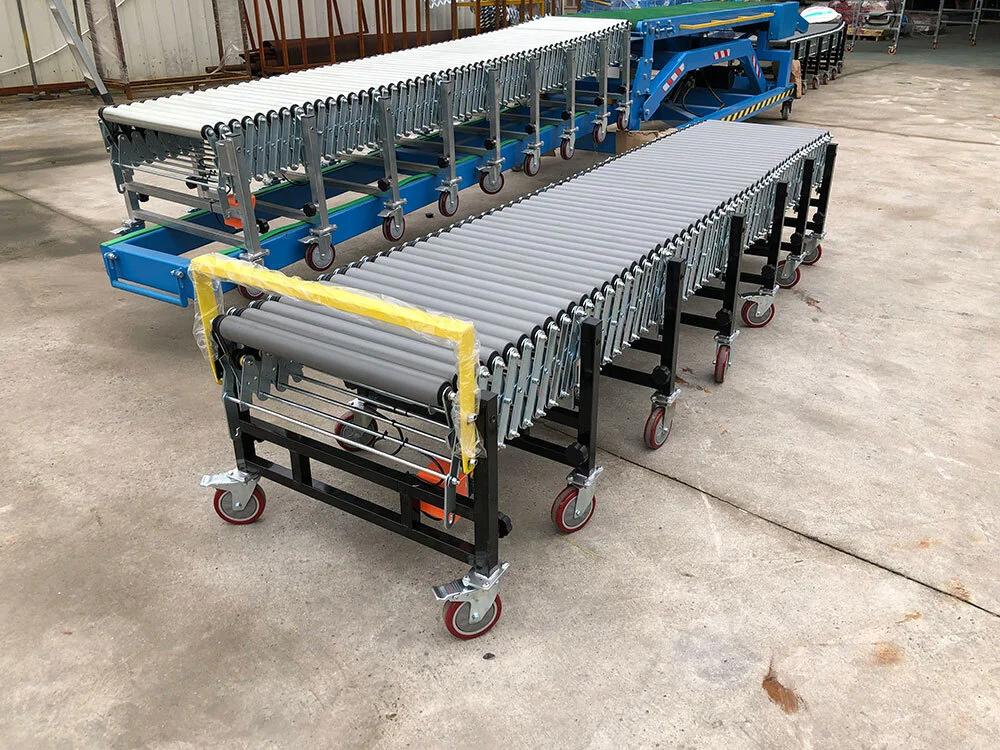
Warehouses that are still growing face a tricky balance between investing in equipment now and avoiding a costly overhaul later as operations expand well beyond what the original setup was designed to handle. A flexible powered roller conveyor offers a scalable option, letting businesses start small and add capacity gradually as their shipping and storage needs increase over time, rather than committing to a large fixed investment before they even know exactly what their long-term requirements will look like.
New or growing warehouses often can't justify the cost of a large, permanent conveyor system right away, especially when future growth patterns are still uncertain and hard to predict with confidence. Starting with one or two portable motorized units allows a business to improve efficiency immediately, without locking into infrastructure sized for a volume of business it hasn't reached yet, which keeps early-stage capital spending more manageable while still delivering real operational benefits from day one.
As order volume increases, additional units can be brought in and positioned alongside existing equipment, effectively expanding handling capacity without needing to redesign the entire facility from the ground up every time growth outpaces the original plan. A flexible powered roller conveyor fits naturally into this kind of gradual scaling, since each new unit adds capability without disrupting what's already in place and working well for the parts of the operation that don't need to change.
Growing warehouses often need to rearrange storage racks or add new sections as inventory expands, sometimes multiple times within a single year as product lines shift and new categories are introduced. Because this conveyor isn't fixed in place, it can be moved and reconfigured alongside these changes, rather than becoming an obstacle that limits how the storage layout can evolve over time, which would otherwise force the business to work around equipment rather than the other way around.
Businesses that eventually expand into a second warehouse or distribution point can move existing conveyor units to the new location rather than purchasing entirely new fixed infrastructure from scratch for every additional site they open. This portability adds another layer of value for companies planning geographic growth alongside their operational growth, letting existing equipment investments continue paying off even as the business physically expands into new regions or markets.
Thinking about scalability from the start, rather than treating equipment purchases as one-off decisions made in isolation, tends to save businesses significant money and disruption down the road once growth actually arrives. A flexible, motorized approach to material handling supports this kind of long-term planning far better than committing early to a large, fixed conveyor installation that assumes today's volume and layout will remain unchanged for years to come.