English
 Arabic
 French
 Spanish
 Portuguese
 Deutsch
 Turkish
 Dutch
Dutch
 Italiano
 Russian
 Romaian
 Portuguese (Brazil)
 Greek
Greek
Secrets Behind Stunning Kitchen Remodeling Paradise NV Projects
Other |
2026-03-11 17:47:54
 Advertise With Us
 About Us
 Terms And Conditions
 Privacy Policy
Mostra tutti i risultati
Privacy Policy
Mostra tutti i risultati

Passa a Pro
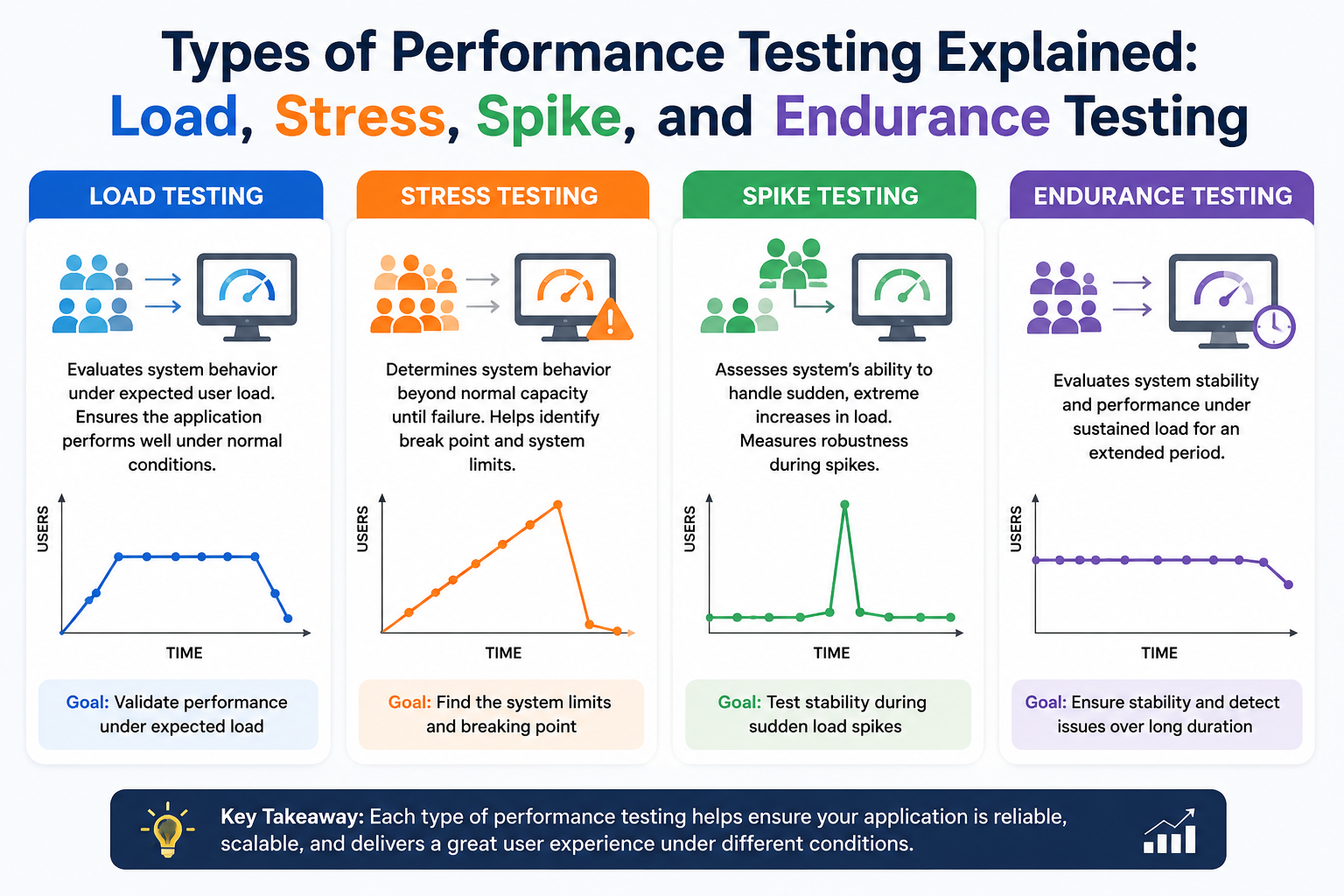
In today’s digital-first world, where applications must deliver seamless user experiences under varying loads, testing plays a pivotal role. Among the many testing types, Performance Testing stands out as a critical practice that ensures software systems remain fast, responsive, and stable. While closely related to Scalability Testing, the two serve distinct yet complementary purposes. This comprehensive guide dives deep into Performance Testing vs Scalability Testing, exploring their definitions, methodologies, differences, similarities, tools, real-world applications, and best practices.
Whether you are a developer, QA engineer, or business stakeholder, understanding these concepts helps build robust, future-proof applications. Let’s explore.
Performance Testing is a non-functional testing technique used to determine how a system performs in terms of responsiveness, speed, stability, and resource usage under a specific workload. It focuses on measuring key metrics such as response time, throughput, latency, and error rates.
The primary goal of Performance Testing is to identify bottlenecks, ensure the application meets performance benchmarks, and deliver a smooth user experience. It simulates real-world usage scenarios to verify that the system can handle expected traffic without degradation.
Performance Testing is not a one-time activity. It is integrated throughout the development lifecycle, especially in Agile and DevOps environments, to catch issues early.
Performance Testing has become indispensable in industries like e-commerce, banking, healthcare, and streaming services where even milliseconds of delay can result in lost revenue or user churn.
Scalability Testing is a specific form of performance testing that determines a system’s ability to scale up or out to handle growing workloads efficiently. It answers questions like: “What happens when we double the number of users or data volume?” and “How effectively can we add more servers or resources?”
While Performance Testing focuses on current capabilities, Scalability Testing explores future growth potential. It measures how well the architecture supports horizontal scaling (adding more machines) or vertical scaling (adding more power to existing machines).
Scalability issues often surface in microservices architectures, distributed databases, or high-traffic SaaS platforms.
Although both fall under the performance umbrella, they differ significantly:
| Aspect | Performance Testing | Scalability Testing |
|---|---|---|
| Focus | Speed, responsiveness, stability under load | Ability to grow with increasing demand |
| Scope | Current workload scenarios | Future growth and expansion scenarios |
| Metrics | Response time, throughput, latency, errors | Scaling factor, resource utilization curve, breaking point |
| Approach | Fixed load levels | Incrementally increasing loads/resources |
| When Conducted | Throughout development and before release | During capacity planning and architecture validation |
| Outcome | Optimization of existing system | Validation of growth strategy |
Performance Testing is broader and includes scalability aspects, but Scalability Testing is more targeted toward long-term viability.
In practice, teams often start with comprehensive Performance Testing and then drill down into dedicated Scalability Testing for critical systems.
Despite differences, both:
Many organizations conduct them together as part of a unified performance engineering strategy.
With the rise of AI-driven applications, edge computing, and global user bases, Performance Testing has evolved. Modern systems must handle millions of concurrent users, process real-time data, and maintain low latency across geographies.
Poor performance directly impacts business metrics:
Performance Testing helps mitigate these risks. At Sdettech, we emphasize proactive performance engineering to help clients achieve sub-second response times even under heavy loads.
Popular tools include:
For Scalability Testing specifically, tools that support distributed execution and cloud orchestration are preferred.
Scalability Testing follows a similar flow but includes resource scaling experiments.
An online retailer faced slowdowns during Black Friday. Performance Testing revealed database query bottlenecks. After optimization, response times improved by 65%. Subsequent Scalability Testing confirmed the system could handle 5x traffic by adding database replicas.
A banking app needed to support international expansion. Scalability Testing helped them choose between Kubernetes auto-scaling and serverless architecture, resulting in 40% cost savings.
Performance Testing identified CDN configuration issues causing buffering in certain regions. Integrating scalability checks ensured seamless handling of live event spikes.
Sdettech has helped numerous clients in these sectors achieve reliable performance through tailored testing strategies.
For Scalability Testing, always validate both vertical and horizontal scaling paths and consider cost implications.
Overcoming these requires investment in modern tools, skilled teams, and a performance-first culture.
Organizations that treat Performance Testing as a strategic capability will lead in user experience and operational efficiency.
Performance Testing remains the cornerstone of delivering high-quality digital experiences. While Scalability Testing focuses specifically on growth readiness, both are essential for modern applications. By understanding their nuances, differences, and synergies, teams can build systems that not only perform well today but continue to excel as demand grows.
Investing in robust Performance Testing practices pays dividends through higher user satisfaction, reduced downtime, and optimized costs. Whether you are starting your testing journey or refining an existing program, prioritize performance from day one.
At Sdettech, we specialize in end-to-end performance engineering solutions tailored to your unique needs. Contact us to transform your application’s speed and scalability.