English
 Arabic
 French
 Spanish
 Portuguese
 Deutsch
 Turkish
 Dutch
Dutch
 Italiano
 Russian
 Romaian
 Portuguese (Brazil)
 Greek
Greek
From the Sky to the Screen: Exploring the End-Use Applications of Aerial Imaging
Other |
2026-07-21 06:36:59
 Advertise With Us
 About Us
 Terms And Conditions
 Política de privacidade
Ver todos
Política de privacidade
Ver todos

Atualizar para Plus
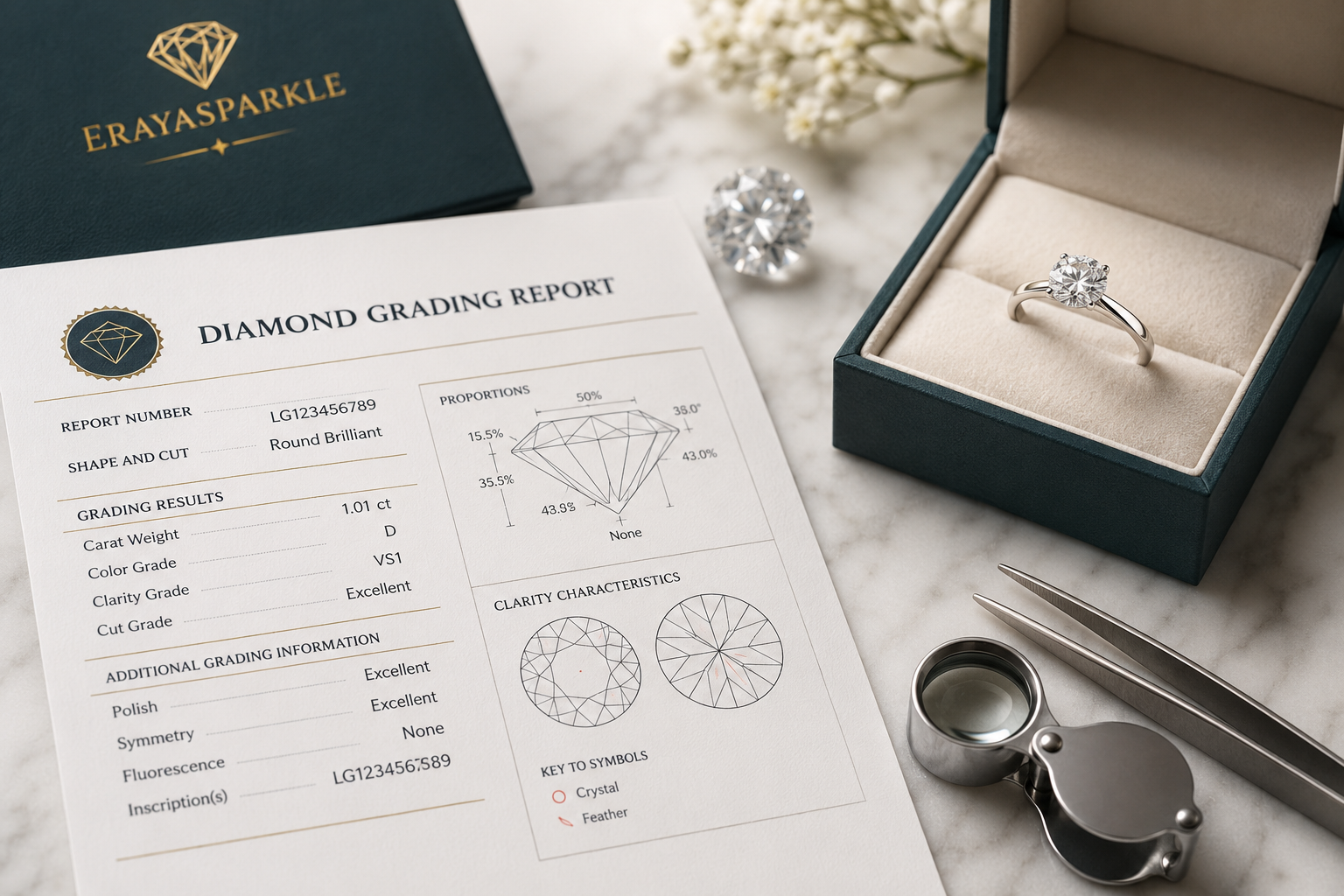
Buying a diamond is an exciting experience, but understanding its quality can be confusing if you do not know how to read a diamond certificate. Many buyers focus only on the sparkle or size of a diamond, while the real value lies in the grading report that explains every important detail. A diamond certificate acts as a trusted document that helps you compare stones fairly and make an informed decision instead of relying only on a seller's description.
Whether you are purchasing a natural or lab-grown diamond, learning to read a grading report gives you confidence throughout the buying journey. Many jewellery enthusiasts who explore collections from brands like ErayaSparkle also take time to understand diamond certification before making a final choice.
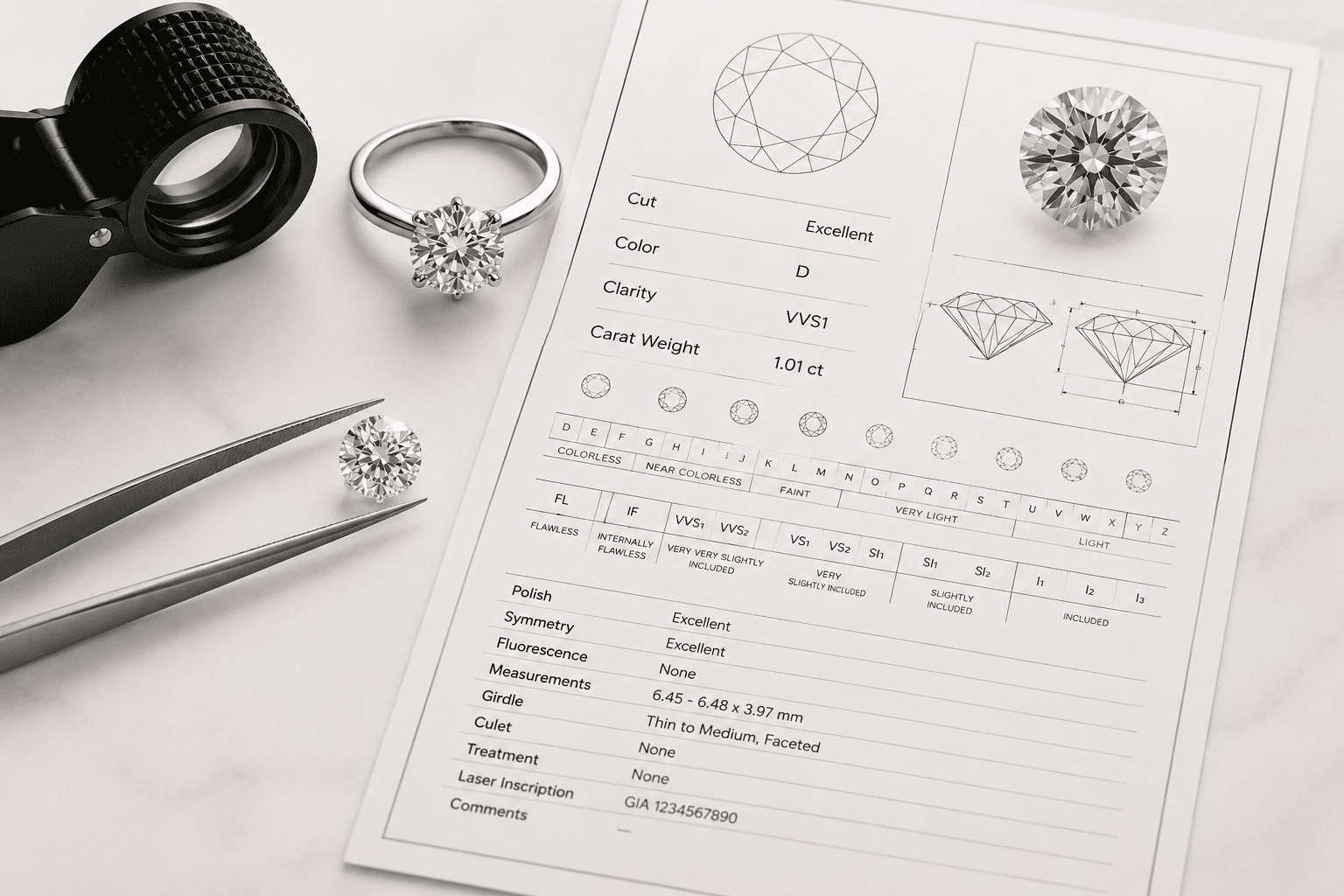
Reading a grading report carefully helps you avoid common buying mistakes. Two diamonds may appear almost identical, but their certificates can reveal significant differences in cut quality, clarity, or proportions that directly affect beauty and value. A well-informed buyer is less likely to overpay or choose a diamond that does not meet expectations.
A certificate also makes it easier to compare multiple diamonds fairly. Instead of judging only by appearance, you can evaluate each stone based on internationally accepted grading standards. Whether you are shopping for engagement rings or elegant halo rings for women , knowing how to interpret the report allows you to focus on genuine quality instead of attractive sales descriptions.
Every grading report contains several sections, and each one tells an important part of the diamond's story. The report number is a unique identification code assigned to the stone. Many diamonds also have this number laser-inscribed on the girdle, making it easier to confirm that the certificate belongs to the correct diamond.
The report also lists the diamond's shape and cutting style. Popular shapes include round, oval, princess, cushion, emerald, and pear. While shape reflects personal style, the cutting style explains how the diamond has been fashioned to maximize brilliance and fire. These details help buyers understand why one diamond may sparkle more than another.
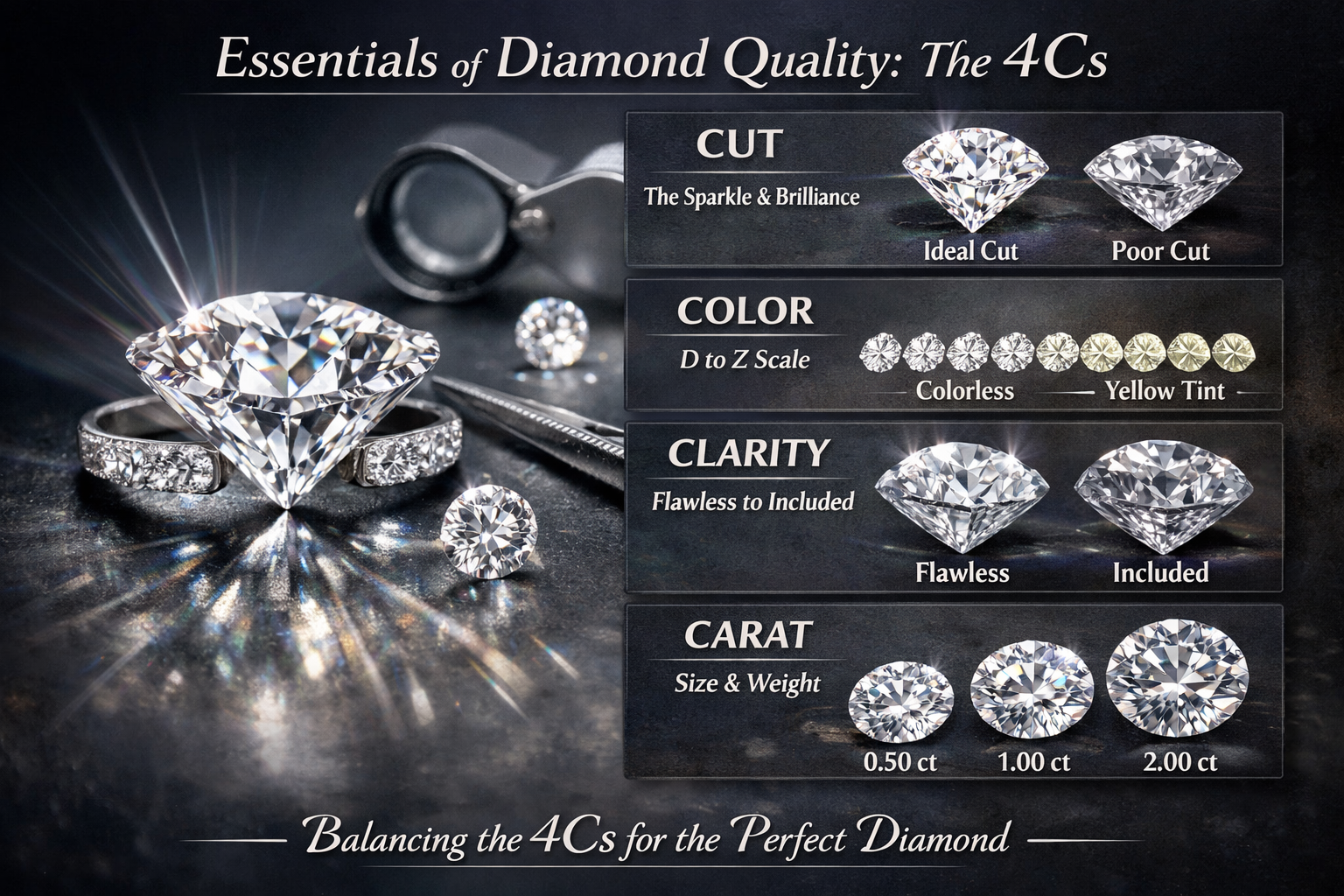
Carat weight is often the first specification buyers notice, but it should never be considered on its own. A larger diamond is not automatically more beautiful if its cut quality is poor. The certificate provides the exact carat weight to the hundredth or thousandth of a carat, allowing accurate comparisons between different stones.
Color grading measures how colorless a diamond appears. Most white diamonds are graded from D to Z, with D representing the highest level of colorlessness. Clarity grading evaluates the presence of internal inclusions and external blemishes. Grades such as FL, IF, VVS, VS, SI, and I indicate different levels of clarity.
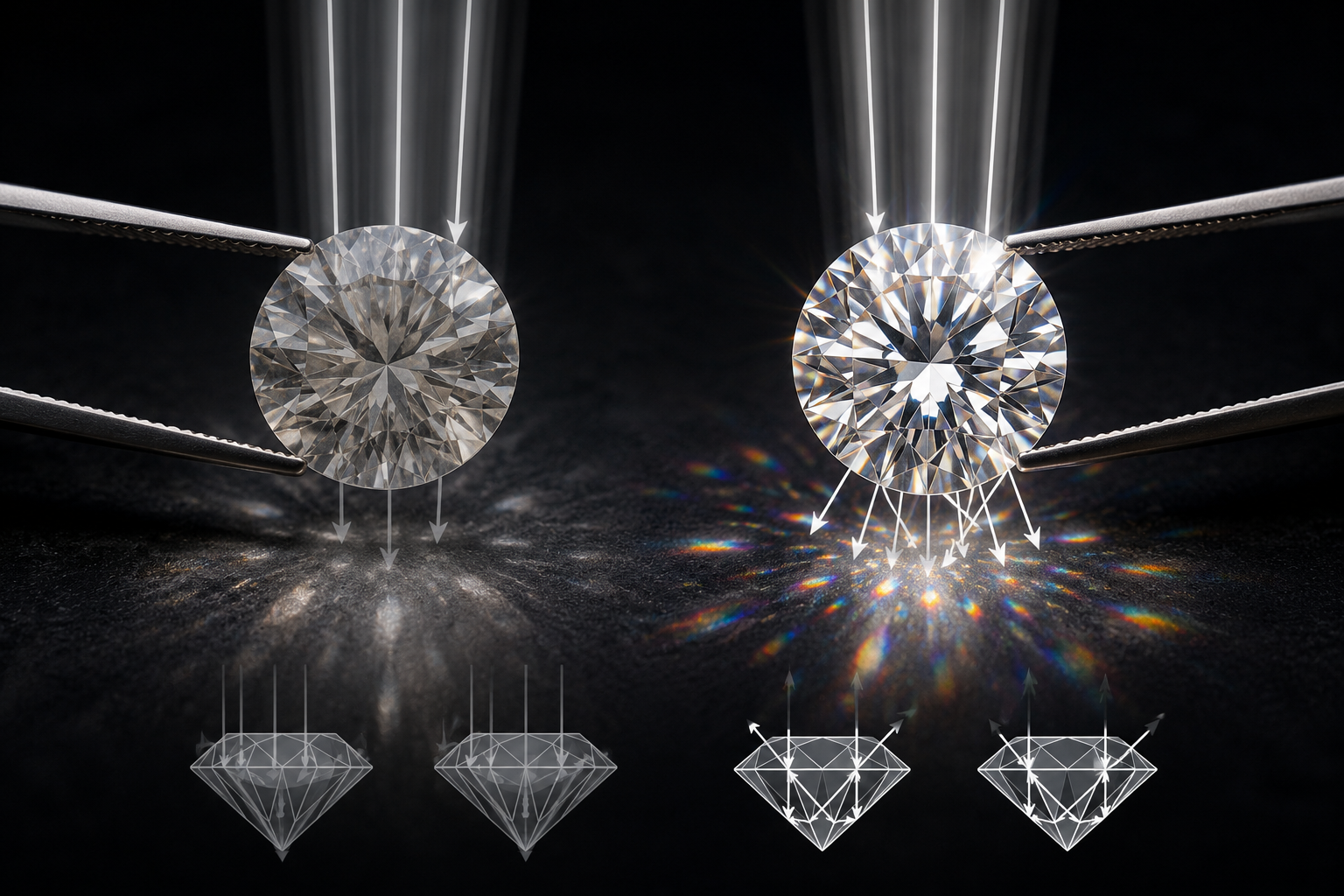
Among the famous 4Cs, cut is often considered the most important because it directly affects brilliance, sparkle, and light performance. Even a diamond with excellent color and clarity may appear dull if it has been poorly cut. A grading report evaluates cut quality by examining how well the diamond's proportions interact with light.
Reports may also include polish and symmetry grades, which describe the quality of the diamond's finishing. Excellent polish creates a smooth surface that enhances light reflection, while good symmetry ensures each facet is aligned correctly. Together, these factors contribute to the beauty that buyers notice first, regardless of the diamond's size.
Beyond the 4Cs, a professional diamond certificate includes measurements that influence the overall appearance of the stone. Details such as table percentage, depth percentage, crown angle, pavilion angle, girdle thickness, and culet size work together to determine how efficiently the diamond reflects light. While these numbers may seem technical, they help experts judge whether a diamond has balanced proportions that maximize brilliance.
Another important section is fluorescence, which describes how a diamond reacts under ultraviolet light. In many cases, faint or medium fluorescence has little effect on everyday appearance, while strong fluorescence may influence the look of certain diamonds.
One of the most useful parts of a grading report is the plot diagram. This illustration maps the position of a diamond's inclusions and surface characteristics, giving every certified stone a unique identity. Instead of worrying about every tiny mark, buyers should understand that many inclusions are microscopic and cannot be seen without magnification.
Reading the plot diagram also helps verify that the diamond matches its certificate. When combined with the report number and laser inscription, it becomes much easier to confirm authenticity. Buyers comparing different styles, including a pear lab diamond ring , can use the plot diagram to understand how clarity characteristics differ from one diamond to another.
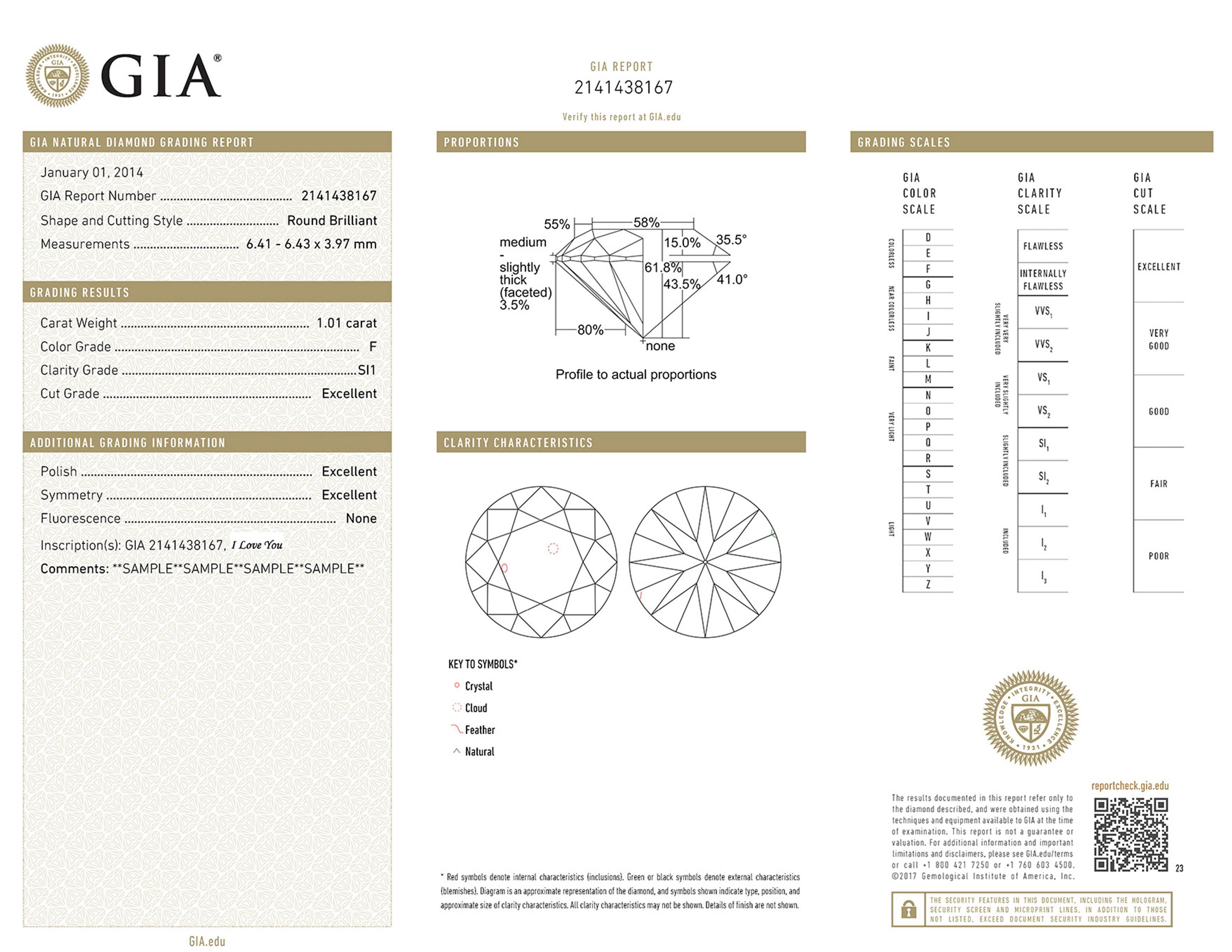
Reading the certificate is only part of the process. Smart buyers also verify the grading report through the official website of the issuing laboratory. By entering the report number, you can confirm that the certificate is genuine and that its details match the diamond being offered for sale.
It is also helpful to compare the measurements, shape, grading information, and laser inscription with the actual diamond. Taking these simple steps reduces the risk of purchasing a misrepresented stone and provides greater confidence throughout the buying journey.
Learning how to read a diamond certificate like a professional is one of the most valuable skills any jewellery buyer can develop. A grading report provides an unbiased picture of a diamond's quality, allowing buyers to compare stones objectively instead of relying only on appearance or sales descriptions.
As diamond education becomes increasingly important, trusted jewellery brands such as ErayaSparkle encourage buyers to understand certification before choosing their perfect piece. Whether you are considering timeless solitaire designs or a beautifully crafted pear lab diamond ring, knowledge will always be your greatest advantage.