English
 Arabic
 French
 Spanish
 Portuguese
 Deutsch
 Turkish
 Dutch
Dutch
 Italiano
 Russian
 Romaian
 Portuguese (Brazil)
 Greek
Greek
Why Are Enzyme Innovations Strengthening the Glycosidases Market?
Networking |
2026-07-07 11:06:13
 Advertise With Us
 About Us
 Terms And Conditions
 Politique de confidentialité
Tout voir
Politique de confidentialité
Tout voir

Mise à niveau vers Pro
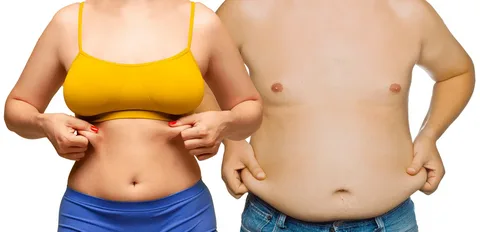
In the discourse surrounding aesthetic enhancements, a persistent myth suggests that surgical fat removal is a strategy for shedding excess body weight. However, for those exploring liposuction in Riyadh and beyond, it is vital to understand that the true purpose of the procedure lies not in the numbers on a scale, but in the nuanced art of body contouring. Liposuction is, fundamentally, a tool for refinement—a surgical method designed to address localized fat deposits that remain stubbornly persistent despite rigorous dedication to healthy eating and active lifestyles. By shifting the focus from weight loss to silhouette definition, patients can better appreciate the procedure's ability to harmonize body proportions.
To truly understand the purpose of liposuction, one must distinguish between generalized adiposity and localized fat distribution. Weight loss is a systemic process; when we eat in a caloric deficit, the body draws energy from fat stores throughout the entire frame, often in a sequence dictated by genetics. Unfortunately, this means that even if an individual achieves their target weight, certain areas—such as the abdomen, flanks, chin, or inner thighs—may retain specific pockets of fat that refuse to diminish.
Liposuction targets these specific zones. Its purpose is to alter the body's topography. By selectively removing subcutaneous fat cells, a practitioner can create smoother transitions between anatomical landmarks, effectively "carving" the physique. The weight change after a procedure is often minimal, as the volume of fat removed is not significant enough to alter one’s overall mass index drastically. Instead, the change is visual and structural, resulting in a more proportionate and defined appearance.
Modern aesthetic medicine is increasingly guided by the philosophy of anatomical precision. Rather than aiming for the removal of maximum fat, the contemporary objective is to respect the underlying muscle structure. This is often referred to as "high-definition" or "sculptural" liposuction. The true purpose here is to reveal the body’s natural landscape.
When fat is layered too thickly over muscles, it masks the aesthetic contours of the frame. By thinning this layer with surgical precision, the surgeon can highlight the natural curves of the waist, the definition of the abdominal wall, or the contour of the shoulders. This approach aligns perfectly with the current trend of "quiet luxury"—an aesthetic characterized by understated, natural, and refined beauty. The goal is to look like an enhanced version of oneself, rather than a drastically altered individual.
Many candidates for liposuction are individuals who have done everything "right" in terms of lifestyle management. They maintain stable, healthy weights, stay active, and follow balanced diets, yet they remain unhappy with specific features of their physique. This is where the genetic component of fat distribution becomes clear.
Genetics dictate where the body preferentially stores fat. For some, this might be the lower abdomen, which can be resistant to exercise-induced fat loss regardless of how much core work is performed. For others, it may be the hips or the chin. The purpose of liposuction in these scenarios is to correct a genetic "mismatch" between the body a person has worked to achieve and the stubborn remnants that remain. It allows individuals to achieve the body they feel their lifestyle merits, providing a sense of alignment and control over their physical appearance.
Another misunderstanding about the purpose of liposuction is its impact on skin quality. While liposuction itself removes fat, a secondary purpose of many modern techniques is to stimulate the skin’s retraction. As the cannula moves through the tissue, the mechanical action—and in the case of energy-based liposuction, the thermal stimulation—encourages the skin to tighten and conform to the newly sculpted area.
This makes the procedure particularly effective for individuals who are near their goal weight but face minor skin laxity in areas like the arms or neck. By ensuring that the skin remains taut over the new, refined contours, the procedure achieves a polished, youthful finish.
Recognizing that liposuction is a contouring procedure rather than a weight-loss tool is the most important factor in long-term patient satisfaction. When a patient understands that the surgery is intended to refine their shape, they are less likely to be disappointed by the post-operative scale weight and more likely to be satisfied with how their clothes fit and how their silhouette looks in the mirror.
Maintaining these results requires an ongoing commitment to a healthy lifestyle. While the fat cells removed during the procedure are permanently gone, the remaining fat cells in the body can still increase in volume if there is an excessive caloric intake. Thus, the procedure should be viewed as an investment in one's aesthetic future—a way to "reset" the silhouette and provide a firm foundation that is then supported by one’s daily habits. Ultimately, the purpose of liposuction is to provide the final, surgical touch to a healthy lifestyle, granting individuals the freedom and confidence to feel comfortable in their own skin.