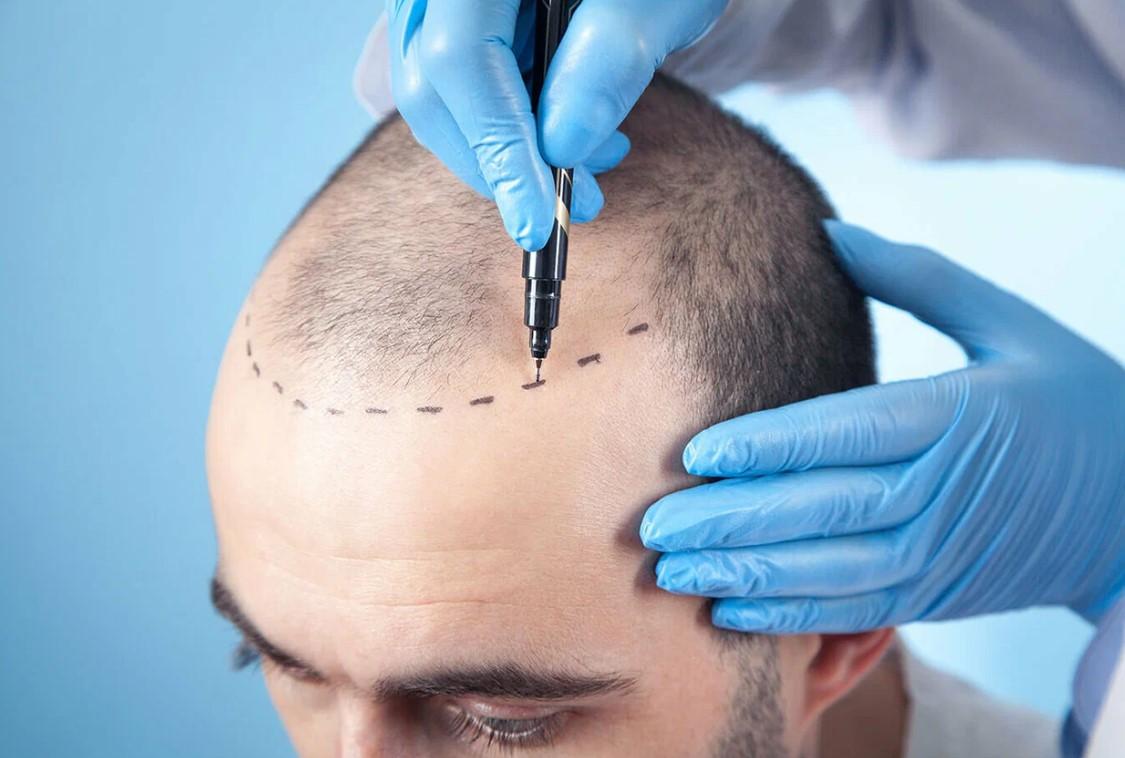
Risks of Poor-Quality Hair Transplant Results
A hair transplant can deliver very natural and long-lasting results when it is properly planned and performed, but poor-quality work can lead to disappointing or even difficult-to-correct outcomes. These risks are usually not related to the concept of hair transplantation itself, but rather to improper technique, poor planning, weak donor management, or inadequate post-operative care. Understanding these risks is important for setting realistic expectations and recognizing what can go wrong. Hair transplant in dammam is becoming an increasingly popular solution for people looking to restore natural hair growth and improve their appearance.
Unnatural Hairline Design
One of the most visible signs of a poor-quality hair transplant is an unnatural hairline. A well-designed hairline should follow a soft, slightly irregular pattern that matches natural hair growth. If the hairline is placed too low, too straight, or too dense in a uniform way, it can look artificial.
An unnatural hairline becomes more noticeable over time as surrounding hair continues to age and thin. Instead of blending with facial features, it may stand out and look out of place, which reduces the overall aesthetic benefit of the procedure.
Poor Graft Placement and Growth Direction
The angle and direction of implanted hair follicles play a major role in how natural the final result appears. In poor-quality procedures, grafts may be placed in the wrong direction or at incorrect angles.
This can cause hair to grow in unnatural patterns such as upward, sideways, or in uneven clumps. Even if the grafts survive and grow, incorrect orientation can make the result look messy or artificial, especially in the frontal hairline where precision is most important.
Low Graft Survival Rate
Not all transplanted follicles survive after implantation. In a well-executed procedure, most grafts successfully establish themselves in the new area. However, in poor-quality procedures, a significant number of grafts may fail to survive.
This can happen due to excessive handling of grafts, long time outside the body, poor storage conditions, or traumatic implantation techniques. A low survival rate results in patchy or thin coverage, making the final outcome look uneven and incomplete.
Overharvesting of Donor Area
The donor area, usually at the back and sides of the scalp, is a limited resource. If too many follicles are extracted from a small region without proper planning, it can lead to visible thinning in the donor site.
Overharvesting not only affects appearance but also reduces the availability of hair for future procedures. In some cases, it can cause permanent damage to the donor area, leaving it visibly patchy or depleted.
Visible Scarring and Poor Healing
Although modern techniques aim to minimize scarring, poor execution can lead to noticeable marks in both donor and recipient areas. Large punches, improper extraction, or rough handling of tissue can result in visible dot scars or linear scarring.
Poor healing can also occur if post-operative care is not followed correctly or if the scalp is subjected to infection or trauma. Visible scarring can make it difficult to wear short hairstyles and may affect overall confidence.
Uneven Density and Patchy Results
A natural-looking hair transplant requires even distribution of grafts across the treated area. In poor-quality procedures, grafts may be placed unevenly, resulting in areas of dense growth next to thin or empty patches.
This uneven density becomes more obvious as hair grows out. Instead of a smooth, uniform appearance, the scalp may show irregular coverage that does not blend well with existing hair.
Shock Loss and Excessive Temporary Hair Loss
Some degree of temporary shedding is normal after a hair transplant, but poor handling or excessive trauma can increase shock loss in both transplanted and existing hair.
If surrounding natural hair is damaged during the procedure, it may fall out and take longer to regrow. In some cases, this loss may be permanent if the follicles are severely affected.
Infection and Poor Hygiene Practices
Although rare, infection is a potential risk if proper hygiene standards are not maintained during or after the procedure. Poor sterilization, unclean tools, or improper post-operative care instructions can increase this risk.
Infection can damage grafts, slow healing, and in severe cases lead to scarring or graft failure. Proper medical care and clean surgical conditions are essential to avoid this outcome.
Unnatural Density Planning
Another common issue in low-quality results is improper density planning. Trying to place too many grafts in a small area can compromise blood supply and reduce graft survival.
On the other hand, placing too few grafts can result in a thin, see-through appearance. Achieving balanced density requires careful planning based on donor availability and scalp condition.
Long-Term Imbalance Due to Ongoing Hair Loss
If a transplant is done without considering future hair loss progression, the long-term result may become uneven. Transplanted hair remains stable, but surrounding natural hair may continue to thin over time.
This can create a situation where transplanted areas look dense while nearby regions become sparse, leading to an unnatural contrast and an unbalanced appearance.
Poor Patient Selection and Unrealistic Planning
One of the underlying causes of poor results is unsuitable candidacy or unrealistic expectations. If the procedure is performed without properly assessing donor supply, hair loss pattern, and long-term progression, the outcome may fall short of expectations.
Good planning ensures that grafts are distributed in a way that maintains balance over time, while poor planning can lead to disappointing results even if the procedure itself is technically performed.
Difficulty in Correcting Poor Results
Fixing a poorly done hair transplant can be challenging. In some cases, corrective procedures may be required to redistribute grafts, improve density, or adjust hairline design.
However, options for correction are often limited by the availability of donor hair and the condition of previously transplanted areas. This makes prevention and proper planning far more important than correction.
Conclusion
Poor-quality hair transplant results can lead to a range of issues including unnatural hairlines, uneven density, poor graft survival, and visible scarring. These problems are usually caused by improper technique, inadequate planning, or poor donor management rather than the concept of hair transplantation itself.
While modern methods can produce highly natural and permanent results, careful evaluation, precise execution, and realistic expectations are essential to avoid complications. A well-planned procedure focuses on balance, long-term stability, and natural appearance, ensuring that results remain satisfactory over time.
 English
 Arabic
 French
 Spanish
 Portuguese
 Deutsch
 Turkish
 Dutch
Dutch
 Italiano
 Russian
 Romaian
 Portuguese (Brazil)
 Greek
Greek
 Advertise With Us
 About Us
 Terms And Conditions
 Privacy Policy
Mostra tutti i risultati
Privacy Policy
Mostra tutti i risultati