English
 Arabic
 French
 Spanish
 Portuguese
 Deutsch
 Turkish
 Dutch
Dutch
 Italiano
 Russian
 Romaian
 Portuguese (Brazil)
 Greek
Greek
Why Are Menstrual Cups Becoming a Top Sustainable Hygiene Choice?
Networking |
2026-08-11 05:46:48
 Advertise With Us
 About Us
 Terms And Conditions
 سياسة الخصوصية
عرض كل النتائج
سياسة الخصوصية
عرض كل النتائج

ترقية الحساب
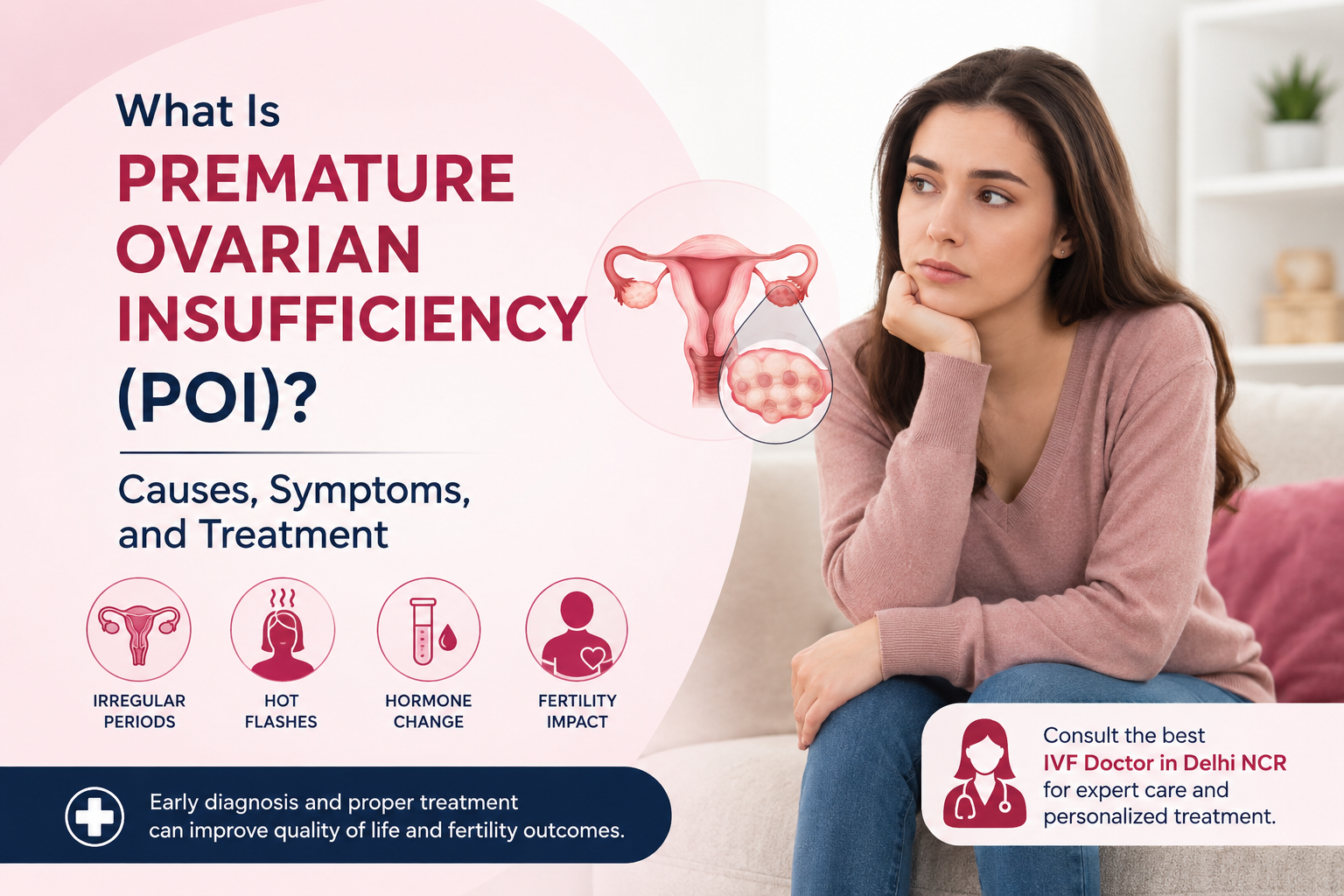
Have you ever wondered why some women experience menopause-like symptoms long before the age of 40? While many people assume menopause only happens later in life, some women develop a condition called Premature Ovarian Insufficiency (POI). This condition affects fertility, hormone production, and overall health, often creating emotional and physical challenges.
Think of your ovaries like a rechargeable battery. Normally, they gradually lose power over decades. In Premature Ovarian Insufficiency, however, the battery starts losing its charge much earlier than expected. Although the ovaries may still work occasionally, their function becomes unpredictable.
The good news? A diagnosis of POI does not mean the end of hope. Modern medicine offers effective treatments to manage symptoms, protect long-term health, and improve fertility options. Seeking guidance from the best IVF Doctor in Delhi NCR can help women understand their choices and create a personalized treatment plan.
1. What Is Premature Ovarian Insufficiency (POI)?
If a woman has POI, that means that her body is going through a form of early menopause before she's even 40 years old. While her body is going through this process, she can still experience periods and even ovulate from time to time. Because of POI, women have less estrogen in their bodies, and that can affect their periods and overall health and wellness.
Some of the things you may see with POI are:
Periods that are irregular or don’t happen at all
Lower levels of estrogen in the body
Less ability to get pregnant
Ovulation can happen from time to time
Unlike women who are fully in menopause, women with POI can still get pregnant, but it is more difficult.
2. How Common Is POI?
POI has been diagnosed in 1 out of every 100 women under the age of 40.
POI can happen:
Before the age of 20 (this is rare)
During a woman's 20s
Most commonly, during a woman's 30s
A lot of women find out that they have POI when they try to get pregnant and find that they can't, or they notice they have missed cycles.
3. How Do Healthy Ovaries Work?
Healthy ovaries do two important things.
Produce Eggs
Every month, a woman's body releases an egg during the process of ovulation.
Produce Hormones
The ovaries create important hormones:
Estrogen
Progesterone
These hormones also help during the process of:
Regulating the body’s cycles
Regulating and managing pregnancy
Maintaining bone and heart health
Regulating moods
Skin and sexual health
4. Causes of Premature Ovarian Insufficiency
The truth is that most women with POI are never really sure why it happened to their body, but there are a few things that are known to contribute to the condition.
Genetic Conditions
Ovarian development can also be affected by genetic conditions.
Some of these are:
Turner Syndrome
Fragile X Premutation
They can also affect how many healthy eggs women have in their bodies.
Autoimmune Diseases
With some of the diseases, the body’s immune system can also attack the ovaries.
Conditions Connected With Premature Ovarian Insufficiency (POI)
Autoimmune Diseases.
Cancer.
Addison’s Disease.
Thyroid Disorders.
Treatment.
Chemotherapy and radiotherapy damage ovarian tissue. The damage is the most when a patient is:
Younger.
Given a higher dosage of radiation.
Given harsher chemotherapy drugs.
Under treatment for a longer duration.
Given ovarian surgery.
Infections.
Though it is rare, infections like mumps can damage ovarian tissue.
Infections of unknown origin account for about 90% of premature ovarian insufficiency (POI) cases.
7. Risk Factors.
Autoimmune Diseases.
Family History of Premature Ovarian Insufficiency (POI).
Genetic disorders.
Ovarian surgery.
Cancer Treatment.
Smoking (proven to be a risk factor).
8. Symptoms of Premature Ovarian Insufficiency (POI).
Symptoms are very much like menopause.
Missed and Irregular Periods.
Lighter Periods.
Heavier Periods.
Periods that stop for months.
Difficulty in Conception.
Experienced by a lot of women when they first discover POI.
Hot Flashes.
Sudden warmth of the face, neck and chest.
Night Sweats.
Excessive sweating that disturbs sleep.
Vaginal Dryness.
Lower estrogen levels lead to:
Reduced vaginal lubrication.
Irritation and pain during sexual intercourse.
Mood Changes.
More depressed.
Anxious.
More Irritable.
More Emotional.
More Poorly Concentrated.
Brain Fog.
Reduced Sex Drive.
Blood Tests
Doctors usually measure:
Follicle-stimulating hormone (FSH)
Estrogen
Thyroid hormones
Prolactin
If there are high levels of FSH and low levels of Estrogen, it may be indicative of POI.
Ultrasound
A pelvic ultrasound would evaluate:
Ovarian size
Egg follicles
Uterus
Genetic Testing
Sometimes, it may be necessary to perform a genetic evaluation to identify inherited causes.
Treatment Options
Currently, there is no treatment to reverse POI, however, there are several treatment options available to improve the quality of life.
Hormone Replacement Therapy (HRT)
This treatment is the primary therapy to POI and provides many benefits, such as:
Reducing hot flashes
Promoting bone health
Supporting heart health
Improving vaginal health
Enhancing quality of life
Calcium and Vitamin D
These nutrients help prevent POI. Doctors usually recommend:
Calcium rich foods
Vitamin D supplementation
Weight bearing exercises
Healthy Lifestyle
Women should:
Exercise regularly
Avoid smoking
Limit alcohol consumption
Eat healthy
Maintain healthy body weight
Mental Health Support
Emotional stress can be treated with counseling and support groups.
Fertility and Pregnancy with POI
This is a condition many women believe makes them unable to conceive.
Natural Pregnancy
Occasional ovulation occurs in some women, and as a result, it has been recorded that 5-10% of women with POI have naturally conceived.
IVF Treatment
Natural conception is out of reach for many women, and can result in the recommendation of In Vitro Fertilization (IVF) to achieve pregnancy. Other treatment options include:
IVF with donor eggs
Fertility preservation (before cancer treatment)
Embryo freezing
Egg freezing (when possible)
The best IVF Doctor in Delhi NCR can help identify the best treatment approach to assist with the journey of parenthood.
Lifestyle Changes That Help
Developing healthy habits will further promote your POI life.
Balanced Diet
This means eating:
Fruits
Veggies
Whole grains
Lean proteins
Healthy fats
Plus, regular exercise like:
Walking
Yoga
Strength training
Swimming
And, managing your stress using techniques such as:
Meditation
Deep breathing
Journaling
Time spent in nature
And improving your sleep. Sleep helps, too!
11. Feelings That Come When Diagnosed with POI
Getting diagnosed with POI can feel like a whirlwind of emotions. Typical feelings POI patients experience include:
Mourning (loss)
Frustration
Worry
Tension (in relationships)
Talk to people as much as possible and keep in mind, you are not by yourself!
12. Long Term Health Risks
Not having POI treated can lead to health concerns like:
Weak and brittle bones
Heart problems (increased risk)
Increased risk of feeling sad or worried
Discomfort (for women) when being intimate
The risks of not having regular check ups with your doctor can lead to great health concerns.
13. When to Talk to Your Doctor
Go to the doctor when you have the following women health issues.
No menstrual cycle for more than 3 months
Early menopause (no menstrual cycles) before 40 years of age
Can't get pregnant
Frequent hot flashes
Family history of POI
Being diagnosed early helps women to manage their health better.
14. Prevention and the Future
Many health concerns that create POI are not avoidable. However, there are ways to help women stay healthy and prevent POI.
Don't smoke
Healthy women keep healthy autoimmune diseases (i.e. don't let them run wild)
Before cancer treatments have your eggs stored for later use (fertility preservation)
Over the years, get regular pelvic health examinations
Research and studies are looking to enhance women’s fertility and save women’s eggs in the future.
Conclusion
The process of modern diagnosis of Premature Ovarian Insufficiency (POI) may sometimes be frustrating for women affected by this condition. This is especially true when considering the implications of POI on future family plans and the emotional and physical health of women of fertile age. Despite the challenges of a diagnosis of POI, there is a broad spectrum of effective treatment options available like early detection and lifestyle modifications, hormone therapy, and modern fertility treatment that there is no reason to lose hope. If you find you are experiencing any early symptoms of POI, such as premature menopause or irregular periods prior to age 40, seek the advice of a qualified gynecologist or the leading IVF specialist in the Delhi NCR region for a diagnosis and treatment that is best for you.
Frequently Asked Questions (FAQs)
1. Can women with Premature Ovarian Insufficiency become pregnant?
Yes. Although reduced, fertility is possible in 5 to 10% of women with POI. The remaining women may require fertility treatments like IVF with donor eggs to achieve pregnancy.
2. Is Premature Ovarian Insufficiency the same as menopause?
No. Natural menopause is the end of the ovarian function and women with Premature Ovarian Insufficiency (POI) may still experience ovulation. In addition to this, women with POI are also able to achieve pregnancy.
3. What is the main symptom of Premature Ovarian Insufficiency?
The most common of the early symptoms of POI is irregular or absent menstruation prior to age 40. This is often accompanied by hot flashes, vaginal dryness and infertility.
4. Can Premature Ovarian Insufficiency be cured?
Currently, there is no permanent cure for POI. The symptoms of POI may be managed and quality of life improved with hormonal therapy, lifestyle modifications and fertility therapies.
5. When should I consult the best IVF Doctor in Delhi NCR?
If you are under the age of 40, experience irregular or absent menstrual cycles, have been trying to get pregnant without success, or have POI (Premature Ovarian Insufficiency) and wish to investigate possible alternatives to having children, you should see a fertility specialist.