English
 Arabic
 French
 Spanish
 Portuguese
 Deutsch
 Turkish
 Dutch
Dutch
 Italiano
 Russian
 Romaian
 Portuguese (Brazil)
 Greek
Greek
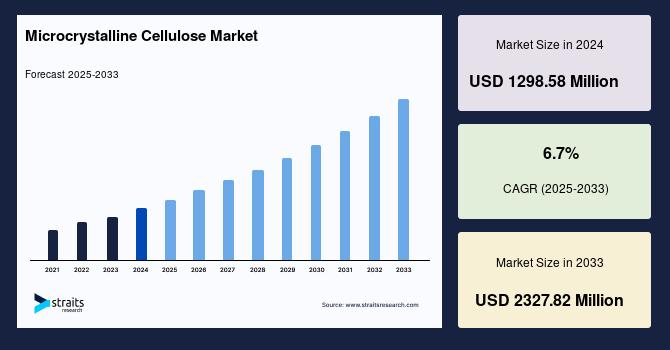
Microcrystalline Cellulose Market Size to Reach USD 2,327.82 Million by 2033, Driven by Rising Demand in Pharmaceuticals, Food, and Personal Care Industries
Insurance |
2026-04-22 07:26:55
 Advertise With Us
 About Us
 Terms And Conditions
 سياسة الخصوصية
عرض كل النتائج
سياسة الخصوصية
عرض كل النتائج

ترقية الحساب

The enterprise VSAT market can be fundamentally categorized by the type of network architecture employed, which dictates how data flows between sites. The most common type is the star topology, also known as hub-and-spoke. In this configuration, all remote VSAT terminals communicate exclusively with a large, centralized hub earth station. If one remote site needs to send data to another, the traffic must travel from the first site up to the satellite, down to the central hub, and then back up to the satellite and down to the second site. This "double-hop" adds latency but offers significant advantages in terms of cost and management. It allows for the use of smaller, less expensive remote terminals and centralizes all the network intelligence and complexity at the hub. A detailed look at the Enterprise VSAT Market Types shows this is the ideal model for the vast majority of enterprise applications, such as retail chains or banks, where many remote locations need to communicate with a central data center. The alternative is the mesh topology, where each remote VSAT terminal has the capability to communicate directly with any other terminal in the network in a single satellite hop. This requires more intelligent and expensive remote terminals but provides lower latency for site-to-site communication, making it suitable for specific applications like inter-branch VoIP or video conferencing.
The market is undergoing a significant transformation based on the type of satellite orbit used to deliver the service, each offering a distinct performance profile. The traditional and still largest market type is based on Geostationary Earth Orbit (GEO) satellites. These satellites orbit at an altitude of approximately 36,000 km and appear stationary from the ground, allowing for simple, fixed antennas. GEO VSAT offers reliable, wide-area coverage and is a mature, well-understood technology, making it the workhorse for most standard enterprise applications. A more niche but powerful market type uses Medium Earth Orbit (MEO) satellites, orbiting at around 8,000 km. MEO constellations like SES's O3b offer a compelling combination of high throughput and significantly lower latency (around 150ms) compared to GEO, making them ideal for performance-sensitive applications like cloud computing and cellular backhaul. The most disruptive and fastest-emerging market type is based on Low Earth Orbit (LEO) satellites. Constellations like Starlink and OneWeb operate at just a few hundred kilometers altitude, delivering a fiber-like low latency (under 100ms) and very high speeds. This LEO VSAT type is opening up satellite connectivity to a whole new range of real-time, interactive enterprise applications that were previously impossible over satellite.
The type of enterprise VSAT solution is also defined by the frequency band in which it operates, with each band offering a different trade-off between reliability, performance, and cost. C-band solutions represent a highly reliable market type, prized for their resilience to adverse weather conditions, particularly heavy rain. This makes C-band the go-to choice for mission-critical communications in tropical and equatorial regions for industries like oil and gas and maritime, where network uptime is non-negotiable. The trade-off is the need for larger antennas and the higher cost of equipment. Ku-band solutions are the most widely deployed enterprise VSAT type, offering a versatile and cost-effective balance. The technology is mature, the equipment is relatively small and affordable, and it provides a reliable service suitable for the vast majority of enterprise use cases, from retail transaction processing to corporate data networking. Ka-band solutions represent the high-performance market type. Leveraged by High-Throughput Satellites (HTS), Ka-band offers significantly more capacity and enables much higher download and upload speeds than Ku-band. This makes it the ideal type for delivering broadband-equivalent services, supporting bandwidth-intensive applications, and serving markets like consumer broadband and in-flight connectivity, though it requires mitigation techniques to deal with its higher susceptibility to rain fade.
Finally, the market can be classified by the type of service model offered to the enterprise customer. The dominant and fastest-growing type is the Managed Network Service. In this model, the service provider offers a complete, end-to-end, turnkey solution. This includes not only the satellite connectivity but also the provision and maintenance of the on-site VSAT equipment, 24/7 network monitoring from a network operations center (NOC), proactive troubleshooting, and a comprehensive Service Level Agreement (SLA) that guarantees a certain level of network availability and performance. This is the preferred model for the vast majority of enterprises, as it outsources the technical complexity of running a satellite network and provides a single point of contact for all service-related issues, with predictable monthly operational costs. The alternative is the Wholesale Bandwidth Leasing model. In this type of service, a large, technically sophisticated organization—such as a telecommunications company or a government agency—might lease raw satellite capacity (transponder space) from a satellite operator and then use its own hub and technical staff to build and manage its own private network. This model offers more control but requires significant upfront investment and in-house expertise.
Top Trending Reports: