English
 Arabic
 French
 Spanish
 Portuguese
 Deutsch
 Turkish
 Dutch
Dutch
 Italiano
 Russian
 Romaian
 Portuguese (Brazil)
 Greek
Greek
Endolift Treatment in Dubai | Advanced Laser Skin Tightening Solution
Health |
2026-07-27 08:46:04
 Advertise With Us
 About Us
 Terms And Conditions
 Политика конфиденциальности
Смотреть все
Политика конфиденциальности
Смотреть все

Обновить до Про

The historical and contemporary landscape of software development contains many fascinating niches, with the Screensaver industry serving as a perfect case study in technological evolution and market adaptation. Originally conceived as a purely utilitarian tool to prevent cathode ray tube (CRT) monitor burn-in, screensavers quickly morphed into a form of digital expression and entertainment. In the early days of personal computing, the phosphorous compounds on CRT screens would degrade if a static image was displayed for too long, leaving a permanent ghost image. Screensavers solved this by ensuring the pixels were in constant motion, displaying flying toasters, intricate 3D pipes, or starry fields. This functional necessity created an entire cottage industry for developers and software companies, who competed to create the most visually captivating or amusing diversions for idle computer screens. While the original problem of burn-in has been largely eliminated by modern LCD and OLED display technologies, the industry did not disappear. Instead, it has transformed, finding new relevance in corporate branding, information display, digital art, and security, proving its remarkable resilience and ability to adapt to changing technological paradigms and user needs across decades of computing history.
The late 1980s and 1990s represented the golden age of the screensaver, a period when it transitioned from a background utility to a prominent feature of desktop culture. Companies like Berkeley Systems, with its iconic "After Dark" software suite, became household names. The suite's flying toasters, aquariums, and mischievous cats were more than just functional; they were a form of digital personality, a way for users to customize and enliven their expensive new beige-box computers. This era saw a boom in third-party screensaver development, with countless shareware and commercial products flooding the market. Consumers were willing to pay for premium screensavers that offered higher-quality graphics, more complex animations, and greater customization options. The screensaver became a topic of conversation, a status symbol, and a form of entertainment in itself. This period firmly established the screensaver not just as a piece of software, but as a cultural artifact of the early digital age. It demonstrated a key market principle: users crave personalization, and even a functional tool can become a platform for creativity and self-expression, creating commercial opportunities far beyond its original technical mandate.
The widespread adoption of Liquid Crystal Display (LCD) technology in the early 2000s marked a significant turning point and an existential threat to the traditional screensaver market. LCD monitors are not susceptible to burn-in in the same way as CRTs, effectively removing the original raison d'être for screensavers. Furthermore, modern operating systems began to incorporate more advanced power-saving features, allowing the screen to simply turn off after a period of inactivity, which was a more energy-efficient solution. This combination of factors led to a sharp decline in the consumer market for paid, third-party screensaver software. What was once a vibrant and lucrative sector saw its core purpose become obsolete. The novelty had also worn off, and the bundled, free screensavers included with Windows and macOS were deemed "good enough" for most users. Many of the pioneering companies in the space either pivoted to other software categories or faded into obscurity. This phase of the industry's lifecycle highlights the disruptive power of hardware innovation on software markets and the necessity for software products to find new value propositions when their original purpose is nullified.
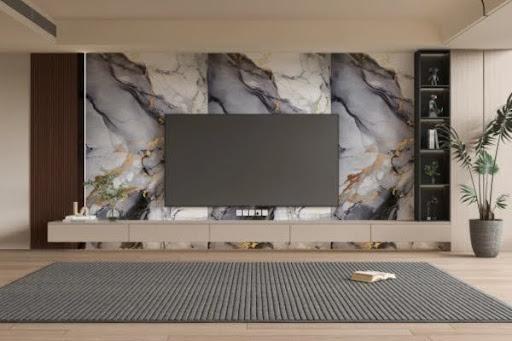
Despite the obsolescence of its original function, the screensaver industry has undergone a remarkable renaissance by finding new, valuable applications in modern computing environments. In the corporate world, the screensaver has been repurposed as a powerful tool for internal communications and branding. Companies now deploy centrally managed screensavers to display important announcements, reinforce company values, or simply showcase the corporate logo on thousands of idle workstations, ensuring a consistent brand image. Another significant area of rebirth is in the realm of digital art and ambient computing. Smart TVs, streaming devices like Apple TV, and even smart displays now use high-definition, visually stunning video screensavers to turn a blank black screen into a dynamic piece of art, showcasing breathtaking landscapes, cityscapes, or abstract animations. This transforms the television from a single-purpose device into an ambient part of a room's decor. Furthermore, the screensaver continues to serve a vital security function, working in tandem with the operating system to automatically lock a computer after a period of inactivity, requiring a password to re-engage and protecting sensitive information in office environments. This successful pivot demonstrates the industry's ability to evolve from a consumer novelty to a strategic enterprise and design tool.
Top Trending Reports:
Domain Name System Firewall Market
Yield Monitoring Device Market