How Dermatologists Evaluate Moles Before Removal
Introduction
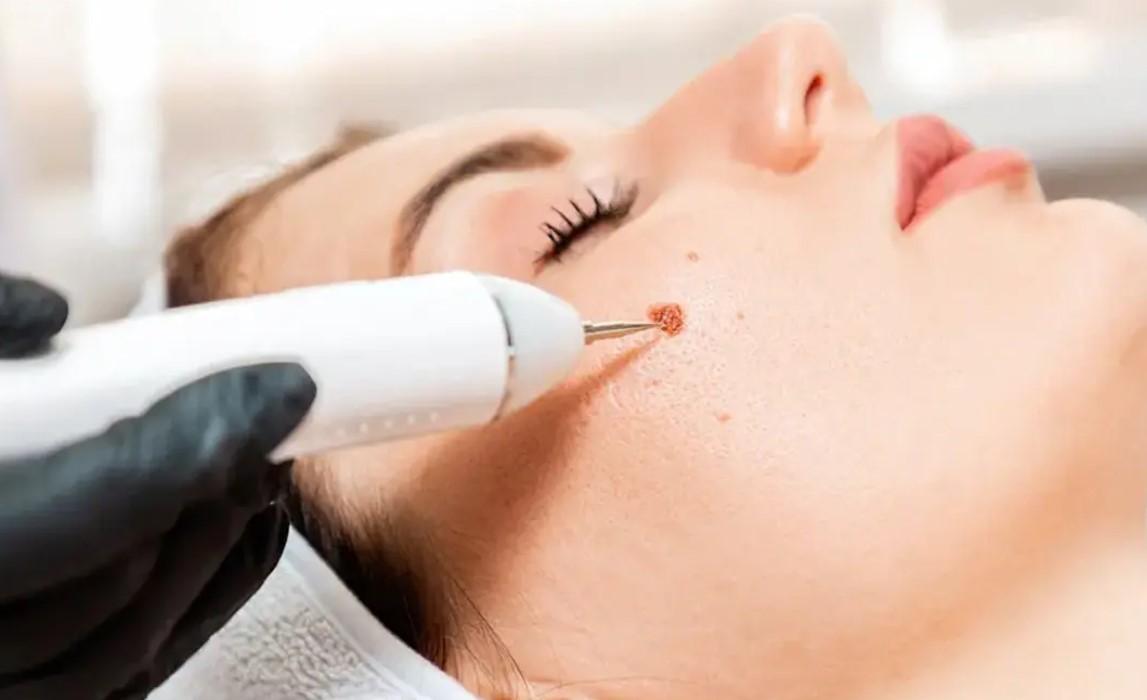
Before removing a mole, dermatologists always perform a careful evaluation to determine whether it is safe, necessary, and what removal method is most appropriate. This step is essential because not all moles are treated the same way—some are removed for cosmetic reasons, while others require removal for medical safety. Mole Removal in Riyadh is a common cosmetic and medical procedure used to safely remove unwanted or suspicious moles from the skin.
A proper evaluation helps distinguish harmless moles from those that may indicate skin cancer or other skin conditions. It also ensures that the chosen procedure minimizes scarring and achieves the best possible outcome.
This article explains how dermatologists evaluate moles before removal, what tools they use, and what factors influence their final decision.
Why Mole Evaluation Is Important
Mole evaluation is a critical step because:
- Some moles may look harmless but be medically risky
- Others may appear unusual but are completely benign
- The wrong removal method can affect diagnosis accuracy
- Early detection of skin cancer can save lives
- Cosmetic results depend on proper assessment
Because of these factors, dermatologists never rely on appearance alone when deciding on removal.
Step 1: Medical History Assessment
The evaluation usually begins with a detailed discussion.
What the dermatologist asks:
- When the mole first appeared
- Whether it has changed over time
- Any symptoms like itching, bleeding, or pain
- History of sun exposure
- Family history of skin cancer
- Previous mole removals or skin conditions
Why it matters:
Medical history helps identify risk factors that may not be visible on the skin.
Step 2: Visual Examination of the Mole
The next step is a close physical inspection.
Dermatologists assess:
- Size
- Shape
- Color
- Border definition
- Surface texture
- Symmetry
They also check surrounding skin for other similar lesions.
What they look for:
- Uniform, smooth moles are usually benign
- Irregular or changing moles may require further testing
Step 3: The ABCDE Rule
Dermatologists commonly use the “ABCDE rule” to evaluate suspicious moles:
A – Asymmetry
One half of the mole does not match the other.
B – Border
Edges are irregular, blurred, or jagged.
C – Color
Multiple colors or uneven pigmentation within the mole.
D – Diameter
Moles larger than about 6mm or showing growth.
E – Evolving
Any changes in size, shape, color, or symptoms over time.
If a mole meets one or more of these criteria, further investigation is usually required.
Step 4: Dermatoscopic Examination
A key tool used in modern dermatology is the dermatoscope.
What is a dermatoscope?
A dermatoscope is a handheld device that magnifies the skin and uses polarized light to reveal deeper structures of a mole that are not visible to the naked eye.
What dermatologists analyze:
- Pigment patterns
- Blood vessel structures
- Internal symmetry
- Color distribution
Why it is important:
Dermatoscopy improves diagnostic accuracy and helps distinguish between benign moles and suspicious lesions.
Step 5: Digital Imaging and Mole Mapping
In some cases, dermatologists use advanced imaging systems.
What it involves:
- Taking high-resolution images of moles
- Storing them for future comparison
- Tracking changes over time
Benefits:
- Helps monitor slow-growing moles
- Useful for patients with many moles
- Improves early detection of changes
Step 6: Risk Classification
After examination, dermatologists classify the mole into one of three categories:
1. Benign (Harmless Mole)
- No signs of cancer
- No immediate medical concern
- Can be removed for cosmetic reasons if desired
2. Atypical (Suspicious Mole)
- Some irregular features
- Needs monitoring or biopsy
- Removal may be recommended
3. High-Risk Mole
- Strong signs of abnormal growth
- Immediate removal required
- Usually followed by laboratory testing
Step 7: Decision on Removal Method
Once evaluation is complete, the dermatologist chooses the safest removal method based on:
Mole characteristics:
- Depth
- Size
- Location
- Suspicion level
Common methods include:
Laser Removal
- Used for small, benign moles
- Best for cosmetic purposes
Shave Excision
- Suitable for raised, non-deep moles
- Minimal scarring
Surgical Excision
- Required for suspicious or deep moles
- Allows full removal and biopsy
Step 8: Biopsy Recommendation (If Needed)
If the mole appears suspicious, a biopsy is performed.
What happens:
- Entire mole or part of it is removed
- Tissue is sent to a laboratory
- Microscopic examination is done
Purpose:
- Confirm whether cells are normal or abnormal
- Detect early signs of skin cancer
This is a critical step in medical mole evaluation.
Step 9: Patient Discussion and Consent
Before any procedure, the dermatologist explains:
- Findings from the evaluation
- Recommended removal method
- Possible risks and benefits
- Expected healing and scarring
- Cost and follow-up requirements
Patient consent is obtained before proceeding.
Factors That Influence Dermatologist Decisions
Several factors affect how a mole is evaluated and treated:
- Patient age
- Skin type and sensitivity
- Location of the mole
- Cosmetic concerns
- Medical history
- Family history of skin cancer
- Number of moles present
Each case is treated individually.
Why Self-Evaluation Is Not Enough
While patients can observe changes, self-diagnosis is not reliable because:
- Many dangerous moles look harmless
- Some benign moles appear irregular
- Internal structures cannot be seen without tools
- Only biopsy can confirm diagnosis
Professional evaluation ensures accuracy and safety.
When to Seek Immediate Evaluation
You should see a dermatologist if a mole:
- Changes rapidly in size or shape
- Bleeds or becomes painful
- Has multiple colors
- Appears suddenly in adulthood
- Looks very different from other moles
Early evaluation can prevent complications.
Conclusion
Dermatologists follow a structured and detailed process to evaluate moles before removal. From medical history and visual inspection to dermatoscopy and risk classification, every step is designed to ensure safety and accuracy.
This careful evaluation helps determine whether a mole is harmless, suspicious, or requires immediate removal and testing. By using advanced tools and clinical expertise, dermatologists ensure that each mole is treated in the safest and most effective way possible, while also achieving the best cosmetic outcome when removal is performed.
 English
 Arabic
 French
 Spanish
 Portuguese
 Deutsch
 Turkish
 Dutch
Dutch
 Italiano
 Russian
 Romaian
 Portuguese (Brazil)
 Greek
Greek
 Advertise With Us
 About Us
 Terms And Conditions
 Privacy Policy
Mostra tutti i risultati
Privacy Policy
Mostra tutti i risultati