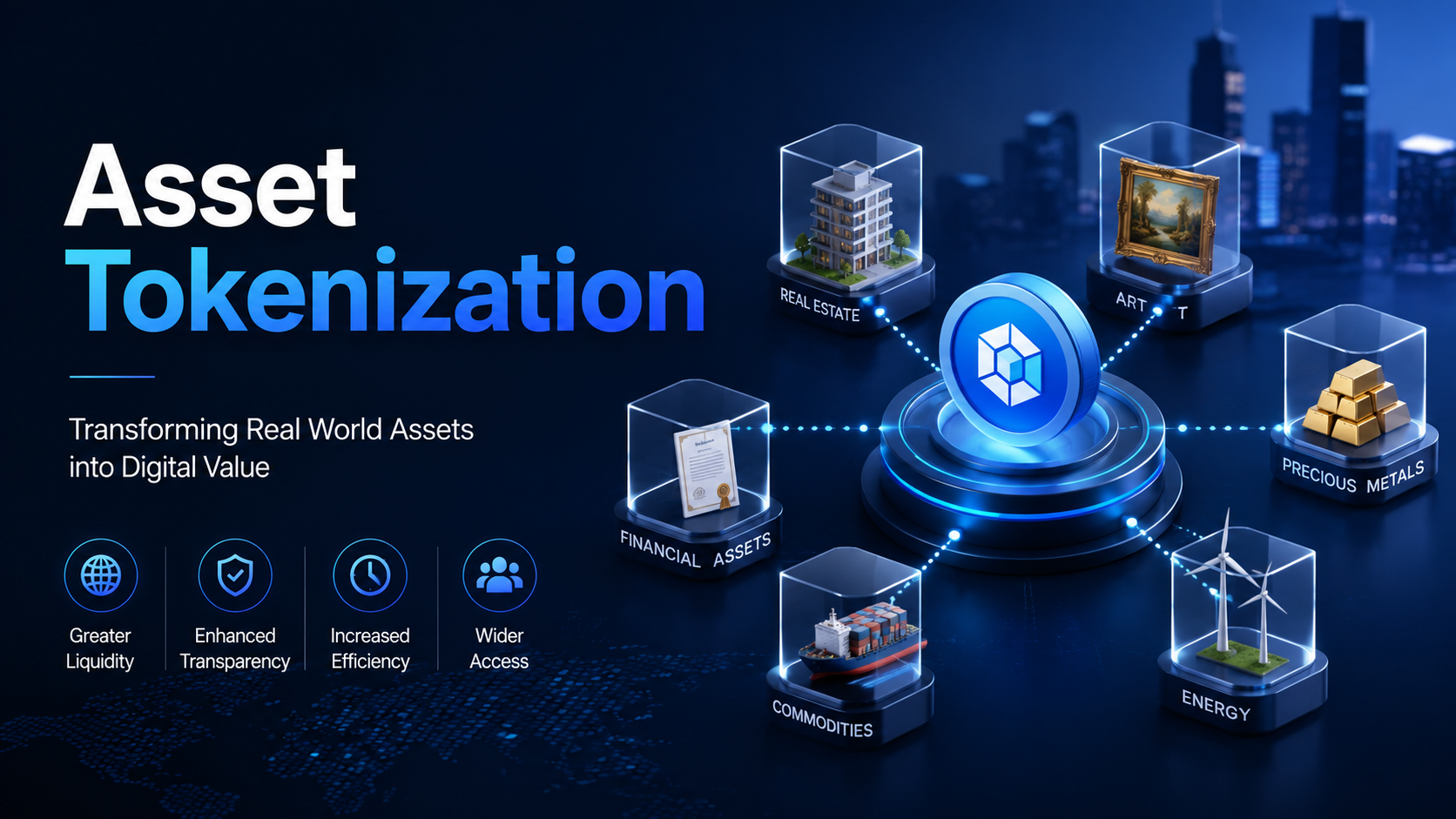
Asset tokenization has evolved from an emerging blockchain concept into a strategic infrastructure layer for institutional capital markets. In 2026, institutional investors are no longer viewing tokenization as a niche experiment. Instead, they are using it to improve liquidity, optimize portfolio construction, expand market access, and modernize asset administration.
By converting ownership rights of real-world and financial assets into blockchain-based digital tokens, institutions are creating more flexible and efficient investment ecosystems. Tokenization enables faster settlement, programmable ownership structures, enhanced transparency, and improved capital efficiency. As adoption accelerates, institutions are applying increasingly sophisticated strategies to capture value across multiple asset classes.
1. Building Diversified Multi-Asset Tokenized Portfolios
One of the leading strategies in 2026 is constructing diversified portfolios using multiple categories of tokenized assets.
Institutional investors are allocating capital across:
- Tokenized real estate
- Private credit assets
- Infrastructure investments
- Government and corporate debt
- Money market instruments
- Commodity-backed assets
- Alternative investment products
Asset Tokenization enables institutions to manage these exposures within a unified digital framework while improving portfolio visibility and operational efficiency. This diversification reduces concentration risk and creates more balanced investment structures.
2. Using Fractional Ownership to Access Premium Assets
Fractionalization has become one of the most widely adopted institutional strategies. Traditionally, access to premium assets required substantial capital commitments. Through tokenization, institutions can divide ownership into smaller digital units and gain exposure to multiple high-value opportunities simultaneously.
This strategy improves:
- Capital deployment flexibility
- Portfolio diversification
- Exposure management
- Investment scalability
Fractional structures are increasingly being used for large commercial properties, infrastructure projects, and private market investments.
3. Improving Liquidity Through Secondary Token Markets
Liquidity optimization remains a major institutional priority. Many traditionally illiquid assets particularly private equity, infrastructure, and real estate are being tokenized and connected to secondary trading environments.
Institutions are using tokenized secondary markets to:
- Reduce lock-up periods
- Improve exit flexibility
- Enable dynamic portfolio rebalancing
- Increase asset turnover efficiency
Rather than waiting years for asset realization events, institutions can create more responsive investment models.
4. Tokenizing Private Market Investments
Private markets continue to attract institutional capital, but operational inefficiencies have historically limited participation. Tokenization strategies are helping institutions modernize:
- Private equity structures
- Venture investment vehicles
- Private debt portfolios
- Alternative financing arrangements
Digital ownership structures simplify administration and improve investor accessibility while maintaining institutional governance standards.
5. Deploying Programmable Yield Distribution Models
Institutions are increasingly adopting programmable financial structures through smart contracts.
Tokenized assets now support automated:
- Dividend payments
- Interest distributions
- Revenue sharing
- Portfolio reallocation mechanisms
This automation reduces administrative overhead and improves cash flow predictability.
Programmable distribution models are becoming particularly important in income-generating asset classes.
6. Expanding Global Investment Access Through Cross-Border Tokenization
Cross-border investment remains a major institutional growth objective in 2026. Tokenization enables institutions to participate in international opportunities through standardized digital ownership structures.
Key benefits include:
- Reduced settlement friction
- Improved capital mobility
- Faster onboarding processes
- Greater jurisdictional flexibility
This strategy allows institutions to diversify internationally without significantly increasing operational complexity.
7. Integrating Tokenized Assets Into Treasury Management
Institutional treasury teams are increasingly allocating portions of idle capital into tokenized assets.
This strategy focuses on:
- Liquidity preservation
- Yield enhancement
- Diversification of reserve assets
- Faster capital deployment
Tokenized treasury frameworks support real-time reporting and improved cash management practices.
8. Leveraging Data-Driven Asset Monitoring
Institutions are using tokenization infrastructure to gain continuous insight into portfolio performance.
Integrated data systems provide:
- Real-time valuation visibility
- Automated reporting
- Risk analytics
- Continuous compliance monitoring
This enables faster decision-making compared to traditional periodic reporting systems. Data-driven asset intelligence is becoming a core institutional advantage.
9. Using Tokenization for Risk Segmentation
Institutions increasingly structure tokenized assets into customized exposure layers.
This allows capital to be segmented based on:
- Risk tolerance
- Return targets
- Investment duration
- Asset priorities
Through digital structuring, institutions create more precise investment products tailored to different portfolio objectives.
10. Adopting Compliance-Embedded Investment Frameworks
Regulatory readiness has become a major tokenization strategy in 2026.
Institutional platforms increasingly integrate:
- Automated investor verification
- Digital compliance workflows
- Continuous audit trails
- Permissioned access controls
Embedding compliance directly into tokenized assets reduces operational burden and improves governance standards.
How Institutional Asset Management Is Changing
The institutional investment model is evolving from periodic portfolio management to continuous portfolio orchestration. Instead of managing isolated investment vehicles, institutions increasingly operate through connected digital infrastructures where assets, ownership, reporting, and liquidity function as integrated components.
Tokenization is enabling:
- Faster capital cycles
- Greater investment flexibility
- Improved transparency
- More efficient portfolio operations
This changes not only how institutions invest but also how they manage and scale investment ecosystems.
Challenges Institutions Continue to Navigate
Despite strong adoption momentum, institutional tokenization still faces several challenges:
- Regulatory variation across markets
- Limited interoperability between blockchain ecosystems
- Integration complexity with traditional systems
- Governance and custody requirements
- Secondary market maturity constraints
Successful institutions are approaching tokenization through phased implementation rather than complete infrastructure replacement.
Future Outlook: Institutional Portfolios Become Digitally Native
Looking ahead, tokenization is expected to become a standard layer across institutional investment operations.
Future developments are likely to include:
- AI-assisted portfolio optimization
- Interoperable tokenized markets
- Automated asset servicing
- Unified digital investment platforms
- Expanded real-world asset participation
Institutional investors are increasingly moving toward portfolios designed to operate digitally from issuance through exit.
Conclusion
In 2026, institutional investors are using asset tokenization as more than a technology initiative they are using it as a capital strategy. From fractional ownership and secondary liquidity to programmable yield structures and cross-border access, tokenization is helping institutions modernize investment operations while improving efficiency and flexibility. As digital asset infrastructure matures, these strategies are expected to define the next phase of institutional portfolio management and reshape how capital moves across global markets.
 English
 Arabic
 French
 Spanish
 Portuguese
 Deutsch
 Turkish
 Dutch
Dutch
 Italiano
 Russian
 Romaian
 Portuguese (Brazil)
 Greek
Greek
 Advertise With Us
 About Us
 Terms And Conditions
 Política de Privacidade
Ver Todos
Política de Privacidade
Ver Todos