English
 Arabic
 French
 Spanish
 Portuguese
 Deutsch
 Turkish
 Dutch
Dutch
 Italiano
 Russian
 Romaian
 Portuguese (Brazil)
 Greek
Greek
Why Is the Point-of-Use Water Cooler Market Growing in Homes and Offices?
Networking |
2026-08-03 08:51:01
 Advertise With Us
 About Us
 Terms And Conditions
 Datenschutzbestimmungen
Alle anzeigen
Datenschutzbestimmungen
Alle anzeigen

Upgrade auf Pro
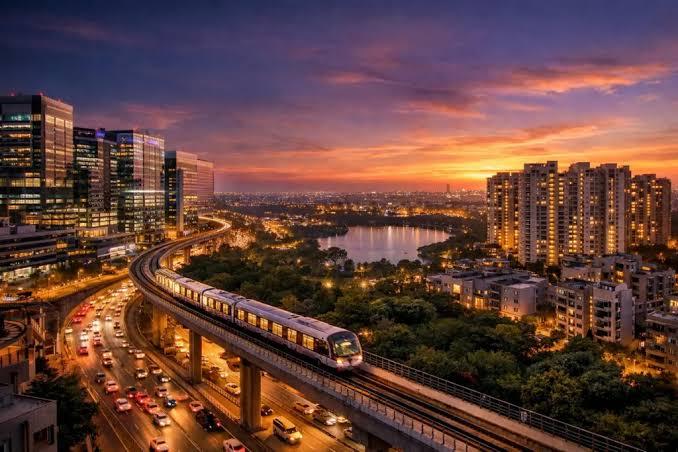
The Bengaluru residential market has undergone a structural reset in 2026. With the Outer Ring Road corridor facing saturation, affordability pressure, and declining liveability, buyers and investors are increasingly looking toward two distinct growth corridors: East Bengaluru and North Bengaluru. Both offer compelling opportunities, but they cater to different investment strategies, risk appetites, and timelines. Understanding the distinctions between these two corridors is essential for anyone exploring residential properties in Bengaluru.
The broader Bengaluru residential market emerged as the strongest-performing among India's top-eight cities in the first quarter of 2026. The city recorded residential sales of 15,603 units, reflecting a remarkable 33% year-on-year growth—the highest among major Indian cities. Average housing prices in Bengaluru increased 24% year-on-year to ₹9,785 per square foot, making it the second most expensive market after Mumbai.
For those seeking Residential Properties, these figures highlight a market that is not only growing but doing so on a foundation of strong demand fundamentals rather than speculative activity.
East Bengaluru, encompassing established zones such as Whitefield, Sarjapur Road, and Marathahalli, continues to be the city's rental-led market. Whitefield alone houses dozens of multinational offices, keeping rental and resale demand consistently high. The area benefits from decades of IT park presence and an operational metro line, making it a low-risk, high-demand investment zone with a proven track record.
For investors seeking stable rental yields—typically ranging between 3–5%—Whitefield remains a preferred destination. Sarjapur Road, meanwhile, is emerging as a strategic east-south residential connector, with proximity to IT parks, educational institutions, and forthcoming metro lines supporting sustained demand.
Residential prices in selected Sarjapur pockets have appreciated sharply in recent years, reflecting strong investor interest and growing end-user adoption. The area has transformed from a peripheral location into a vibrant residential corridor, attracting a mix of young professionals and families.
North Bengaluru has emerged as the city's fastest-growing realty corridor, driven by infrastructure, robust commercial demand, and shifting residential patterns. Areas such as Hebbal, Thanisandra, Jakkur, Hennur, Yelahanka, and Airport Road have emerged as future growth destinations as they have developed their residential market.
The northern corridor is benefiting from large-scale infrastructure projects, including the Kempegowda International Airport expansion, the upcoming Satellite Town Ring Road, and the Peripheral Ring Road. These projects are set to improve access to the northern corridor and influence how homebuyers and investors assess distance and connectivity.
High-end capital values in the North submarket grew 7% year-on-year in the first quarter of 2026, with the mid-segment recording 6% annual growth, both carrying a positive short-term outlook. For investors looking at the Best Properties in Bangalore, North Bengaluru offers the potential for long-term capital appreciation rather than immediate rental yields.
Investment Strategy: East Bengaluru is a rental-led market offering stable yields and proven demand. North Bengaluru is a capital appreciation play, driven by infrastructure-led growth and future employment hubs.
Price Maturity: East Bengaluru is showing signs of price maturity, with appreciation rates moderating in some pockets. North Bengaluru is still in a growth phase, with select micro-markets reporting double-digit price growth.
Buyer Profile: East Bengaluru attracts IT professionals seeking convenience and rental income. North Bengaluru attracts end-users and investors looking for larger homes, integrated townships, and long-term value.
Infrastructure Pipeline: East Bengaluru benefits from existing metro connectivity and established IT parks. North Bengaluru benefits from a pipeline of future infrastructure projects, including new metro lines, ring roads, and airport expansion.
If your priority is steady rental income and proven demand, East Bengaluru—particularly Whitefield and Sarjapur Road—remains a sound choice. If your priority is long-term capital appreciation and you are willing to wait for infrastructure to mature, North Bengaluru offers compelling opportunities.
Industry projections point to 10–12% price growth through 2026, supported by strong fundamentals: a strong job market, expanding infrastructure, tight prime supply, and multi-segment buyer demand. Both East and North Bengaluru are well-positioned to benefit from this upward trend.
The Bangalore Real Estate market is no longer defined by a single corridor. It is being reshaped by connectivity, liveability, and the ability of micro-markets to support inclusive and resilient urban living. Whether you choose East or North, understanding these dynamics will help you make a smarter investment decision.