English
 Arabic
 French
 Spanish
 Portuguese
 Deutsch
 Turkish
 Dutch
Dutch
 Italiano
 Russian
 Romaian
 Portuguese (Brazil)
 Greek
Greek
Social Media Marketing Service Providers: How They Build and Engage Communities
Other |
2026-07-31 12:30:36
 Advertise With Us
 About Us
 Terms And Conditions
 Политика конфиденциальности
Смотреть все
Политика конфиденциальности
Смотреть все

Обновить до Про
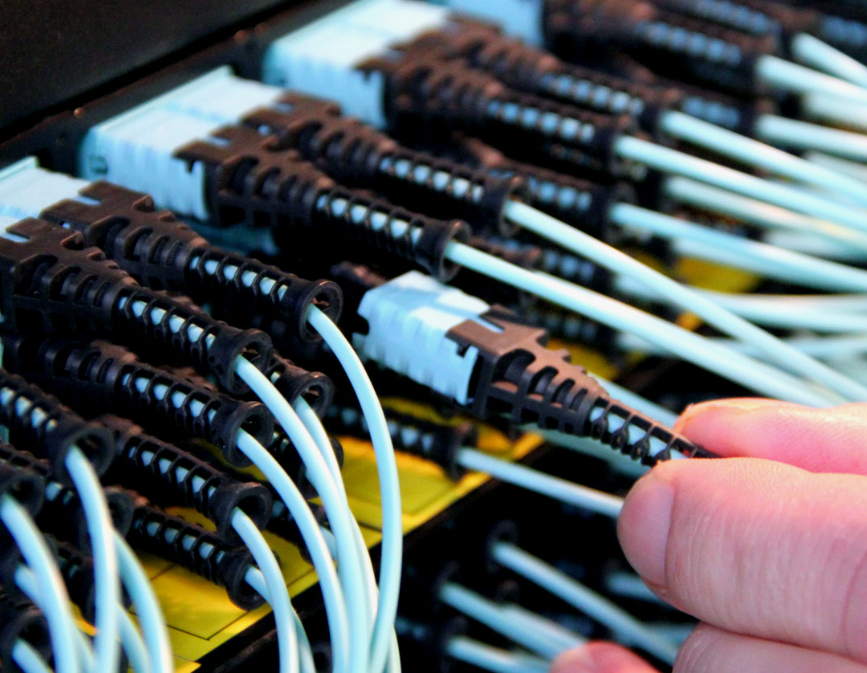
As businesses continue to generate and process massive amounts of data, the demand for efficient network infrastructure is greater than ever. Data centers, telecommunications providers, and enterprise networks require advanced cabling systems that can support high-speed connectivity while maximizing available space. This is where high density cable solutions play a critical role in modern networking environments.
The growing adoption of high density cable systems is driven by the need for increased bandwidth, improved cable management, and scalable network architecture. By enabling a larger number of connections within a compact footprint, high-density cabling helps organizations optimize performance while preparing for future technological advancements.
High-density cable refers to a cabling solution designed to accommodate multiple connections in a limited physical space. These cables are commonly used in environments where maximizing connectivity while minimizing cable congestion is essential.
Unlike traditional cabling systems, high-density cables provide greater port density and support higher data transmission requirements. They are frequently utilized in fiber optic networks, data centers, telecommunications systems, and large-scale enterprise infrastructures.
Modern organizations depend on fast and reliable communication networks to support daily operations. As network traffic increases, traditional cabling systems can become difficult to manage and may limit scalability.
High-density cable solutions address these challenges by providing efficient cable routing, reduced space requirements, and improved overall network organization. This makes them an ideal choice for environments where performance and flexibility are priorities.
One of the most significant advantages of high-density cabling is its ability to maximize available space. Data centers and server rooms often have limited rack capacity, making efficient cable management essential.
High-density cable systems allow organizations to accommodate more connections within smaller areas, helping optimize infrastructure layouts.
Cable congestion can create operational challenges and complicate maintenance activities. High-density solutions reduce clutter by organizing multiple connections within a streamlined cabling structure.
Better cable management improves accessibility, simplifies troubleshooting, and enhances overall network efficiency.
High-density cables are designed to support high-bandwidth applications and rapid data transmission. They help ensure reliable connectivity while minimizing signal loss and performance bottlenecks.
This capability is especially important for organizations that rely on cloud services, video conferencing, and data-intensive applications.
Business requirements continue to evolve, and network infrastructure must be able to adapt accordingly. High-density cabling provides the flexibility needed to support future expansion without requiring major redesigns.
Organizations can add new devices, servers, and network equipment while maintaining efficient cable management practices.
By consolidating multiple connections into a compact design, high-density cable solutions can reduce installation time and labor costs. Technicians can deploy and manage networks more efficiently, leading to faster project completion.
Data centers are among the largest users of high-density cabling systems. These facilities require thousands of connections to support servers, storage systems, and networking equipment.
High-density cable solutions help maximize rack space while ensuring reliable performance and easy maintenance.
Telecommunications providers rely on high-density cabling to support growing customer demand for internet, voice, and data services. Efficient cable management enables service providers to expand network capacity while maintaining operational efficiency.
Businesses use high-density cable systems to connect computers, servers, switches, and communication platforms. These solutions support high-speed connectivity while reducing infrastructure complexity.
Cloud service providers require scalable network infrastructure capable of handling large volumes of data traffic. High-density cabling supports the connectivity needs of modern cloud platforms and distributed computing environments.
High-density cables are engineered to deliver maximum connectivity within minimal physical space. This compact design makes them ideal for crowded network environments.
Modern high-density cable systems are designed to handle high-speed data transmission standards, ensuring compatibility with current and future networking technologies.
These cable solutions can be integrated into a variety of network architectures, including data centers, enterprise environments, and telecommunications systems.
High-density cables are built to withstand demanding operational conditions while maintaining consistent performance and reliability.
A well-designed cabling strategy helps maximize efficiency and supports future expansion needs.
Clear cable identification simplifies maintenance and troubleshooting while reducing downtime.
Using cable management accessories such as trays, panels, and organizers helps preserve network performance and accessibility.
Routine inspections can identify potential issues before they impact network operations, helping maintain optimal system performance.
The increasing adoption of technologies such as artificial intelligence, 5G, edge computing, and the Internet of Things is driving demand for higher-capacity network infrastructure. As data volumes continue to grow, organizations will require more efficient cabling solutions to support these advancements.
High-density cable technology is expected to evolve with improved designs, greater connectivity capacity, and enhanced performance capabilities. These innovations will help businesses meet future networking demands while maintaining operational efficiency.
High density cable solutions have become an essential component of modern network infrastructure. Their ability to maximize space, improve cable management, support high-speed connectivity, and enable future scalability makes them invaluable for data centers, telecommunications providers, and enterprise networks.
As digital transformation accelerates across industries, investing in high density cable systems can help organizations build reliable, efficient, and future-ready communication networks capable of supporting long-term growth and technological innovation.