English
 Arabic
 French
 Spanish
 Portuguese
 Deutsch
 Turkish
 Dutch
Dutch
 Italiano
 Russian
 Romaian
 Portuguese (Brazil)
 Greek
Greek
Reverse Osmosis Membrane Market Analysis: Growth, Segmentation and Competitive Landscape
Other |
2026-08-24 08:48:06
 Advertise With Us
 About Us
 Terms And Conditions
 Datenschutzbestimmungen
Alle anzeigen
Datenschutzbestimmungen
Alle anzeigen

Upgrade auf Pro
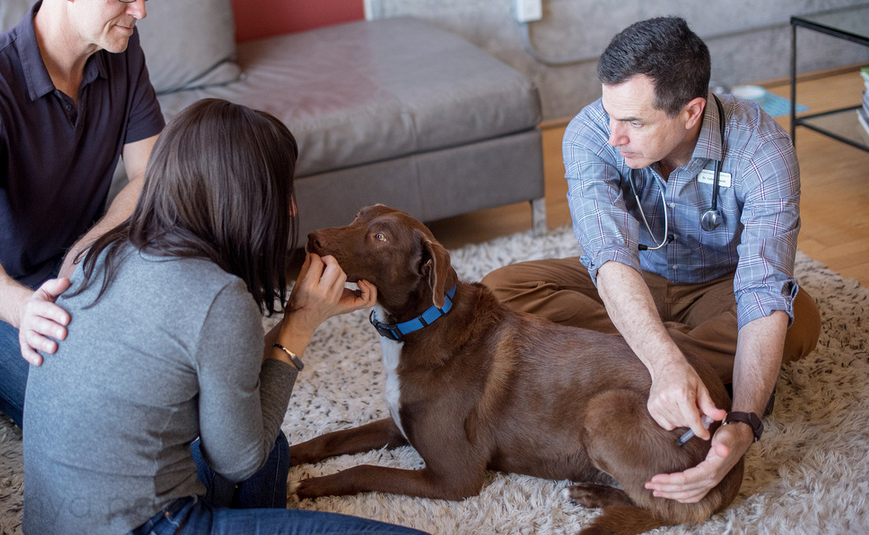
There comes a point in many pet owners' lives when they find themselves searching for information about what dog euthanasia actually involves, not because the decision has been made, but because they want to understand what they might be facing before the weight of the moment is fully upon them. That impulse is one of the most thoughtful things a pet owner can do. Knowing what to expect transforms fear of the unknown into a kind of quiet readiness, and that readiness allows you to be fully present for your dog when they need you most. Whether you are considering dog euthanasia at a clinic or exploring at home options, this guide walks you through every stage of the process honestly and compassionately, from the conversation that precedes the decision all the way through to the grief that follows it.
Fear of the process is one of the most common reasons families delay making an end-of-life decision for their dog even when they sense, on some level, that the time has come. The imagination tends to fill the space where information is absent with worst-case scenarios that are almost entirely disconnected from what a well-conducted, compassionate euthanasia appointment actually looks like in practice.
Veterinarians who specialize in end-of-life care consistently observe that families who have done some research before the appointment arrive in a fundamentally different emotional state. They are calmer. They are more grounded. They are able to focus on being with their dog rather than managing their own anxiety about what is unfolding around them. That presence is one of the most meaningful gifts you can offer your dog in their final moments, and it becomes much more accessible when the unknown has been replaced with honest, clear information.
Animal euthanasia, when performed by a compassionate and skilled veterinarian, is not a frightening event. It is a quiet and deliberate act of mercy, and understanding it as such is the foundation of approaching it with the peace it deserves.
The process of dog euthanasia begins well before the veterinarian arrives or before you drive to a clinic. It begins with a decision, and that decision is almost always the hardest part of the entire journey. Most families describe it as arriving not as a single clear moment of certainty but as a gradual accumulation of evidence, a growing recognition that their dog's bad days have begun to outnumber their good ones and that available interventions can no longer meaningfully restore comfort or joy.
One of the most practical tools for navigating this stage is a simple daily quality of life diary. Each day, give your dog a smiley face for a good day and a frown for a bad day. A good day is one where your dog is comfortable, interested in their environment, willing to eat, and able to connect with you in ways that feel like them. A bad day is one where pain, nausea, confusion, or withdrawal is the dominant experience. Over several weeks, the pattern that emerges from this diary is more honest and more informative than any single observation made in a moment of hope or grief.
The quality of life scale available through Paws at Peace provides a structured framework for assessing your dog across key dimensions including pain, appetite, hydration, hygiene, happiness, and mobility. For families who want more personalized guidance, Paws at Peace offers quality of life teleconsults with veterinarians who specialize in hospice and end-of-life care. These 50-minute consultations include a thorough review of your dog's medical history and a compassionate and genuinely unhurried conversation about what your options look like and what they mean for your specific dog and your specific family.
Once the decision has been made, one of the most important choices a family faces is where the euthanasia will take place. Both options are medically sound and performed by fully licensed veterinarians. The difference lies not in the clinical procedure but in the environment it creates for your dog and for you.
The table below outlines the most meaningful differences between a clinic setting and in home pet euthanasia to help families understand what each path involves.
|
Factor |
Clinic-Based Euthanasia |
In Home Pet Euthanasia |
|
Setting |
Veterinary examination room |
Your home in your dog's chosen spot |
|
Travel |
Dog must be transported to the clinic |
Veterinarian comes directly to you |
|
Familiar environment |
Unfamiliar smells, sounds, and surfaces |
Completely familiar and stress-free |
|
Time available |
Bound by appointment slot scheduling |
Entirely unhurried with no time pressure |
|
Privacy |
Shared facility with other patients |
Complete privacy within your own space |
|
People present |
Often limited by available room space |
Anyone meaningful to your dog |
|
After the passing |
Family leaves the clinic without the dog |
Family remains at home with time to grieve |
|
Anxious dogs |
Can intensify stress for fearful animals |
Familiarity naturally reduces anxiety |
For many families, reviewing these differences makes the choice straightforward. A dog who has spent their life building safety and comfort within a home deserves to spend their final moments in that same place. At home euthanasia removes every layer of unnecessary stress from an experience that is already emotionally enormous.
For families who have chosen at home pet euthanasia, the days between scheduling the appointment and the day itself are an opportunity to prepare both practically and emotionally. Thoughtful preparation makes a meaningful difference in how the experience unfolds.
Choose a location in your home where your dog is most at ease. This might be their favorite bed, the family couch, a warm patch of sunlight by the window, or the family bed. The goal is to place your dog in a spot that feels entirely ordinary and safe to them so that nothing about their physical environment introduces anxiety on that day.
Think about who you want present and let those people know in advance so that the atmosphere on the day is calm and settled. Surviving pets in the household can also be present, and many families find that allowing other dogs or cats to be in the room helps those animals understand what has happened rather than simply experiencing the sudden and confusing absence of their companion.
If your dog is still eating and your veterinarian confirms it is safe to do so, offer them something they truly love on their final day. This is not the time for dietary rules. Many families give their dog a burger, steak, ice cream, peanut butter, or whatever reliably produces a moment of pure delight. Being present together without distraction, moving at your dog's pace, and spending time in the places they love most, is the most meaningful way to spend the hours before the appointment.
The arrival of the veterinarian is the moment the appointment formally begins, but a skilled and experienced end-of-life veterinarian does not approach it with clinical efficiency. They approach it with deliberate slowness, allowing the room to find its footing before anything else happens.
Upon arriving, the veterinarian will introduce themselves gently to your dog and spend a few minutes simply being in the space, allowing your dog to become comfortable with their presence before anything clinical begins. For dogs who are anxious around strangers or who have historically been fearful at veterinary appointments, an oral sedative can often be administered first, mixed into a treat, so that the dog is already deeply relaxed before any injection is given. This single accommodation changes the entire character of the experience for a nervous dog.
The veterinarian will speak with you about what is going to happen at each step, invite any questions you have, and confirm that you feel ready to proceed. There is no rush. If you need more time, you can take it. The appointment moves at whatever pace feels right for your dog and for your family.
The first medication given during dog euthanasia is a sedative, and this step is foundational to everything that follows. Understanding it can replace a great deal of the fear that surrounds the idea of euthanasia with something closer to relief.
The sedative is administered by injection into a muscle or under the skin. It begins to take effect within a few minutes, and as it does, your dog will become visibly drowsy. Their muscles will soften, their breathing will slow and deepen, and they will settle into a profoundly relaxed and sleep-like state. Most families describe watching this happen as one of the most unexpectedly comforting moments of the entire appointment. A dog who has been carrying pain, tension, or discomfort for weeks or months finally appears to let it go entirely. The change in their face and in their body is visible and often described as peaceful in a way that is deeply moving.
During this stage you are encouraged to stay as close to your dog as you want. Hold them, speak softly to them, stroke them, or simply rest your hand on their side so they can feel your warmth and your presence. Your calm is genuinely meaningful to your dog even as they drift toward sleep.
Once your dog is fully sedated and entirely unaware of their surroundings, the veterinarian administers the final medication. This is most commonly given intravenously and works within seconds, gently and permanently stopping the heart. Because your dog is already in a deep sedated state, they experience nothing during this step. There is no awareness, no sensation, and no distress of any kind.
The transition is quiet and seamless. The room simply becomes still. Many families describe this moment as looking like their dog fell the rest of the way asleep, which is, in the most honest and meaningful sense, exactly what happened. There is nothing alarming, nothing sudden, and nothing that does not match the peacefulness of the sedation that preceded it.
The veterinarian will place a stethoscope gently on your dog's chest to listen for a heartbeat and will let you know quietly and with great care when your dog has passed. They will then step back and give you the space and time you need.
What happens in the minutes and hours after your dog passes is one of the most significant practical differences between at home euthanasia and a clinic setting, and it is one that many families say they did not fully appreciate until they experienced it.
At a clinic, there is often an unspoken pressure to move. To make room. To wrap things up so the space can be used for other patients. The drive home afterward, in a car that no longer contains your dog, is something many families describe as one of the most difficult moments of the entire experience. At home, none of that applies.
You remain in your own space. You can stay with your dog for as long as you need. You can hold them, lie beside them, cry without any concern for who might be watching, or simply sit in the quiet of the room where they spent their life. The time is entirely yours. There is no next appointment waiting. There is no clock.
When you are ready, the veterinarian will gently raise the subject of aftercare options for your dog's remains. Common choices include private cremation, where your dog is cremated individually and their ashes are returned to you, and communal cremation. Some families choose private burial. If this is something you are considering, reading about what you need to know before burying a pet will help you understand the practical and legal considerations involved, particularly for families in New York.
At home euthanasia and clinic-based dog euthanasia are most often chosen in the context of a serious or terminal illness that has reached the point where quality of life can no longer be meaningfully maintained. The conditions that most commonly bring families to this conversation include the following.
Cancer in dogs including lymphoma, osteosarcoma, hemangiosarcoma, and mast cell tumors when treatment can no longer offer a meaningful improvement in quality of life.
Progressive conditions such as congestive heart failure, degenerative myelopathy, chronic kidney disease, arthritis, canine cognitive dysfunction, laryngeal paralysis, and tracheal collapse when they have advanced to a stage where available treatments can no longer restore comfort or dignity.
Some families must also navigate the deeply painful reality of behavioral euthanasia when a dog poses a serious and unmanageable safety risk despite all efforts at rehabilitation. Paws at Peace approaches these situations with the same compassion and complete absence of judgment that characterizes every other end-of-life conversation.
The grief that follows animal euthanasia is real, significant, and often far more intense and lasting than the people around you may understand or anticipate. Many dog owners describe the loss of their companion as one of the most painful experiences of their lives. The grief is also shaped in a particular way by the fact that a decision was made, and many families carry the weight of that decision alongside the grief of the loss itself, second-guessing their timing even when they made their choice with great care and with their dog's genuine wellbeing at the center of it.
Pet loss grief counseling is available through Paws at Peace from a trained counselor who works specifically with people navigating the loss of an animal companion. Sessions are offered individually or as part of a structured package and are always gentle, unhurried, and non-judgmental. Healing from this kind of loss takes time, and having dedicated support through that process makes a meaningful and lasting difference.
Q: Is dog euthanasia painful for the dog?
A: No. Dog euthanasia begins with a sedative that brings your dog into a deeply relaxed and comfortable state before anything else is administered. The final medication is given only once your dog is fully sedated and completely unaware. The entire process is painless and peaceful throughout.
Q: How long does an in home pet euthanasia appointment typically take?
A: An in home pet euthanasia appointment typically takes between 30 and 45 minutes from arrival to departure. However, there is no time pressure at any point. The veterinarian moves entirely at your family's pace and gives you as much time as you need after your dog has passed.
Q: Can other pets and children be present during at home euthanasia?
A: Yes. Both children and other pets can be present during at home euthanasia when appropriately prepared. Children find comfort in being included rather than excluded. Surviving pets benefit from being present as it helps them understand the loss rather than experiencing a confusing and unexplained absence.
Q: What should I do with my dog's remains after at home pet euthanasia?
A: Options include private cremation where ashes are returned to you, communal cremation, or private burial. Paws at Peace can help coordinate cremation with care and respect. Reading about what to know before burying a pet will help you understand all practical and legal considerations involved in New York.
Q: How do I know if it is the right time to arrange dog euthanasia for my pet?
A: When bad days consistently and significantly outnumber good ones and available treatments can no longer restore meaningful comfort or joy, it is often time. Using the quality of life scale and keeping a daily diary are the most practical tools for seeing your dog's situation clearly and deciding with genuine confidence.