English
 Arabic
 French
 Spanish
 Portuguese
 Deutsch
 Turkish
 Dutch
Dutch
 Italiano
 Russian
 Romaian
 Portuguese (Brazil)
 Greek
Greek
IVF Hospital in Sonipat: Expert Fertility Care for Your Parenthood Journey
Health |
2026-07-30 12:32:37
 Advertise With Us
 About Us
 Terms And Conditions
 Privacy Policy
Mostra tutti i risultati
Privacy Policy
Mostra tutti i risultati

Passa a Pro
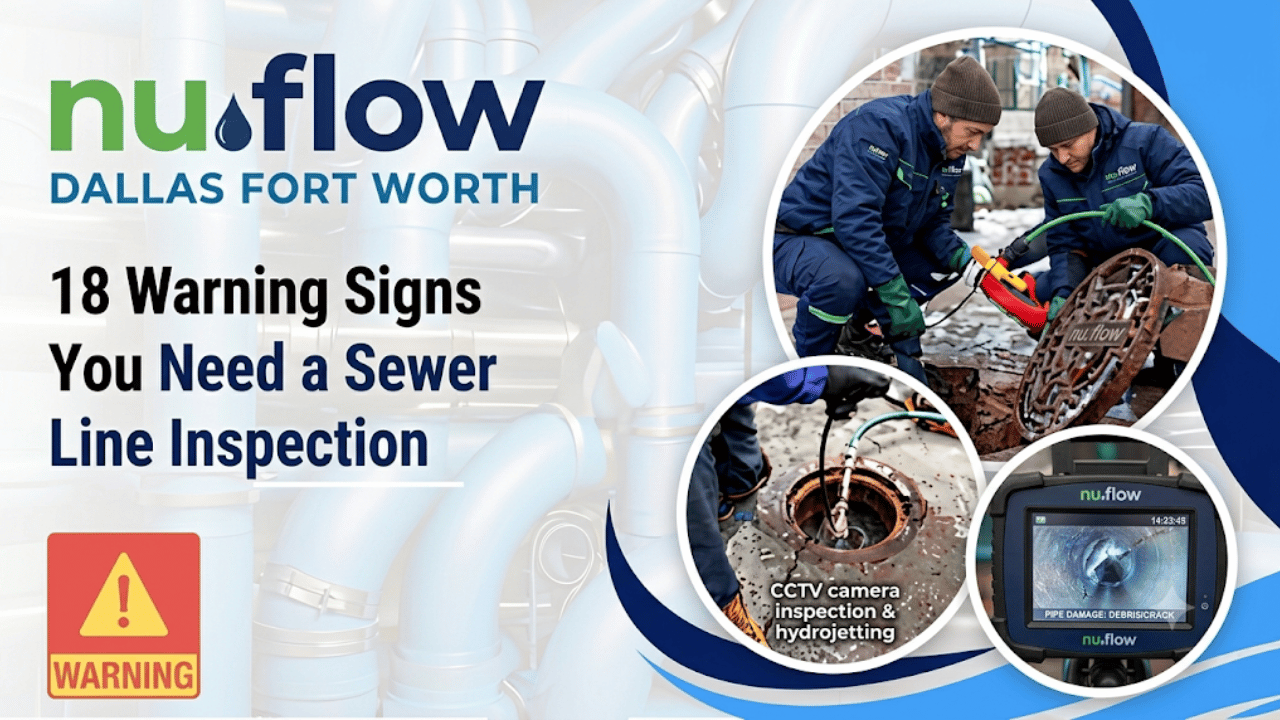
A sewer line can be made of the best pipe on the market and still fail early if it was installed wrong. In fact, installation defects are behind a surprising number of "mystery" clogs and backups in homes that are only a few years old. The pipe is fine, but the way it was laid in the ground guarantees problems. Whether you are buying a newly built home, had recent work done, or just cannot figure out why a young line keeps backing up, here are the most common sewer line installation defects and how to spot them.
Gravity does all the work in a sewer line. Waste flows out only because the pipe is angled correctly, supported evenly, and connected cleanly. Get any of that wrong and the line fights itself for the rest of its life, catching debris, holding water, and clogging no matter how good the pipe material is. That is why a defect built in on day one keeps causing trouble long after the crew has left. The problems below are the ones that show up most.
The most common and most damaging defect is the wrong slope. A sewer line needs to fall at roughly a quarter inch per foot. Too flat, and water and solids move too slowly, so solids settle out and build up until the line clogs. Too steep, and the water actually outruns the solids, draining away and leaving waste behind to accumulate. Both extremes cause chronic clogs, and both trace back to a line that was not laid at the right angle. This is the defect that catches the most homeowners off guard, because the line looks fine but never drains right.
A belly is a low spot where the line dips below its proper grade, creating a section that holds standing water and waste. It happens when the pipe was not bedded and supported evenly, so a stretch of it settles into soft or poorly compacted soil. Water pools in the sag, solids collect, and you get repeat clogs at the same spot. A belly is one of the clearest installation defects on a camera, and it is also one that lining cannot fix, since a liner follows the existing sag, correcting it means excavating and re-grading that section. Our guide covers this and the other sewer line installation defects in more detail.
Every place two pipes meet is a potential weak point, and a rushed or careless joint is a defect waiting to leak. Joints that are not fully seated, glued improperly, or left offset let water escape and give tree roots an easy entry. Over time those joints separate further, and what started as a small installation shortcut becomes a cracked, root-filled section. Offset joints also catch passing debris and start clogs.
How the pipe was surrounded and covered matters as much as how it was laid. If the trench was backfilled with rocky soil or debris pressing against the pipe, or if it was not compacted properly, the line shifts and stresses over time. Rocks against the pipe create pressure points that crack it, and poor compaction lets sections settle unevenly, which is exactly what creates bellies. Good installation uses proper bedding material to cradle the pipe evenly.
A cleanout is the access point a plumber uses to inspect and clear the line. When an installer skips one, hides it, or buries it, servicing the line later becomes far harder and more expensive. It is not a defect that causes clogs on its own, but it turns every future repair into a bigger job, and its absence is a sign the installation cut corners elsewhere too.
Finally, using undersized pipe, the wrong material for the application, or sharp, flow-restricting fittings sets a line up to fail. An undersized line cannot carry the load, and rough or abrupt fittings catch waste and start clogs. These choices are made during installation and are difficult to live with afterward.
Most of these are invisible from the surface, which is why a camera inspection is the tool that finds them. On the screen, a plumber can see standing water that reveals a belly or a flat slope, offset or leaking joints, root intrusion at bad connections, and debris collecting where the flow is wrong. The telltale symptom for a homeowner is a young line that clogs or backs up repeatedly for no obvious reason, that pattern in a newer home almost always points to an installation defect rather than normal wear.
A new sewer line is only as good as its installation. Wrong slope, bellies, sloppy joints, poor bedding, missing cleanouts, and the wrong pipe all cause chronic problems that no amount of snaking will cure, because the flaw is built into the line itself. If a newer home keeps backing up, or you are buying new construction, a camera inspection is the way to catch these defects before they become your recurring headache.
Nuflow DFW is a licensed Plano plumber (RMP# 46694) serving the Dallas-Fort Worth Metroplex, with 24/7 availability. If a newer line keeps clogging, call (469) 701-0597 for a camera inspection to find out why.