English
 Arabic
 French
 Spanish
 Portuguese
 Deutsch
 Turkish
 Dutch
Dutch
 Italiano
 Russian
 Romaian
 Portuguese (Brazil)
 Greek
Greek
USMNT 3 Ideal Avid gamers of the 7 days: Trusty Improbable Name, Gozo Huge Press
Sports |
2026-07-03 06:41:59
 Advertise With Us
 About Us
 Terms And Conditions
 سياسة الخصوصية
عرض كل النتائج
سياسة الخصوصية
عرض كل النتائج

ترقية الحساب
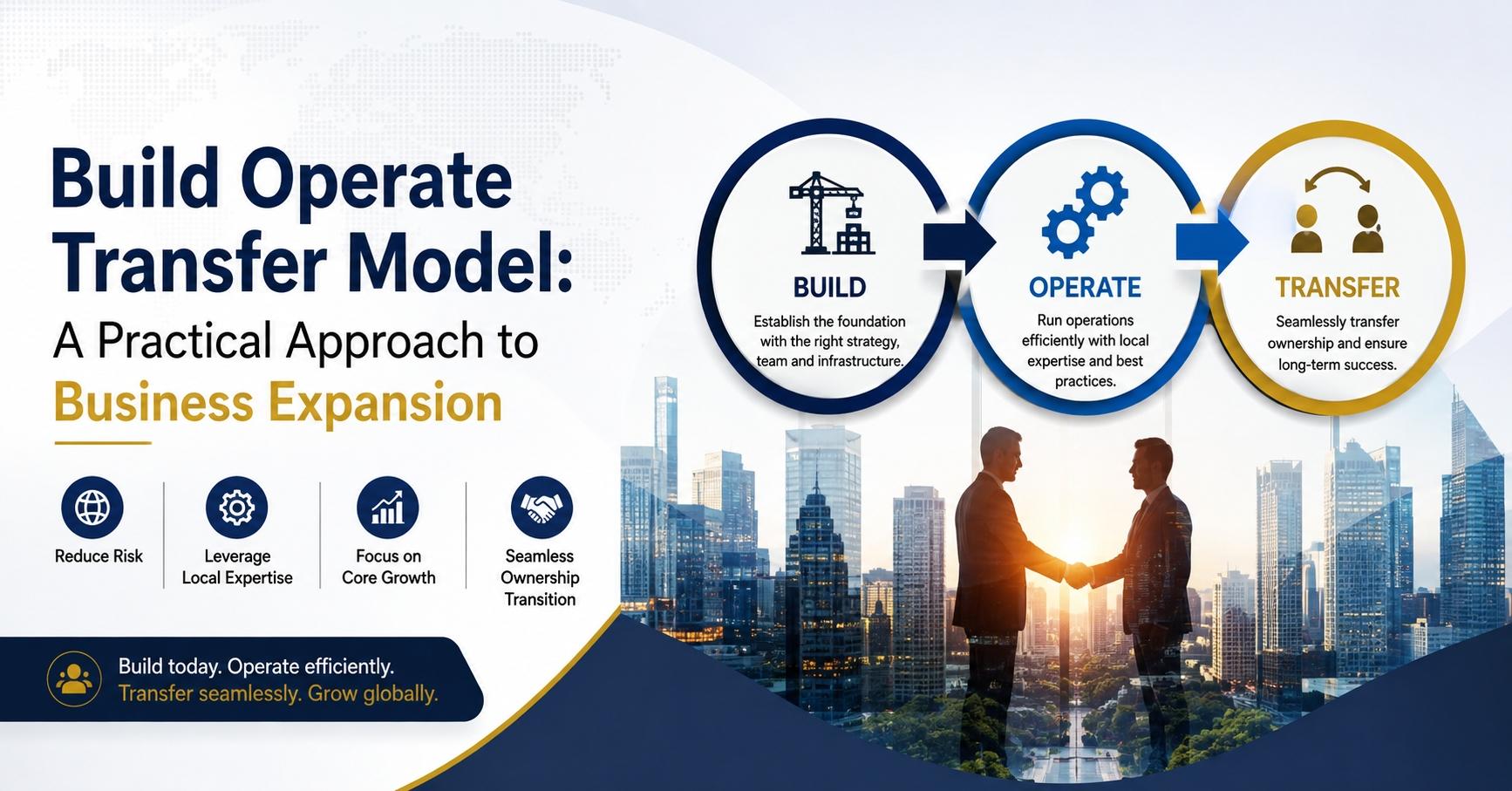
The build operate transfer model is a structured business arrangement used by organisations that want to establish a new function, facility, team, or operational unit with support from an experienced external partner. Under this model, the partner builds the required setup, operates it for an agreed period, and later transfers ownership and control to the client organisation.
This approach is commonly used for setting up shared service centres, technology teams, manufacturing units, back-office operations, customer support functions, and overseas delivery centres. It helps businesses enter new markets or create new capabilities without managing every setup-related activity internally from day one.
A build operate transfer model is generally divided into three stages:
The exact scope can differ based on the business objective, location, industry requirements, and duration of the arrangement.
Setting up a new business function can involve considerable planning and coordination. Companies may need to understand local laws, recruit suitable employees, lease office space, arrange technology infrastructure, and develop reliable operating processes. For businesses entering unfamiliar markets, these activities can become complex and time-consuming.
The build operate transfer model allows companies to use external expertise during the initial stages while retaining the option to own the operation later. It can be useful when a business wants more control than a traditional outsourcing arrangement but does not want to manage the full setup process alone.
For example, an international company planning to establish a finance or technology support centre in India may work with a local partner to set up the entity, recruit professionals, establish systems, and manage the centre initially. Once the operations become stable, the company can take over the centre as its own captive unit.
One of the main benefits is faster market entry. An experienced partner may already understand local regulations, labour markets, vendor networks, and infrastructure requirements. This can reduce delays during the setup stage.
The model also helps manage early operational risks. The operating partner can bring established processes, local management support, and implementation experience. This may help the client avoid common challenges related to hiring, compliance, payroll, taxation, and operational governance.
Another advantage is knowledge transfer. During the operate phase, the client can understand the processes, workforce structure, performance metrics, and operational requirements before assuming full responsibility. This creates a smoother transition at the transfer stage.
The model can also offer flexibility. Businesses may decide the transfer timeline based on operational readiness and commercial objectives. The agreement can define specific milestones related to staffing, revenue, service levels, process maturity, or compliance before the transfer takes place.
A successful build operate transfer model depends on a clear agreement between both parties. The scope of work should specify what the partner will build, how the operation will be managed, and what assets or responsibilities will be transferred.
Businesses should define:
These elements help reduce uncertainty and support a controlled handover.
Business advisory services can support organisations throughout the planning and execution of a BOT arrangement. Advisors may assist with feasibility studies, operating-model design, location analysis, entity setup, financial planning, tax considerations, regulatory compliance, and risk assessment.
They can also help structure governance frameworks and define the transition plan. This is particularly important where the arrangement involves cross-border operations, specialised teams, sensitive data, or industry-specific regulations.
In addition, business advisory services can support due diligence before the transfer stage. This may involve reviewing financial records, legal documentation, operational performance, employee contracts, technology assets, and compliance status. A structured review helps the client understand whether the unit is ready to be transferred.
Although the BOT model offers several benefits, it requires careful planning. Differences in expectations between the client and operating partner can affect timelines and outcomes. The client should remain involved throughout the operate phase instead of waiting until the transfer stage.
Workforce retention is another important consideration. Employees may have questions about their employment terms and reporting structure when the ownership transfer occurs. Clear communication and transition planning can help maintain continuity.
Businesses should also assess whether the operational model can scale after transfer. The new unit should not only function effectively during the managed phase but also be capable of meeting future growth requirements under the client’s direct management.
The build operate transfer model provides a structured way for businesses to create and eventually own new operations. It combines external setup and operating expertise with long-term ownership and control. When supported by clear governance, defined transfer conditions, and suitable business advisory services, the model can help organisations establish capabilities while managing early-stage operational complexity.