English
 Arabic
 French
 Spanish
 Portuguese
 Deutsch
 Turkish
 Dutch
Dutch
 Italiano
 Russian
 Romaian
 Portuguese (Brazil)
 Greek
Greek
Enhancing Body Proportions Through Liposuction in Jeddah
Health |
2026-07-18 17:43:47
 Advertise With Us
 About Us
 Terms And Conditions
 Privacy Policy
See All
Privacy Policy
See All

Upgrade to Pro
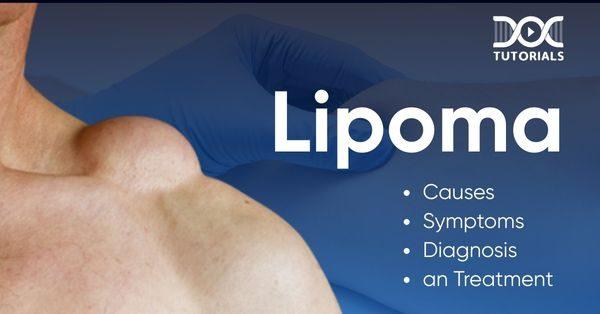
A lipoma is a benign fatty growth that develops beneath the skin. It is usually slow-growing and may remain painless for many years. However, some lipomas become larger, more visible, or uncomfortable over time. When this happens, individuals may begin exploring Lipoma Treatment in Jeddah to understand whether the growth should be monitored or removed.
The treatment of a lipoma should be individualized. Factors such as size, location, depth, symptoms, and cosmetic concerns can all influence the management plan. Understanding these factors can help individuals approach treatment with realistic expectations.
A lipoma is a collection of mature fat cells that forms a localized mass beneath the skin. It is generally considered benign.
Many lipomas have a soft or rubbery consistency and may move slightly when touched. They commonly grow slowly and may not cause any symptoms.
However, the characteristics of a lipoma can vary. Some may be larger or located deeper within the body's soft tissues.
Because different types of growths can occur beneath the skin, a new lump should be evaluated rather than automatically assumed to be a lipoma.
People may consider treatment for different reasons.
Some of the most common include:
The lipoma is increasing in size.
It causes pain or tenderness.
It creates pressure.
It interferes with movement.
Clothing repeatedly rubs against it.
It is located in a visible area.
It changes the contour of the body.
The individual is concerned about its appearance.
A person may also seek evaluation simply because they are uncertain about the nature of a lump.
Proper assessment can provide clarity and help determine whether treatment is necessary.
The evaluation typically begins with a medical history and physical examination.
The growth may be assessed for its:
Size.
Shape.
Texture.
Mobility.
Location.
Depth.
Rate of growth.
The individual may also be asked whether the growth causes pain or affects everyday activities.
If the characteristics are typical of a simple lipoma, monitoring may be considered. If the growth has unusual features, additional evaluation may be appropriate.
Not every lipoma requires imaging or other diagnostic testing. However, additional evaluation may be considered when a growth is particularly large, deep, painful, rapidly changing, or difficult to characterize.
Imaging can help provide information about the growth's depth and relationship to surrounding tissues.
In selected circumstances, tissue examination may also be considered.
These evaluations help guide treatment decisions and ensure that the growth is properly understood.
Observation is an important part of lipoma management.
A small, painless, stable lipoma may not need removal. Instead, the individual may simply monitor the growth for changes.
Observation can help avoid an unnecessary procedure when the lipoma is not causing problems.
However, monitoring should follow an appropriate assessment. If the growth begins to change, becomes painful, or develops unusual characteristics, it should be reassessed.
When removal is appropriate, surgical excision is a commonly used approach.
The procedure generally involves making an incision to access the lipoma and carefully separating it from surrounding tissues.
The exact technique depends on the size and location of the growth.
A small superficial lipoma may be removed through a relatively limited incision, whereas a larger or deeper lipoma may require more extensive planning.
Once the growth is removed, the incision is closed.
A personalized approach is particularly important when considering Lipoma Treatment in Jeddah.
Treatment planning may take into account:
The location of the growth.
Its size.
Whether it is superficial or deep.
Symptoms.
Cosmetic concerns.
The individual's normal activities.
Expected recovery.
For example, a lipoma near a frequently moving joint may require different recovery considerations from one located on a less active part of the body.
Before the procedure, relevant medical information may be reviewed.
This can include:
Current medications.
Allergies.
Previous procedures.
Relevant medical history.
Previous experiences with anesthesia.
Details about the lipoma.
Individuals may receive specific preparation instructions depending on the procedure.
Understanding the planned treatment and aftercare requirements can help individuals prepare for recovery.
During treatment, the area is prepared and an appropriate anesthesia method is selected.
An incision is made to access the lipoma. The fatty tissue is then carefully removed from the surrounding area.
The duration and complexity of the procedure vary according to the characteristics of the growth.
Once the lipoma has been removed, the incision is closed.
In appropriate circumstances, the removed tissue may be examined further.
Recovery can vary considerably.
Some individuals may experience only mild temporary discomfort, while others may require additional healing time depending on the extent of treatment.
Possible temporary effects include:
Swelling.
Bruising.
Tenderness.
Mild discomfort.
Aftercare instructions should be followed carefully.
Certain activities may need to be limited temporarily, especially if they place pressure on or stretch the treatment area.
The return to normal activities depends on the procedure and the individual's recovery.
Light activities may be resumed sooner than strenuous exercise or heavy physical work.
The location of the lipoma can also influence recovery. A growth removed from an area that moves frequently may require more attention during the initial healing period.
Individuals should follow the specific guidance provided for their situation.
An incision can result in a scar. The appearance depends on factors such as the size of the lipoma, the location of the incision, and individual healing characteristics.
Scars may initially appear more noticeable before changing over time.
For individuals concerned about cosmetic appearance, the potential scar can be discussed as part of treatment planning.
It is important to understand that individual healing varies and that no specific scar appearance can be guaranteed.
Some individuals have several lipomas. Treatment does not necessarily need to address every growth.
A management plan may prioritize lipomas that cause:
Pain.
Pressure.
Movement problems.
Rapid growth.
Cosmetic concerns.
Depending on the circumstances, multiple growths may be treated during one period or separately.
The decision should be based on the individual's overall condition.
After a lipoma is removed, the treatment area is monitored during the healing process.
Follow-up may be recommended to assess the incision and discuss any concerns.
If tissue was examined, the relevant findings may also be discussed.
Individuals should remain aware of any unusual changes during recovery and seek appropriate medical advice when needed.
Complete removal generally makes recurrence at the same location uncommon. However, individuals who are prone to developing lipomas may develop new growths elsewhere.
A new lump should be evaluated independently.
It is important not to assume that every new growth is automatically a lipoma or a recurrence.
Lipoma Treatment in Jeddah requires careful assessment and individualized planning. While many lipomas can be safely observed, treatment may be considered when a growth becomes painful, increases in size, interferes with movement, causes repeated irritation, or creates significant cosmetic concerns.
Understanding the evaluation process, treatment options, recovery, and potential scarring can help individuals make informed choices. Whether observation or removal is selected, the approach should be based on the characteristics of the specific lipoma and the individual's needs.