English
 Arabic
 French
 Spanish
 Portuguese
 Deutsch
 Turkish
 Dutch
Dutch
 Italiano
 Russian
 Romaian
 Portuguese (Brazil)
 Greek
Greek
Why Is Gibsons One of British Columbia's Most Relaxing Coastal Destinations?
Other |
2026-07-27 08:15:37
 Advertise With Us
 About Us
 Terms And Conditions
 Privacy Policy
See All
Privacy Policy
See All

Upgrade to Pro
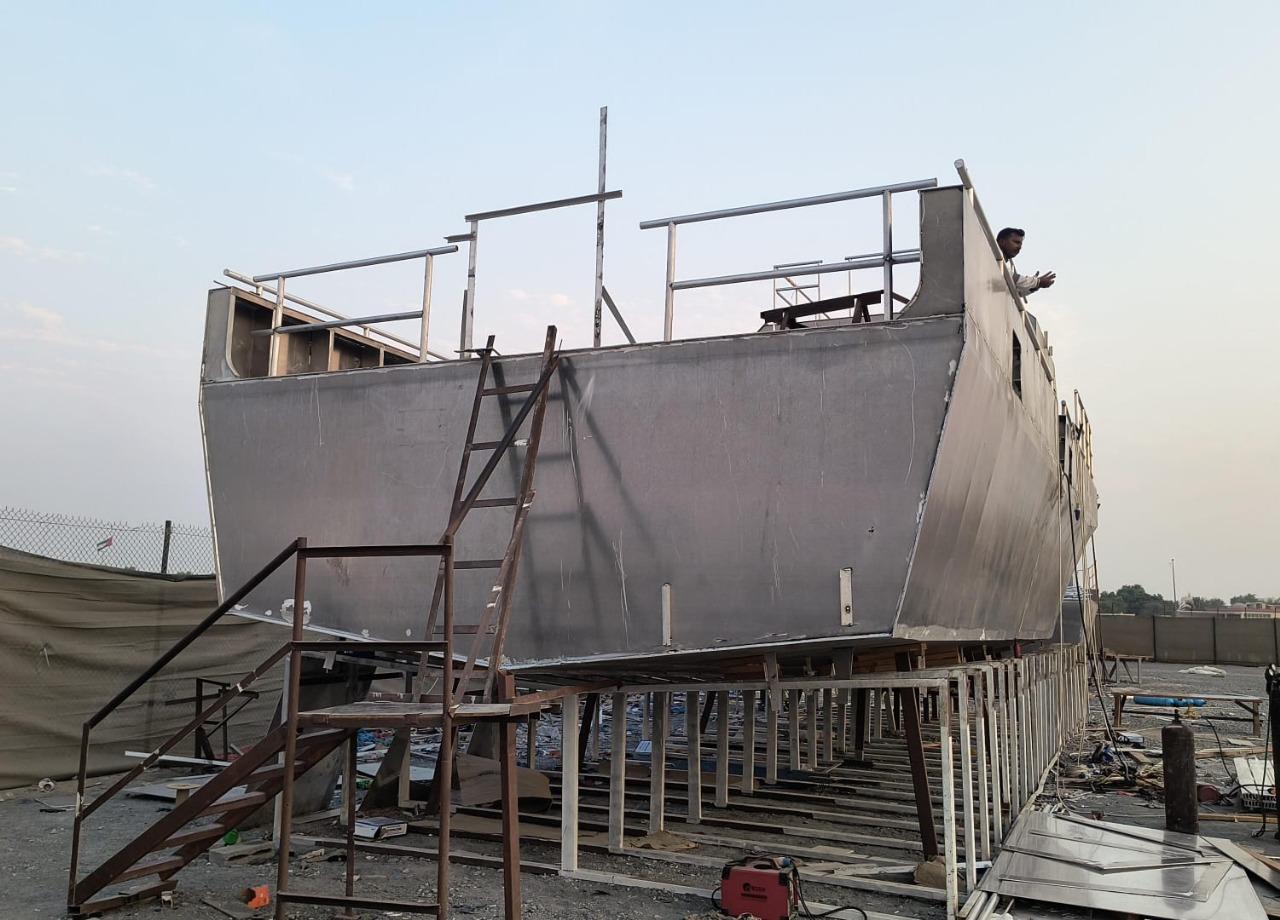
The marine industry is changing quickly as customers demand boats that are lighter, stronger, more efficient, and easier to maintain. Aluminium boat builders are responding to this demand by combining modern engineering, advanced fabrication techniques, lightweight materials, and innovative vessel designs. Aluminium has become a popular choice for commercial boats, fishing vessels, patrol boats, passenger boats, workboats, and other specialized marine vessels.
The global aluminium boat market continues to show strong growth. Recent industry estimates value the market at several billion dollars, with forecasts indicating continued expansion through the next decade. Growing demand for lightweight vessels, fuel efficiency, durability, and customized marine solutions is supporting this development.
Aluminium offers an attractive combination of strength and low weight. Compared with heavier construction materials, aluminium can help reduce the overall weight of a vessel. A lighter boat generally requires less power to achieve the same performance, which can contribute to better fuel efficiency and lower operating costs.
This advantage is particularly important for commercial operators that use boats for long hours every day. Even a small improvement in fuel consumption can make a meaningful difference over the operational life of a vessel.
Another important benefit is corrosion resistance. Marine-grade aluminium can perform well in demanding marine environments when it is properly designed, fabricated, protected, and maintained. This makes it suitable for both coastal and inland water applications.
Modern aluminium boat building is no longer limited to simple recreational vessels. Today, aluminium construction is used for a wide range of professional applications, including rescue boats, crew boats, patrol vessels, fishing boats, passenger vessels, utility boats, and offshore support vessels.
One market study estimates that the global aluminium boat market could grow from around USD 3.5 billion in 2024 to nearly USD 6.9 billion by 2034, representing a compound annual growth rate of approximately 7.1%. While estimates differ between research organizations because of different market definitions, the overall direction shows increasing demand for aluminium-based vessels.
The growth is being supported by several factors, including rising marine transportation activity, recreational boating, coastal development, fishing operations, marine tourism, and demand for efficient commercial vessels.
One of the biggest advantages of aluminium is its lightweight nature. Vessel weight has a direct relationship with performance. Reducing unnecessary weight can improve acceleration, handling, fuel economy, and overall efficiency.
For high-speed vessels, weight reduction can be particularly valuable. For commercial boats, it can allow operators to carry useful equipment or additional payload without significantly increasing the overall displacement.
Lightweight construction can also reduce the power requirement of a vessel. This provides an opportunity to use smaller engines or more efficient propulsion systems depending on the vessel's design and operational requirements.
Today's aluminium boats manufacturers focus on much more than hull fabrication. Modern boat construction involves naval architecture, structural engineering, computer-aided design, precision cutting, welding, electrical systems, propulsion integration, navigation equipment, and quality testing.
The design process normally begins with understanding how the vessel will be used. A fishing boat may require a large working deck and storage areas, while a patrol vessel may require speed, stability, advanced navigation systems, and crew protection.
Computer-aided design allows engineers to develop accurate vessel models before fabrication begins. This can help identify potential design problems, improve material utilization, and make the construction process more efficient.
Welding plays a critical role in aluminium vessel construction. High-quality welding is essential for maintaining structural strength and ensuring the durability of the hull.
Modern fabrication facilities use specialized aluminium welding techniques, precision cutting systems, forming equipment, and quality-control procedures. Accurate fabrication can improve dimensional consistency and reduce unnecessary material waste.
The construction process may involve hull panels, frames, bulkheads, deck structures, cabins, fuel tanks, piping, electrical systems, and equipment foundations. Each component needs to work together as part of the vessel's overall structural and operational system.
Marine environments can be challenging because vessels are constantly exposed to water, humidity, salt, and changing weather conditions. Material selection and construction quality therefore have an important impact on vessel longevity.
Marine-grade aluminium offers useful corrosion resistance, but it does not mean that aluminium vessels require no maintenance. Proper drainage, surface treatment, electrical isolation, inspection, cleaning, and prevention of galvanic corrosion are all important.
Regular maintenance can help identify problems before they become expensive repairs. For commercial operators, planned maintenance can also reduce unexpected downtime and improve vessel availability.
Environmental performance is becoming increasingly important in the marine industry. Operators are looking for ways to reduce fuel consumption, emissions, and operating costs.
Aluminium can support these objectives because its lightweight characteristics can contribute to improved vessel efficiency. Aluminium is also recyclable, which provides another sustainability benefit when vessels reach the end of their operational life.
The marine aluminium market is also expected to expand in the coming years. Some industry forecasts project steady growth through 2030 and beyond, driven by demand for lightweight marine structures and more efficient vessels.
The move toward hybrid and electric propulsion is another important development. Lightweight hull construction can complement these systems because reducing vessel weight can help improve energy efficiency and operating range.
Modern customers increasingly want boats designed around specific operational requirements. Aluminium provides considerable flexibility for customization.
Deck layouts, cabins, seating arrangements, equipment mounts, storage areas, wheelhouses, working platforms, and other features can be designed according to the intended application.
A commercial workboat may require a strong open deck for equipment, while a passenger vessel may prioritize seating capacity and comfort. Similarly, a rescue vessel may require quick acceleration, high maneuverability, and specialized emergency equipment.
This ability to customize vessels is one of the reasons aluminium remains attractive for specialized marine applications.
Technology is changing almost every stage of modern vessel development. Digital design tools allow engineers to create accurate 3D models and analyze vessel layouts before physical construction begins.
Modern boats can also integrate GPS, radar, communication systems, electronic monitoring, automated controls, digital displays, and advanced safety equipment.
Propulsion technology is developing as well. Hybrid and electric systems are receiving increased attention as marine operators seek to reduce fuel consumption and emissions. These technologies, combined with lightweight hulls, could play a significant role in future boat designs.
For a boat building company, adopting modern technology is therefore becoming essential. Customers are no longer looking only for a strong hull; they expect efficient, safe, technologically advanced, and purpose-built vessels.
VU Marine is involved in aluminium boat construction along with a range of marine engineering and vessel-related services. Its work reflects the broader direction of the industry, where boat construction is increasingly connected with engineering, maintenance, repair, retrofitting, and specialized marine solutions.
The future of boat construction will depend on combining quality materials with modern design and engineering practices. Simply choosing aluminium is not enough. The quality of the design, alloy selection, welding, fabrication, equipment installation, and maintenance all influence the final performance of a vessel.
The future of aluminium boat construction looks promising. Increasing demand for efficient commercial vessels, fishing boats, patrol vessels, passenger boats, recreational craft, and specialized workboats is expected to create continued opportunities for aluminium vessel construction.
The broader global boat-building industry is also expanding. One recent market estimate placed the global boat-building market at approximately USD 40 billion in 2025, with projections indicating substantial growth over the following years.
At the same time, customers are becoming more concerned about total ownership costs. Fuel consumption, maintenance requirements, vessel lifespan, reliability, and resale value are becoming important factors when selecting a boat.
This is likely to encourage further innovation in lightweight structures, hull design, propulsion, digital systems, and environmentally responsible construction.
Aluminium has become an important material in modern marine construction because it offers a practical balance of strength, low weight, durability, corrosion resistance, and customization. These characteristics make it suitable for a wide range of commercial and specialized vessels.
The future will likely bring more advanced hull designs, improved fabrication processes, smarter onboard technology, hybrid and electric propulsion, and greater attention to sustainability.
As the marine industry continues to evolve, aluminium vessels are expected to remain an important part of modern boat construction. With the right combination of engineering, fabrication quality, technology, and maintenance, aluminium boats can provide reliable performance and long-term value across many different marine applications.