English
 Arabic
 French
 Spanish
 Portuguese
 Deutsch
 Turkish
 Dutch
Dutch
 Italiano
 Russian
 Romaian
 Portuguese (Brazil)
 Greek
Greek
Comprehensive Guide to Stump Grinding in Spring Hill AL and Professional Property Cleanup
Other |
2026-05-08 20:58:07
 Advertise With Us
 About Us
 Terms And Conditions
 Política de privacidade
Ver todos
Política de privacidade
Ver todos

Atualizar para Plus
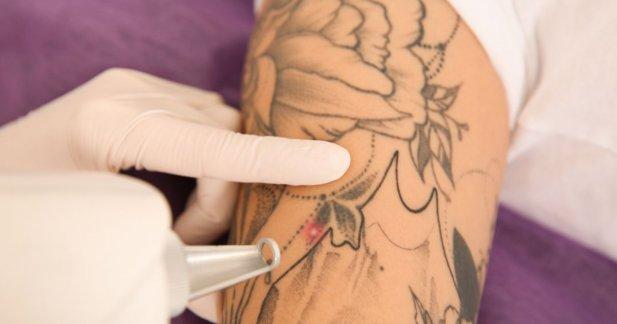
Tattoo removal in Jeddah has become an increasingly popular option for individuals who want to reduce or eliminate the appearance of unwanted tattoos. While tattoos are often created as permanent forms of self-expression, preferences and circumstances can change over time. A design that once felt meaningful may no longer reflect someone's personality, lifestyle, or professional goals. Fortunately, advances in aesthetic technology have introduced more sophisticated approaches to tattoo removal, particularly laser-based treatments.
Modern tattoo removal focuses on breaking down tattoo pigments so that the body's natural processes can gradually clear them. Unlike older approaches that could cause significant damage to the skin, contemporary laser techniques are designed to target pigment more precisely. The treatment process is gradual, and achieving the desired result generally requires patience and multiple sessions.
There are many reasons people decide to remove tattoos. Some individuals may regret a design they selected when they were younger. Others may want to remove a tattoo connected to a previous relationship, personal phase, or belief that has changed.
Professional considerations can also influence the decision. Although attitudes toward tattoos have changed considerably, some people may prefer less visible tattoos in particular professional environments. Others may simply want their skin to appear clearer.
In some cases, complete removal is not the primary goal. A person may want to significantly fade an existing tattoo so that another design can be placed over it. Laser treatment can sometimes be used as part of this preparation process.
Tattoo ink is deposited beneath the outermost layers of the skin. Because the pigment particles can be relatively large, the body may not naturally eliminate them efficiently. Laser treatment is designed to address this problem.
During treatment, controlled pulses of laser energy are directed toward the tattoo. The energy interacts with the pigment and helps break larger ink particles into smaller fragments. The body's natural immune and metabolic processes can then gradually remove some of these fragmented particles.
The process does not usually result in the tattoo disappearing immediately after one treatment. Instead, fading occurs progressively over time. This is why treatment plans commonly involve several sessions separated by recovery periods.
Not every tattoo reacts to laser treatment in the same way. The characteristics of the tattoo play an important role in determining the expected outcome.
Color is one of the major factors. Dark pigments can often be easier to target, while certain lighter or unusual colors may require specialized approaches. Multicolored tattoos can therefore be more complicated because different pigments may respond differently to laser energy.
The amount of ink used is also important. A tattoo with dense pigmentation may take longer to fade than one created with lighter pigment. The depth at which the ink was placed can influence the treatment response as well.
The tattoo's age and location may also affect the process. For these reasons, a personalized assessment is preferable to relying on general estimates.
Before beginning treatment, the area is typically examined to determine the characteristics of the tattoo and surrounding skin. Appropriate protective measures are used during the procedure.
During the session, the laser device delivers short pulses to the tattooed area. Patients may experience temporary sensations such as warmth, tingling, or a snapping feeling. The level of discomfort varies from person to person and can depend on the location and size of the tattoo.
The duration of the session depends largely on the tattoo's size. Small designs may be treated relatively quickly, while larger tattoos naturally require more time.
After treatment, temporary redness, swelling, sensitivity, or other skin reactions may occur. These effects are generally part of the skin's response to treatment, but patients should follow the aftercare guidance provided by their healthcare professional.
One of the most important things to understand about tattoo removal is that it is rarely an instant process. A single laser session generally cannot remove all the pigment from a tattoo.
Ink can be distributed at different depths and densities. Laser treatment gradually breaks down pigment, while the body needs time to process and eliminate the fragmented particles. Additional sessions can therefore be required to target remaining pigment.
The number of sessions varies considerably. Factors such as tattoo size, color, age, location, ink density, and individual response all influence the treatment schedule.
Patients should avoid comparing their progress directly with someone else's experience. Two people with tattoos that appear similar on the surface may have very different pigment characteristics underneath the skin.
Preparation can help make the treatment process smoother. During the consultation, individuals should provide accurate information about the tattoo and any previous treatments performed on the area.
The treatment provider may also give specific instructions regarding sun exposure, skincare products, shaving, and other aspects of preparation. Following these recommendations can help reduce unnecessary irritation.
It is also important to discuss existing skin concerns or previous reactions to aesthetic treatments. A complete assessment allows the treatment approach to be adapted to individual circumstances.
Aftercare plays an important role in the overall tattoo removal journey. Treated skin should generally be kept clean and protected according to professional instructions.
Sun protection is particularly important. Exposure to ultraviolet radiation can contribute to changes in pigmentation and may make the treated skin more vulnerable to irritation. Using appropriate protection and following professional recommendations can help support recovery.
Patients should avoid scratching, picking, or aggressively rubbing the treated area. Even when temporary skin changes appear, allowing the area to recover naturally is generally preferable to disturbing it.
If symptoms appear unusual, become severe, or persist longer than expected, professional medical guidance should be obtained.
When considering tattoo removal in Jeddah, individuals should evaluate more than the cost of treatment. Safety, technology, professional experience, assessment procedures, and aftercare support are all important considerations.
A consultation should provide an opportunity to understand the treatment process and discuss realistic expectations. Patients can ask how the tattoo's characteristics may affect treatment, how many sessions might be required, how much time may be needed between sessions, and what aftercare will involve.
It is also useful to understand that treatment results cannot always be predicted with complete certainty. The goal should be informed decision-making rather than promises of immediate or guaranteed removal.
Some individuals choose tattoo removal because they want a new tattoo rather than completely clear skin. In such cases, laser treatment may be used to fade the original tattoo.
Fading can make it easier for a new tattoo artist to work with the existing design. However, the appropriate amount of fading depends on the planned replacement tattoo and the original pigment.
A professional assessment can help determine whether partial fading is appropriate and how many sessions may be needed before considering a cover-up.
Tattoo removal in Jeddah can provide a modern option for people who want to reduce the appearance of unwanted tattoos. Laser-based treatment works by targeting tattoo pigment and breaking it into smaller particles that the body can gradually process.
The process requires realistic expectations because tattoo removal is usually gradual rather than immediate. Multiple sessions may be necessary, and results vary according to tattoo color, size, age, pigment density, location, and individual skin response.
Choosing a professional treatment environment, following preparation and aftercare instructions, and allowing sufficient recovery time between sessions can contribute to a safer and more effective treatment journey. Whether someone wants complete removal or simply wants to fade an old design, understanding the process beforehand can help them make a more informed decision.