English
 Arabic
 French
 Spanish
 Portuguese
 Deutsch
 Turkish
 Dutch
Dutch
 Italiano
 Russian
 Romaian
 Portuguese (Brazil)
 Greek
Greek
FYP Worthy The Broken Edge of the World by Alena Bruzas
Shopping |
2026-07-03 06:44:15
 Advertise With Us
 About Us
 Terms And Conditions
 Privacy Policy
See All
Privacy Policy
See All

Upgrade to Pro
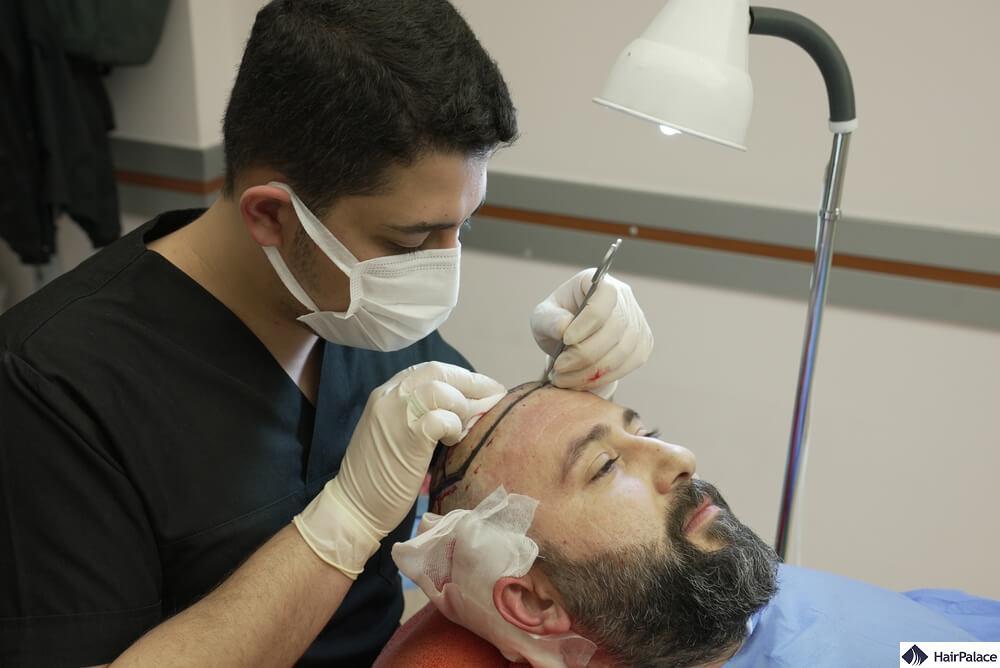
Hair loss can affect the appearance of the hairline, temples, crown, and overall scalp density. For many individuals, thinning hair can become a source of frustration, particularly when conventional styling methods no longer provide sufficient coverage. Scarless Hair Transplant in Jeddah is a modern hair restoration option that commonly uses Follicular Unit Extraction, or FUE, to relocate healthy hair follicles from a donor area to areas affected by thinning or baldness.
The appeal of this approach is largely related to its minimally invasive harvesting method. Instead of removing a continuous strip of scalp, individual follicular units are extracted separately. This can reduce the visibility of donor-area scarring and may be suitable for people who prefer shorter hairstyles. However, understanding the procedure, limitations, recovery process, and realistic expectations is important before considering treatment.
The term “scarless hair transplant” is often used to describe procedures designed to minimize visible scarring rather than eliminate scarring completely.
FUE is one of the most widely recognized techniques. During FUE, individual follicular units are carefully extracted from the donor region. These grafts are then prepared and placed into recipient areas where additional hair coverage is required.
Because there is no long strip of scalp removed, the procedure does not produce the traditional linear scar associated with strip harvesting. Instead, small extraction points are created.
These marks can become less noticeable after healing, although the exact appearance varies from person to person.
FUE offers several characteristics that make it attractive for hair restoration.
One major consideration is hairstyle flexibility. People who prefer short hair may be concerned about a visible linear donor scar. Because FUE does not create one continuous incision, the resulting marks may be less noticeable.
Another advantage is the ability to select individual follicular units. This allows grafts to be distributed according to the patient's specific pattern of hair loss and desired areas of improvement.
FUE can be customized for different restoration goals, although not every patient is necessarily an appropriate candidate.
A proper evaluation should be performed before transplantation.
Hair loss can occur for many reasons, and transplantation is most appropriate when there is a suitable supply of stable donor follicles and an appropriate restoration pattern.
An assessment may examine:
Hairline position
Temple recession
Crown thinning
Overall scalp density
Donor-area quality
Hair thickness
Hair texture
Scalp condition
Previous hair treatments
Potential future hair loss
Understanding these factors helps establish a treatment strategy based on the individual's needs.
Hair transplantation works by redistributing existing follicles. It does not create an unlimited supply of new hair.
The donor region is therefore one of the most important factors in treatment planning.
If the donor area has good density and suitable hair characteristics, it may provide enough follicles for meaningful restoration. However, donor supply remains limited.
Excessive extraction can make the donor area look thin or uneven. Careful distribution of extraction points is therefore essential.
The hairline strongly influences the overall appearance of a hair transplant.
A natural hairline usually has gradual transitions and subtle variations. It is rarely a perfectly straight line with identical density throughout.
The design should consider facial proportions, age, forehead shape, current hairline, hair characteristics, and possible future thinning.
Finer grafts may be used toward the front of the hairline, with gradually increasing density behind the frontal edge.
Follicular units naturally contain different numbers of hairs.
Some units contain one hair, while others contain multiple hairs. This natural variation can be useful during transplantation.
Single-hair grafts are often suitable for creating a softer frontal transition. Multi-hair grafts can provide greater coverage behind the hairline or in areas where density is more important.
Strategic graft placement can help conserve donor follicles while improving the visual appearance of coverage.
During FUE, individual follicular units are extracted from the donor area using specialized instruments.
The procedure requires precision because the follicles need to remain intact. Excessive manipulation or damage can affect graft viability.
Extraction should also be distributed appropriately across the donor area.
Concentrating too many extractions in one location can make the donor region appear uneven. Proper planning aims to maintain a balanced appearance.
After extraction, the grafts are prepared for implantation.
Follicular units may be sorted according to their characteristics so they can be placed in appropriate areas. Smaller grafts may be useful near the hairline, while larger units can be used to increase density farther behind it.
Careful graft handling is important because the condition of the follicles can influence their ability to grow after transplantation.
The recipient area is carefully planned before graft placement.
Small recipient sites are created according to the desired density, angle, and direction of growth.
Natural hair does not grow at one identical angle across the entire scalp. The frontal region, temples, mid-scalp, and crown each have distinct growth patterns.
Following these natural characteristics can help the transplanted hair blend with existing hair.
Recovery varies between individuals.
Temporary redness, swelling, sensitivity, and crust formation can occur after treatment. The donor area may also show small extraction marks during the early healing period.
Patients should follow the specific aftercare instructions provided following the procedure. These may include guidance on washing the scalp, sleeping, exercise, and protecting the treated areas.
Gentle scalp care is particularly important during the initial healing period.
Some patients notice that transplanted hairs shed after the procedure.
This can be part of the normal hair-growth cycle. The visible hair shaft may fall while the follicle remains in the scalp.
New hair can develop later as the follicle enters an active growth stage.
Therefore, temporary shedding should not automatically be considered a sign that the transplantation has failed.
Hair transplantation does not produce immediate mature density.
New growth generally develops gradually. Early hairs may be fine and sparse before becoming thicker over time.
The speed of growth varies according to individual factors such as genetics, healing, hair characteristics, and follicular behavior.
Patients should be patient and avoid judging the final outcome during the earliest stages.
Several factors contribute to the final appearance of a hair transplant.
These include:
Quality of donor hair
Hair thickness
Number of viable grafts
Hairline design
Graft distribution
Implantation direction
Existing hair density
Scalp condition
Individual healing
Future hair-loss progression
The number of grafts alone does not determine whether a result looks natural.
A hair transplant may improve coverage without completely recreating the density a person had when they were younger.
Donor follicles are limited, so treatment planning often focuses on achieving the greatest visual improvement with the available supply.
Strategic placement can make the hair appear fuller without requiring unrealistic graft numbers.
Understanding this limitation can help patients develop more realistic expectations.
Another important consideration is the possibility of continued hair loss.
Transplanted follicles may continue growing, but untreated surrounding hair can become thinner over time.
This possibility should be considered during the original hairline and graft-placement plan.
A conservative design may help the result remain balanced if additional thinning occurs later.
Although FUE is designed to minimize visible scarring, it is still a surgical procedure.
Potential risks may include infection, bleeding, swelling, temporary changes in sensation, follicular damage, poor graft growth, and scarring.
There is also a possibility that the final density may not match expectations.
Patients should understand these risks before deciding whether transplantation is appropriate.
When considering Scarless Hair Transplant in Jeddah, it is important to evaluate the complete treatment plan rather than focusing only on the word “scarless.”
A consultation should cover the cause and pattern of hair loss, donor availability, expected graft requirements, hairline design, recovery, potential risks, and realistic outcomes.
The most appropriate approach varies from person to person.
Scarless Hair Transplant in Jeddah can offer a modern approach to hair restoration for individuals seeking improved hair coverage with minimized donor-area scarring. FUE allows individual follicular units to be harvested and transplanted without creating the long linear incision associated with traditional strip procedures.
Despite the term “scarless,” small extraction marks may still occur, and healing varies among individuals. The final result depends on donor quality, graft handling, hairline planning, implantation technique, recovery, and future hair loss.
A careful assessment, individualized treatment plan, realistic expectations, and appropriate aftercare are important parts of the process. When these factors are considered together, modern follicular hair transplantation can provide gradual improvement and a natural-looking enhancement of hair coverage.