English
 Arabic
 French
 Spanish
 Portuguese
 Deutsch
 Turkish
 Dutch
Dutch
 Italiano
 Russian
 Romaian
 Portuguese (Brazil)
 Greek
Greek
Why Is the Surgical Site Infection Control Market Critical for Modern Healthcare?
Networking |
2026-07-29 06:21:18
 Advertise With Us
 About Us
 Terms And Conditions
 Πολιτική Ιδιωτικότητας
δες τα όλα
Πολιτική Ιδιωτικότητας
δες τα όλα

Upgrade to Pro
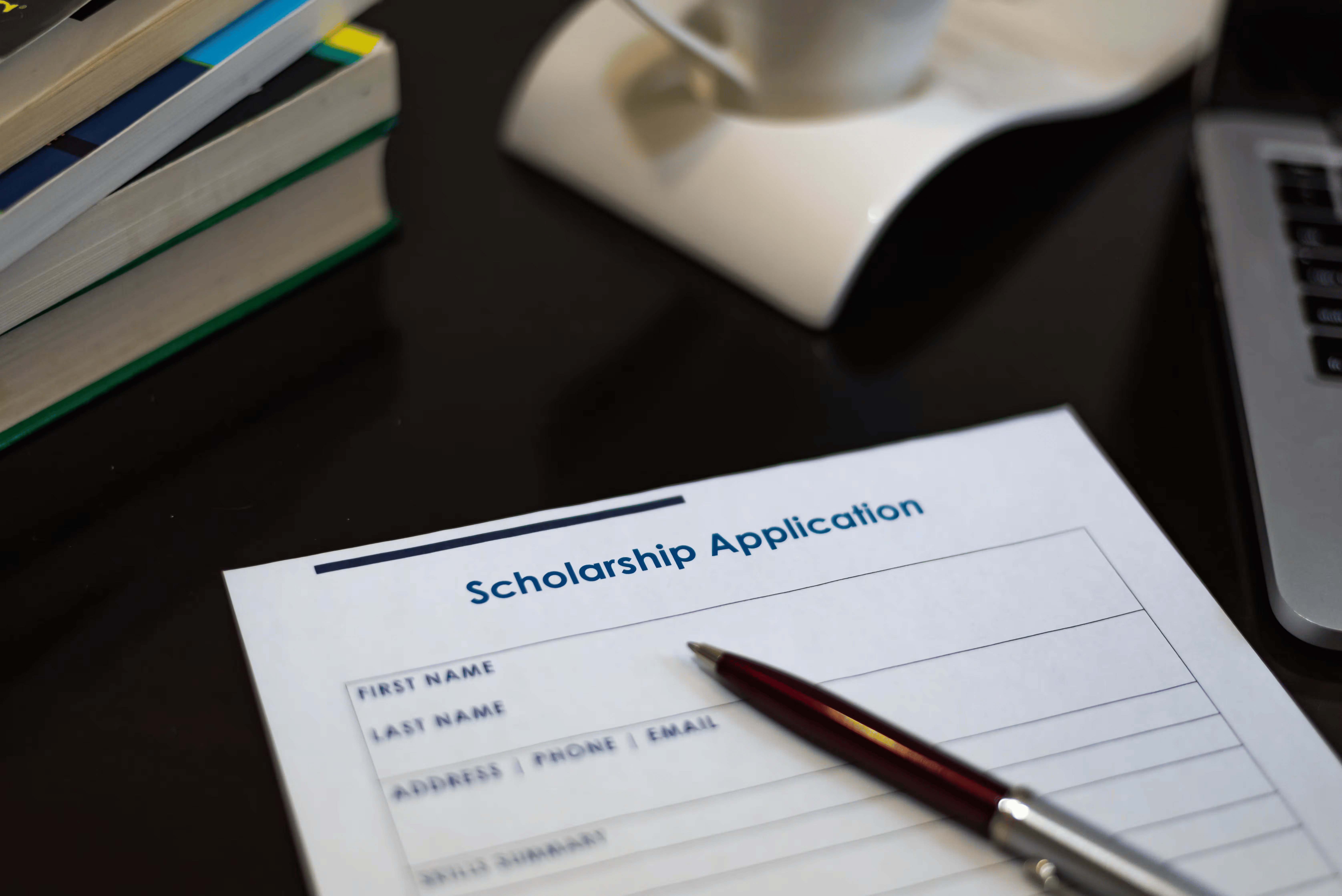
Every year, crores of rupees in scholarship money for Indian students go unclaimed, not because the awards are impossible to win, but because most applicants never hear about them or apply too late. The Inlaks Shivdasani Foundation raised its maximum award to USD 120,000 (roughly ₹1 crore) for 2026. The JN Tata Endowment has funded Indians abroad since 1892. Yet ask a typical aspirant to name five scholarships, and the list usually stops at Chevening and Fulbright.
Mostly, it is the timing. Scholarship calendars run six to eighteen months ahead of admissions. A student targeting September 2027 in the UK must apply to Chevening between August and 6 October 2026, long before most people have even shortlisted universities. Students who begin searching after receiving an admission have already missed out on fully funded scholarships.
Two other patterns recur. The first is the “toppers only” myth, the misconception that you need a perfect GPA to win. In reality, many awards heavily prioritise leadership and work experience over raw scores. Chevening, for example, has no official GPA minimum. The second pattern is ignoring local foundations. Mumbai-based trusts like JN Tata, KC Mahindra, and Narotam Sekhsaria exist specifically to fund Indian students abroad, yet they draw far smaller applicant pools than major international awards.
Fully funded awards like Chevening, Fulbright-Nehru, Commonwealth, Rhodes, and Erasmus Mundus cover tuition, stipend, airfare, and insurance, and are fiercely competitive (Chevening’s Indian acceptance rate runs roughly 8–10%). Partial awards cover a fixed sum: the GREAT Scholarships’ £10,000, a 25% university waiver, or an AAUW Fellowship of USD 20,000–50,000 for women in the US. A third, distinctly Indian category is the interest-free loan scholarship (JN Tata, KC Mahindra, Narotam Sekhsaria), which replaces bank loans at 10–12% interest.
Winners typically stack: two or three fully funded reaches plus a portfolio of four to six partial and loan awards.
Chevening (UK). A fully funded one-year master’s at any UK university. Requires two years (about 2,800 hours) of work experience and an intention to return to India. Applications for the 2027/28 intake open in August 2026 and close on 6 October 2026 at 11:00 UTC.
Fulbright-Nehru (USA). Administered by USIEF for master’s, doctoral, and postdoctoral study; deadlines fall mid-year (the 2027–28 doctoral deadline was 1 July 2026). Central and state government employees are not eligible.
Commonwealth Scholarships (UK). Full funding for master’s and PhD study; application windows generally open in the last quarter of the year.
National Overseas Scholarship (India). For SC and specified categories, providing approximately USD 15,400 per year plus tuition, subject to income ceilings.
Erasmus Mundus (Europe). EU-funded joint master’s across two or more countries, covering tuition plus a monthly allowance (around €1,400 in recent cohorts). Applications run from October to January, each programme on its own portal, which is exactly why so many students miss them.
Many universities consider every admitted applicant for merit awards automatically — but only if you apply by the scholarship priority deadline, often two to three months before the final admission deadline. Worth knowing by name: the Tata Scholarship at Cornell (Indian undergraduates with need), the Reliance Dhirubhai Ambani Fellowship at Stanford GSB, need-based aid at Harvard, Yale, Princeton, MIT, and Amherst (need-blind for internationals), Canada’s Vanier CGS (CAD 50,000/year for PhDs), and the Lester B. Pearson Scholarship at Toronto.
USA: Fulbright-Nehru, university assistantships (the default funding route for STEM graduate study), AAUW for women. UK: Chevening, Commonwealth, GREAT, Rhodes (roughly five Indian scholars a year; applications close late July–August), Gates Cambridge, Felix. Canada: Vanier, Pearson, entrance scholarships at UBC and McGill. Australia: Destination Australia (AUD 15,000/year, regional campuses) plus generous university merit waivers. Germany: DAAD — especially the EPOS programme — on top of low or zero public-university tuition. Rest of Europe: Eiffel (France), Holland Scholarship, Swedish Institute awards; deadlines cluster October–January.
This is where the real money hides.
Inlaks Shivdasani Foundation. Up to USD 120,000 in 2026 — tuition, living costs, travel, visa, and health allowance. The 2026 round closed on 31 March with no extensions, so applicants for 2027 should prepare from January. Engineering, business, and medicine are excluded, and costs above the cap require proof of additional funding. No bond is required, and stacking with other awards is permitted.
JN Tata Endowment. Interest-free loan scholarships (historically up to ₹10 lakh) for postgraduate study in any field; deadline mid-March. The “JN Tata Scholar” title carries weight with other funders.
KC Mahindra Education Trust. Interest-free loans — ₹8 lakh each for the top three candidates, up to ₹4 lakh for others; applications close around April.
Narotam Sekhsaria Foundation. Interest-free loans up to ₹20 lakh; age limit 30; window roughly January–April.
Also: the Aga Khan Foundation’s 50% grant/50% loan package (March deadline), the Lady Meherbai D. Tata Trust for women in social sciences and public health, and AAUW International Fellowships (mid-November deadline).
Eligibility criteria common to most scholarships include Indian nationality, first-class academic performance (60-70%), work experience where necessary (compulsory for Chevening Scholarships), age requirements (for Narotam Sekhsaria Scholarships, the maximum age is 30 years) and for Inlaks & JN Tata Scholarships, an acceptance letter for admission. Prepare your application once, including the following documents: academic transcripts, statement of purpose, two to three letters of recommendation, resume, admission acceptance letter, English test score, passport, and proof of income.
Specificity beats sincerity. “I spent fourteen months running vaccination drives across three districts of Bihar”, beats “I am passionate about public health.”
Answer the funder’s actual question. Chevening scores leadership and networking; Fulbright wants India–US exchange; Inlaks looks for exceptional promise in your discipline. One essay cannot serve all three.
Close the loop with a return narrative — a concrete account of what you will do in India in the five years after graduating.
Common mistakes to avoid: starting after the admit arrives, recycling the same SOP everywhere, missing university priority deadlines, dismissing loan scholarships (zero-interest on ₹20 lakh saves several lakh compared to a bank loan), and submitting on deadline day when portals crash.
| Chevening (UK) | Fully funded | Tuition + stipend + airfare | 6 Oct 2026 (2027/28 intake) |
| Fulbright-Nehru (USA) | Fully funded | Tuition + living + travel | June–July |
| Inlaks Shivdasani | Fully funded (capped) | Up to USD 120,000 | Late March |
| Erasmus Mundus (EU) | Fully funded | Tuition + ~€1,400/month | Oct–Jan |
| GREAT (UK) | Partial | £10,000 | Spring (varies) |
| JN Tata Endowment | Interest-free loan | Up to ₹10 lakh | Mid-March |
| Narotam Sekhsaria | Interest-free loan | Up to ₹20 lakh | Jan–April |
| KC Mahindra | Interest-free loan | Up to ₹8 lakh | April |
| National Overseas | Government grant | ~USD 15,400/yr + tuition | Per notification |
| AAUW (women, USA) | Partial | USD 20,000–50,000 | Mid-November |
These scholarships aren’t hidden behind impossible standards — they’re hidden behind early deadlines and scattered information. Start twelve months out, apply to eight to ten awards, tailor every essay, and treat Indian foundation money as seriously as foreign flagships. The 2027 cycle is already underway: Chevening closes 6 October 2026, with foundation deadlines following from January. By being proactive, strategic, and diligent, you can maximise your funding opportunities and turn your academic aspirations into reality. Begin your scholarship journey today — persistence and early planning will set you apart.
Ready to build your scholarship strategy? Vita Nova Educators offers scholarship shortlisting, SOP editing, and interview preparation tailored to your profile. Book a free counselling session today.