English
 Arabic
 French
 Spanish
 Portuguese
 Deutsch
 Turkish
 Dutch
Dutch
 Italiano
 Russian
 Romaian
 Portuguese (Brazil)
 Greek
Greek
Cleaning Up After Your Pets with EC3 Enzymes
Other |
2026-07-23 10:49:08
 Advertise With Us
 About Us
 Terms And Conditions
 سياسة الخصوصية
عرض كل النتائج
سياسة الخصوصية
عرض كل النتائج

ترقية الحساب
Engineering, manufacturing, and assembly work each place their own distinct demands on a workbench, and what performs well in one setting does not always translate cleanly to another. Understanding these differences helps buyers avoid the common mistake of choosing a bench based purely on general reputation rather than genuine suitability for their specific type of demanding professional work.
Engineering tasks often involve precision measurement, delicate component handling, and occasionally exposure to sharp edges or small parts that can easily be lost on an unsuitable surface. A bench suited to engineering work typically benefits from a smooth, resistant worktop that supports precise work without introducing unwanted texture or unevenness, alongside good lighting access and enough clear surface area to lay out components and tools without unnecessary clutter interfering with careful, detailed work. Anti-static surface options are also worth considering for certain types of electronics work, where even small amounts of static discharge can cause genuine damage to sensitive components being handled on the bench. Good task lighting integrated directly into the bench itself can also make a meaningful difference for detailed engineering work, reducing eye strain during long sessions focused on small, intricate components.
Manufacturing settings frequently demand benches capable of withstanding continuous, high-volume use across multiple shifts, often involving heavier components, repetitive impact, and exposure to industrial fluids or debris throughout the working day. Durability and ease of cleaning become genuinely important considerations here, alongside sufficient load capacity to handle the kind of sustained daily wear a busy production line generates without the bench gradually degrading or becoming unstable over time, which is worth keeping in mind when comparing the manufacturing-focused workbenches available for this kind of demanding environment. Facilities running multiple shifts around the clock should pay particular attention to how well a bench's construction holds up under near-constant use, since the demands here go well beyond what a single-shift operation would typically experience. Ease of cleaning becomes a genuinely practical daily concern in these settings, since a worktop that resists staining and wipes down quickly saves meaningful time across a busy production schedule.
Assembly environments often benefit from benches designed specifically to support efficient, repeatable workflows, sometimes including integrated fixtures, adjustable components, or specific layouts suited to a particular assembly sequence. Consistency across multiple stations also matters considerably in these settings, since standardising on similar bench configurations across an assembly line helps maintain predictable workflow and makes it easier to train new staff quickly on a familiar, consistent setup. Involving the staff who will actually work at these stations in the selection process often surfaces practical insights about workflow that would be difficult to anticipate from a purely theoretical planning perspective alone.

Some tasks straddle the line between requiring heavy-duty durability and fine precision simultaneously, such as engineering work involving both delicate assembly and occasional heavier component handling within the same workflow. Benches built with reinforced frames but smoother, precision-friendly worktops can bridge this gap effectively, offering the structural strength needed for occasional heavier tasks without compromising the smooth, controlled surface that detailed precision work genuinely requires. Some manufacturers offer modular systems specifically designed to bridge this gap, allowing a single bench platform to be configured differently depending on whether a particular task leans more toward heavy handling or fine precision work.
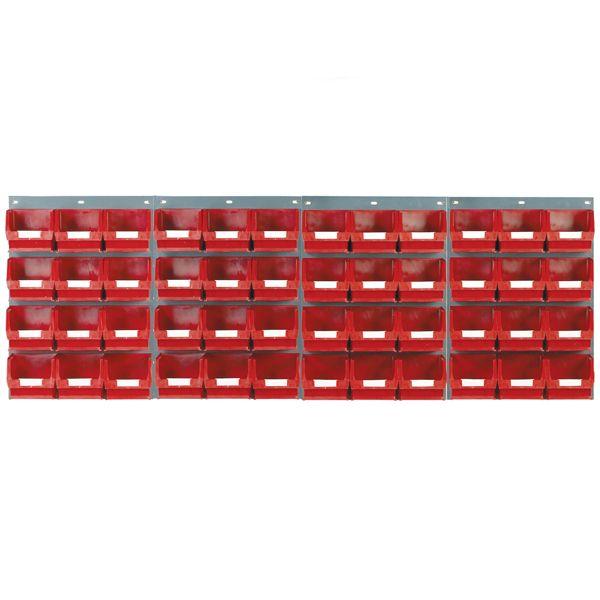
Professional engineering, manufacturing, and assembly environments often involve a wide variety of specialised tools and components that benefit from thoughtfully organised storage directly integrated into the bench itself. Reviewing the available range of professional-grade benches makes it easier to compare storage configurations specifically suited to these more demanding, specialised professional environments, rather than settling for a generic storage setup that does not genuinely match the specific tools and materials involved in the work. Consulting directly with staff about which tools they reach for most frequently during a typical task sequence can help ensure the final storage configuration genuinely reflects real working patterns rather than a generic assumption. Colour-coded or clearly labelled storage sections can further reduce time lost searching for specific components, particularly in fast-paced assembly environments where speed and accuracy both matter considerably.
Selecting the ideal bench for engineering, manufacturing, or assembly work ultimately depends on carefully matching construction, worktop material, and storage configuration against the genuine demands of your specific professional environment. Taking the time to identify exactly what your particular workflow requires, rather than defaulting to a generic industrial bench, ensures the equipment you invest in genuinely supports the precision, durability, or efficiency your professional work actually depends on day to day. Revisiting this decision as your operation grows or diversifies also makes sense, since a configuration that worked well for an earlier stage of the business may need reassessing as work becomes more varied over time.