English
 Arabic
 French
 Spanish
 Portuguese
 Deutsch
 Turkish
 Dutch
Dutch
 Italiano
 Russian
 Romaian
 Portuguese (Brazil)
 Greek
Greek
Two Wheeler Rental Market Size, Analysis & Forecast Report
Other |
2026-05-30 14:56:29
 Advertise With Us
 About Us
 Terms And Conditions
 Privacy Policy
See All
Privacy Policy
See All

Upgrade to Pro
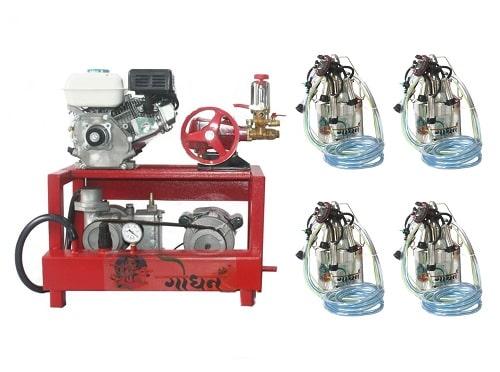
If you're still milking cows by hand, you already know the problems. It's slow. It tires out your workers. And no matter how careful they are, hands and open buckets let dust, hair, and bacteria into the milk.
A trolley milking machine fixes most of these problems at once. It's a portable, wheel mounted machine that you can roll from cow to cow or shed to shed, without building a fixed milking parlour.
This guide explains what a trolley milking machine is, how it actually improves milk quality (not just in theory), what it does for your farm's bottom line, and how to pick the right one. We'll also compare it with other milking systems and answer the questions farmers ask most.
A trolley milking machine is a mobile milking unit built on a wheeled frame. It has its own motor, vacuum pump, and milk bucket, so it doesn't need a fixed pipeline running through your shed.
You plug it in (or start the engine, on non electric models), wheel it up to the cow, attach the milking cluster, and start milking. When you're done with one cow, you roll it to the next.
This makes it different from two other common setups:
The trolley model sits in between: more capable than a basic bucket unit, more flexible than a pipeline system. 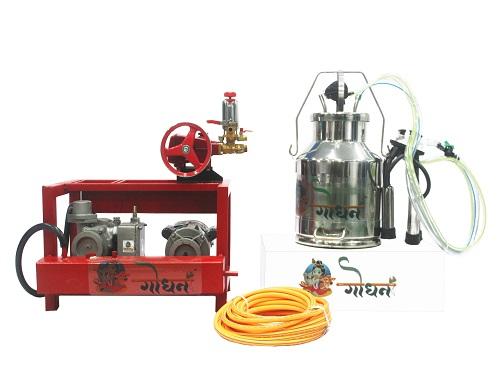
Every trolley milking machine has four core parts. Understanding them helps you see exactly where milk quality and speed come from.
Together, these parts do one job: remove milk quickly, gently, and with as little air and human contact as possible.
This is the part most farmers actually care about, since milk quality decides the price you get. Here's how the machine helps, step by step.
Less human contact with the milk. Hand milking means hands, buckets, and open air all touch the milk before it's stored. Every one of those is a source of bacteria. A trolley machine draws milk through a sealed line straight from the udder into a closed bucket, cutting out most of that contact.
Lower bacterial and somatic cell counts. Milk buyers grade raw milk partly on Total Plate Count (a measure of bacteria) and Somatic Cell Count (a measure of udder health and mastitis risk). Faster, cleaner extraction directly lowers both, which is why machine milked herds often qualify for better milk prices than hand milked ones.
More complete milking. A cow left partly milked is more likely to develop mastitis (udder infection), which ruins milk quality fast. A properly adjusted machine empties the udder more consistently than tired hands do at the end of a long milking round.
Steady, gentle suction. The pulsator protects the udder from the kind of rough or uneven pulling that can cause micro injuries. Those injuries raise infection risk and, in turn, lower milk quality.
Less time for bacteria to multiply. Bacteria grow fast in warm milk. The quicker milk moves from udder to a cooled container, the less time bacteria have to build up. A machine that milks a cow in 5 to 7 minutes beats hand milking on this every time.
Milk quality gets the machine a better price. Productivity gets you more milk, sold faster, with less labour cost. Here's where the gains come from.
| Feature | Trolley Milking Machine | Fixed Bucket Machine | Pipeline System |
|---|---|---|---|
| Mobility | Moves between cows/sheds on wheels | Usually stays in one spot | Fully fixed, not movable |
| Setup cost | Moderate | Lower | High |
| Best for | Small to mid size herds (8 to 35 cows) | Very small herds | Large, established dairies |
| Shed/parlour needed | No | Sometimes | Yes, purpose built |
| Labour needed | Low to moderate | Moderate | Low (once installed) |
| Scalability | Good, add units as herd grows | Limited | Requires major rework to expand |
| Power options | Electric, or engine/kerosene for low electricity areas | Usually electric only | Electric |
If you're a small or growing dairy farmer, the trolley model usually offers the best balance of cost, flexibility, and quality improvement. If you're running a large, fixed operation with a stable herd size, a pipeline system may pay off in the long run.
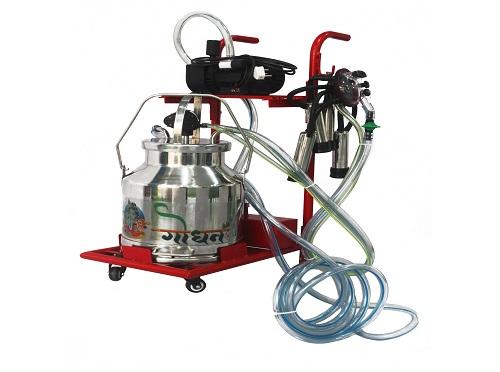
Not every trolley unit suits every farm. Before you buy, check these points.
Buying the machine is step one. Keeping it clean and well adjusted is what actually protects your milk quality long term.
A trolley milking machine won't fix bad habits on its own. Watch for these:
A trolley milking machine won't turn a poorly run farm into a well run one overnight. But for the fundamentals, cleaner milk, faster milking, and lower labour strain, it delivers real, measurable results.
The gains come from two things working together: the machine's design, and how well you maintain and operate it. Get both right, and you'll see it in your milk quality reports and your bottom line within a few months.