English
 Arabic
 French
 Spanish
 Portuguese
 Deutsch
 Turkish
 Dutch
Dutch
 Italiano
 Russian
 Romaian
 Portuguese (Brazil)
 Greek
Greek
From First Sketch to Final Ring: The Custom Lab Grown Diamond Rings Design Process
Shopping |
2026-07-11 12:10:37
 Advertise With Us
 About Us
 Terms And Conditions
 Privacy Policy
See All
Privacy Policy
See All

Upgrade to Pro
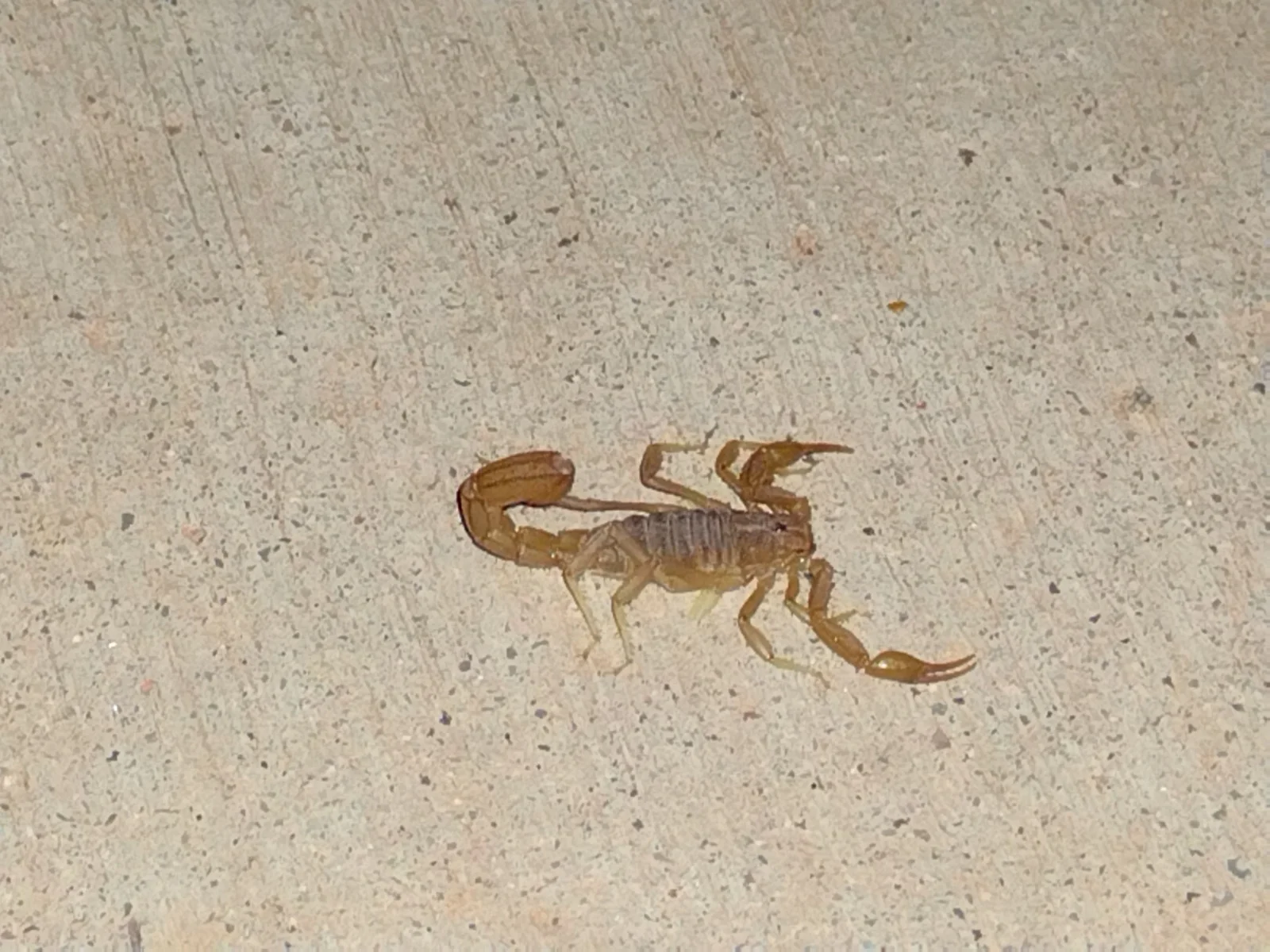
Finding a scorpion inside your home is one of those moments that is hard to forget. The instinct for most people is to deal with it and move on, assume it wandered in once, and that is probably the end of it.
Sometimes that is true. More often, it is not.
In Arizona, scorpion activity around a home usually follows a pattern. The first sighting is rarely the only one. And the areas where scorpions show up first tend to be the same areas they keep returning to if nothing changes. Understanding the signs of a scorpion problem, not just the visible sightings, but the less obvious indicators, helps homeowners decide when to watch and when to act.
This guide covers what Arizona homeowners typically notice first, where scorpions are most likely to appear, and how to tell the difference between a random encounter and a problem that needs professional attention.
Scorpions are not an occasional nuisance in Arizona, the way they might be in other parts of the country. The bark scorpion, the species most commonly encountered in the greater Phoenix area and across the West Valley, is one of the most venomous scorpions in North America. It is also a climber, which means it can move along walls, squeeze through surprisingly small gaps, and show up in places like closets, bedrooms, and bathrooms, not just garages and patios.
Bark scorpions are also socially related to other scorpion species. They tend to cluster together in harborage areas, which means if you are finding them repeatedly, there may be more nearby than you are seeing.
None of this is meant to alarm; scorpion activity is manageable with the right approach. But it does explain why a single sighting deserves more attention in Arizona than it might elsewhere.
Not every scorpion problem starts with a live scorpion walking across the kitchen floor. Many homeowners pick up on other signals first, sometimes without recognizing what they are seeing.
The most common early indicator is not one scorpion; it is the same general area coming up again and again. A scorpion near the garage door one week. Another near the patio door the following week. One in the master bathroom a few days later.
When sightings cluster around a particular zone of the home, that is not a coincidence. Scorpions tend to use consistent travel paths and return to areas that offer shelter, moisture, or access points. Repeated activity in the same area is one of the clearest signs of a scorpion problem that goes beyond a random encounter.
Scorpions are nocturnal. If you are finding them during daylight hours, especially inside the home, that is worth noting. Daytime sightings can suggest that activity nearby is significant enough that scorpions are moving around even outside their typical active window.
Nighttime sightings, on the other hand, are normal behavior. The key detail is not the time of day but the frequency and location.
Scorpions molt as they grow, leaving behind shed exoskeletons that look like a hollow, pale version of the scorpion itself. These are easy to miss; they tend to show up in quiet corners, storage areas, along baseboards, or in spaces that do not get regular foot traffic.
Finding shed exoskeletons inside the home or in the garage is a sign that scorpions have been spending time in that area, not just passing through.
Scorpions eat insects. If you are noticing more insect activity around your home, near exterior lights, around the patio, in the garage, that environment may also be drawing scorpions closer. A home with a consistent insect presence gives scorpions a reason to stay nearby. If both insects and scorpions are showing up with regularity, that combination is worth paying attention to.
Scorpion droppings are small, dark, and easy to overlook. They tend to appear near areas where scorpions rest or travel, along baseboards, in garage corners, near storage piles, or in other low-traffic spaces. If you are cleaning and notice small dark marks or pellets in areas you would not expect, it is worth considering whether scorpions may be active in that zone.
Understanding the most common entry zones helps homeowners know where to focus their attention and helps explain why the same areas keep producing sightings.
The garage is where most Arizona homeowners first encounter scorpion activity. It checks almost every box for what scorpions look for: shade, access to the outside, storage items that create hiding spots, and a direct path toward the interior of the home.
Specific areas inside the garage to watch:
Corners along the back wall and sides
The threshold between the garage and the main living space
Around storage boxes, especially cardboard stacked on the floor
Alongside doors and their frames
Near the water heater or any area with moisture
Scorpions in the garage become a more serious concern when they appear near the door that connects to the house. That door is often one of the primary paths scorpions use to move inside.
Exterior doors, especially patio doors, side entries, and the garage-to-home door, are common scorpion access points. Worn weather stripping, gaps under door sweeps, and slight misalignments in door frames can all create openings that are small enough to go unnoticed but large enough for a scorpion to move through.
Homeowners who keep finding scorpions near the same door should pay close attention to the condition of the door sweep and frame. That one detail is often the difference between a repeat problem and a resolved one.
Inside the home, bathrooms and laundry rooms are among the most common areas where scorpions are found. Both rooms offer moisture, which scorpions are often drawn toward, especially in the dry desert heat. Plumbing lines that enter through exterior walls can also create small gaps that become access points.
Finding a scorpion in the bathroom once may be startling but not necessarily alarming. Finding them there repeatedly is a pattern worth addressing.
Scorpions found in bedrooms and closets are usually the most concerning for homeowners, particularly for families with children or pets. These areas are dark, quiet, and low-traffic, which makes them attractive resting spots.
This is also why checking shoes, bedding, and items left on the floor is a standard recommendation in areas with active scorpion populations. It is a simple habit that reduces the chance of unexpected contact.
Outdoor activity near the home is often the starting point before scorpions move inside. Block walls, desert landscaping, rock features, wood piles near the house, and patio furniture can all serve as harborage areas.
Yard sightings become more significant when they happen close to the structure, near the exterior walls, patio doors, garage edges, or yard areas adjacent to entries. The closer the outdoor activity is to an access point, the higher the chance scorpions will eventually find a way inside.
There is a meaningful difference between finding one scorpion and having a recurring scorpion issue. Here is how to tell which situation you are dealing with.
It is likely more than a random encounter if:
You have found more than one scorpion, regardless of the time gap between sightings
The sightings keep happening in or near the same area
You are finding them inside the main living space, not just the garage or yard
Children, pets, or family members have had unexpected contact with scorpions
You are also noticing a significant insect presence around the home
Sightings have happened both inside and outside the home
Any one of these individually is enough reason to move from watching to acting. Multiple factors together make a professional assessment the clear next step.
You do not need to conduct a full inspection yourself, but knowing the most common entry points helps you explain the situation clearly if you call for service.
Areas worth noting:
Door sweeps, check whether the sweep makes full contact with the threshold, especially on exterior and garage-entry doors
Garage door edges, look for light showing along the sides or bottom when the door is closed
Exterior wall gaps, around pipes, utility lines, conduit, or cable entry points
Vent screens, damaged or missing screens on exterior vents, create direct access
Patio door frames, the sliding door track area, and frame edges are common gaps
Cracks near the foundation, especially where soil and structure are in close contact
If you notice activity near any of these areas specifically, that detail is useful when you call. It helps focus the service conversation and can speed up the next step significantly.
While professional treatment is the most effective solution for an active scorpion problem, there are steps homeowners can take to reduce easy access and lower the conditions that attract scorpions.
Reduce access: Check door sweeps on all exterior doors, the garage-to-home door, and patio doors. Replace any sweep that does not make full contact with the floor.
Reduce shelter: Keep garage corners clear of stacked cardboard, clutter, or items piled against exterior walls. Scorpions will use almost any dark, undisturbed space as a hiding spot.
Reduce moisture: Fix leaking pipes, clear standing water, and make sure areas near plumbing do not stay damp. Scorpions in the desert are drawn to moisture sources.
Reduce insect activity: Minimize exterior lighting that draws insects at night, or switch to yellow or sodium vapor bulbs that are less attractive to insects. Fewer insects mean fewer reasons for scorpions to stay close.
Check exterior openings: Look at vent screens, gaps around pipes, and utility entry points. These are often overlooked but are among the most common access routes.
These steps do not replace professional service when activity is already present, but they support better long-term results when used alongside treatment.
The decision to call is straightforward once the pattern becomes clear. If any of the following apply, professional scorpion control is the right next step:
Scorpions have appeared inside the home more than once
You keep finding them near the same door, zone, or area
The garage has become a repeated problem area
You are not sure where they are getting in
You have children or pets and want the risk reduced as quickly as possible
You are seeing both insects and scorpions around the home with regularity
You want prevention built in rather than reacting after each sighting
A one-time encounter might not require professional service. A pattern almost always does.
Scorpions in Arizona are not something most homeowners can simply wait out. The desert climate, the construction style of West Valley homes, and the behavior of bark scorpions in particular create conditions where activity tends to continue, and sometimes increase, without intervention.
The good news is that most scorpion problems have clear early warning signs. Knowing what the signs of a scorpion problem look like, repeated sightings, shed exoskeletons, activity near entry points, and garage patterns, gives you the ability to act before the situation becomes more serious.
If you are seeing those signs around your home, the right move is to get a clear next step from a professional rather than waiting for the pattern to confirm itself one more time.
Red Rock Pest AZ provides scorpion control services in Peoria, Surprise, Glendale, and throughout the West Valley. Locally owned and operated since 2016. Open 24 hours. Call (480) 582-4371.