English
 Arabic
 French
 Spanish
 Portuguese
 Deutsch
 Turkish
 Dutch
Dutch
 Italiano
 Russian
 Romaian
 Portuguese (Brazil)
 Greek
Greek
Architects in Delhi Who Design Homes With Great Care and Precision
Other |
2026-08-10 10:19:06
 Advertise With Us
 About Us
 Terms And Conditions
 Privacy Policy
See All
Privacy Policy
See All

Upgrade to Pro
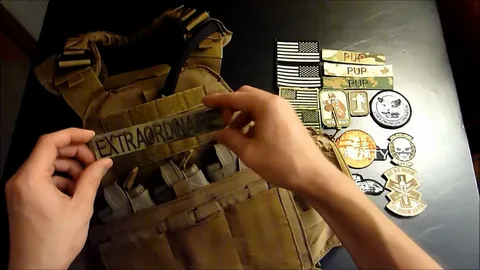
Plate carriers have become standard gear far beyond the battlefield — you'll spot them on range days, in security jobs, on airsoft fields, and on everyday tactical enthusiasts who just like the look and function. But a plain plate carrier only tells half a story. The patches on the front, back, and sides are what actually communicate who's wearing it, what team they belong to, and sometimes even critical safety information like blood type. This guide breaks down everything you need to know about Custom Plate Carrier Patches: how they work, the materials they're made from, how to attach them properly, what sizes make sense, and importantly what the law actually says about wearing them.
On a plate carrier, patches aren't decoration first and function second — it's usually the other way around. In the field, a quick glance at a name tape, blood type patch, or unit marker can matter more than people realize.
Because most plate carriers use hook-and-loop (Velcro) panels, patches can be swapped in seconds depending on the mission, the unit, or just the mood.
Not all patches are built the same, and the material changes how they perform in the field.
| Material | Look & Feel | Best For |
|---|---|---|
| PVC / Rubber | Soft, flexible, 3D detail | Waterproof, rugged, outdoor use |
| Embroidered fabric | Classic stitched texture | Text-heavy or simple logo designs |
| Woven | Flat, tight-stitched | Small text or fine line detail |
| Leather / faux leather | Rugged, premium look | Style-forward, less tactical-specific use |
Almost all of these come with a hook-and-loop backing option, which is what makes them compatible with standard plate carrier panels in the first place.
| Method | Best For | Durability | Flexibility |
|---|---|---|---|
| Velcro (hook & loop) | Frequent swaps, mission-specific loadouts | High if panel is well-maintained | Very high — remove/replace in seconds |
| Sew-on | Permanent uniform identifiers | Highest — won't peel or fall off | Low — needs unpicking to remove |
| Iron-on | Casual or lightweight fabric use | Moderate, weakens with washing/heat | Low — not ideal for tactical fabrics |
For plate carriers specifically, Velcro dominates for a simple reason: operational needs change. A name tape today might need to become a "MEDIC" label tomorrow. Sew-on is reserved for identifiers that genuinely never change, and iron-on is generally avoided on tactical fabric altogether since many of those materials aren't heat-friendly.
Patch size isn't arbitrary — it's tied to both the Velcro panel dimensions on the carrier and how far away the patch needs to be legible from.
| Size | Common Use |
|---|---|
| 2x3 inches | Blood type, initials, call signs |
| 3x5 inches | Standard name tapes, compact unit markers |
| 4x6 inches | "POLICE"/"SECURITY" labels, short-distance logos |
| 5x7 to 6x8 inches | Back panels, flags visible from a distance |
This is the part people often skip past, and it's the one that can actually get someone in trouble. In most countries, including the US, wearing custom patches on a plate carrier is completely legal — the issue only arises when a patch is designed to closely mimic an official insignia.
The short version: personalize freely, but don't design a patch that could reasonably be mistaken for genuine law enforcement or military identification.
| Custom | Pre-Made | |
|---|---|---|
| Design | Fully your own — text, colors, logos | Fixed designs like "POLICE" or flags |
| Cost | Higher, made-to-order pricing | Lower, mass-produced |
| Turnaround | Takes time to produce | Ready to use immediately |
| Best for | Teams, brands, unique identity | Standard, generic identification needs |
If you just need a stock "POLICE" or blood-type patch, pre-made is faster and cheaper. If you want something that represents your team, brand, or personal identity, a custom-made patch is worth the wait.
Small one-off orders will always carry a higher per-patch cost than a batch of 50 or 100, since setup costs get spread across more units in bulk runs.
A plate carrier does its job whether or not it has patches — but the patches are what make it yours. Getting the material, attachment method, and size right ensures the patch performs as well as it looks, and staying mindful of the legal boundaries around official insignia keeps things simple and above board.
Whether you're outfitting a whole team or just adding a bit of personality to your own gear, taking the time to get these details right pays off both in durability and in how the finished look reads in the field.