English
 Arabic
 French
 Spanish
 Portuguese
 Deutsch
 Turkish
 Dutch
Dutch
 Italiano
 Russian
 Romaian
 Portuguese (Brazil)
 Greek
Greek
Home Décor and Biophilic Design Trends Lift Indoor Plants Market
Other |
2026-02-09 09:20:38
 Advertise With Us
 About Us
 Terms And Conditions
 Privacy Policy
Hepsini Gör
Privacy Policy
Hepsini Gör

Upgrade to Pro
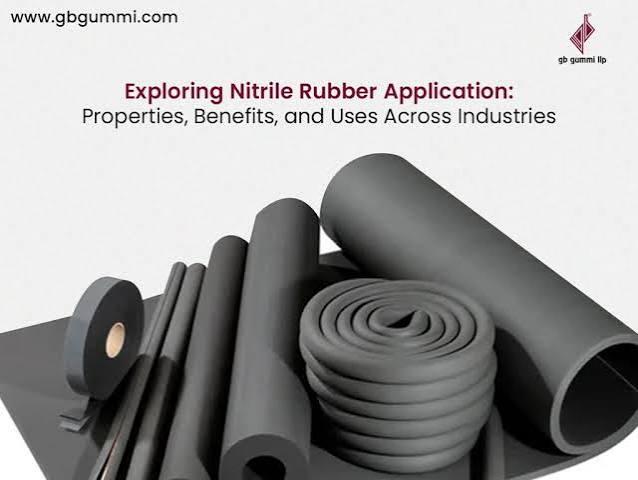
NBR rubber is a high-performance synthetic elastomer widely recognized for its exceptional resistance to petroleum oils, fuels, lubricants, and hydraulic fluids. Because of these characteristics, it has become one of the most preferred materials for manufacturing industrial sealing products that operate in demanding environments.
From automotive engines and hydraulic systems to oil refineries and manufacturing plants, NBR rubber provides dependable sealing performance, mechanical strength, and durability. Its ability to withstand constant exposure to oils while maintaining flexibility makes it a valuable material for numerous industrial sectors.
At GB Gummi, we manufacture precision-engineered NBR rubber products designed to deliver outstanding performance, extended service life, and reliable sealing solutions for industrial applications.
NBR rubber, also known as Nitrile Butadiene Rubber, is a synthetic elastomer produced by combining acrylonitrile and butadiene. The amount of acrylonitrile in the compound determines the rubber's resistance to oils and fuels, allowing manufacturers to develop grades suitable for different industrial applications.
Unlike natural rubber, NBR rubber performs exceptionally well in environments where continuous contact with oils, greases, and hydrocarbons is unavoidable. This makes it one of the most widely used materials for dynamic and static sealing components.
Products commonly manufactured using NBR rubber include:
O-rings
Oil seals
Hydraulic seals
Fuel hoses
Rubber gaskets
Diaphragms
Bushes
Industrial moulded rubber parts
Industrial equipment depends on reliable sealing materials to prevent leakage, contamination, and equipment failure. NBR rubber has earned a strong reputation because it offers excellent resistance to petroleum-based substances while maintaining its mechanical properties under continuous operation.
Its versatility allows manufacturers to use a single material across multiple applications, reducing maintenance costs and improving equipment efficiency.
Some major advantages include:
Excellent oil and fuel resistance
High durability
Good abrasion resistance
Reliable sealing performance
Long operational lifespan
Economical manufacturing solution
NBR rubber combines excellent chemical resistance with strong mechanical performance, making it suitable for demanding industrial environments.
One of the defining characteristics of NBR rubber is its ability to resist mineral oils, diesel, lubricants, transmission fluids, and hydraulic oils.
Its abrasion-resistant nature allows components to perform efficiently in moving mechanical systems.
NBR maintains good tensile strength and tear resistance even under continuous pressure.
The material retains its original shape after prolonged compression, ensuring reliable sealing.
NBR rubber provides flexibility that helps absorb movement and vibration in mechanical systems.
It offers resistance to many industrial greases, lubricants, and petroleum-based chemicals.
Businesses choose NBR rubber because it combines performance, durability, and affordability.
High-quality seals reduce the risk of fluid leakage and equipment failure.
Durable rubber components require less frequent replacement.
Excellent resistance to oils and abrasion contributes to extended product lifespan.
NBR rubber can be moulded into complex designs while maintaining dimensional accuracy.
It offers excellent value for applications requiring oil-resistant rubber products.
Because of its outstanding oil resistance, NBR rubber is used across numerous industries.
NBR rubber is commonly found in:
Fuel system seals
Engine gaskets
Oil-resistant hoses
O-rings
Transmission seals
The material is widely used for:
Pipeline seals
Valve components
Pump diaphragms
Hydraulic sealing systems
Fuel handling equipment
Its sealing properties make it ideal for:
Hydraulic cylinders
Pressure seals
Fluid transfer systems
Industrial pumps
NBR rubber is also used in:
Industrial rollers
Machinery seals
Conveyor equipment
Rubber sheets
Protective covers
Applications include:
Tractor hydraulic seals
Fuel hoses
Industrial machinery components
Rubber bushes
The performance characteristics of NBR rubber make it suitable for a wide range of industrial sectors.
Major industries include:
Automotive manufacturing
Oil and gas processing
Hydraulic equipment manufacturing
Chemical processing
Heavy engineering
Agriculture
Marine equipment
Industrial automation
Mining
Its excellent compatibility with petroleum products makes it one of the most commonly specified sealing materials worldwide.
Producing premium-quality NBR rubber components involves advanced manufacturing processes that ensure precision and durability.
Carefully selected NBR polymers are blended with fillers, curing agents, plasticizers, and stabilizers to achieve the required physical properties.
The raw materials are thoroughly mixed to produce a homogeneous rubber compound.
The prepared compound is shaped using compression moulding, transfer moulding, injection moulding, or extrusion processes.
Heat curing creates strong molecular cross-links, improving elasticity, strength, and durability.
Every component is tested for:
Hardness
Tensile strength
Elongation
Compression set
Dimensional accuracy
Surface finish
At GB Gummi, each NBR rubber product undergoes rigorous quality inspection to ensure dependable industrial performance.
Selecting the correct NBR rubber product depends on the intended operating conditions.
Before making a decision, evaluate:
Confirm that the material matches the oils, fuels, or chemicals present in your application.
Choose the appropriate compound for the expected operating temperature.
Consider hardness, flexibility, and pressure resistance.
Ensure the dimensions and tolerances match your equipment specifications.
Working with an experienced manufacturer ensures consistent quality and reliable performance.
At GB Gummi, we understand the importance of manufacturing rubber components that deliver reliable sealing performance under challenging industrial conditions.
Our advantages include:
Premium NBR rubber compounds
Advanced moulding technology
Precision manufacturing
Customized rubber components
Comprehensive quality testing
Experienced engineering team
Timely production and delivery
Industry-specific solutions
We work closely with customers to develop NBR rubber products that meet both standard and custom application requirements.
Proper maintenance improves the lifespan and reliability of NBR rubber products.
For best results:
Store components in a cool, dry environment.
Protect products from excessive sunlight.
Keep rubber away from incompatible chemicals.
Inspect seals periodically for wear.
Replace damaged components promptly to prevent equipment failure.
Preventive maintenance helps maximize sealing performance and reduce downtime.
As industries continue to expand their use of hydraulic systems, fuel handling equipment, and automated machinery, the demand for NBR rubber continues to grow. Advances in polymer engineering are producing improved NBR compounds with enhanced durability, greater chemical resistance, and longer operational life.
The increasing focus on industrial efficiency and equipment reliability ensures that NBR rubber will remain one of the most important synthetic elastomers for modern manufacturing.
NBR rubber has become the preferred choice for industries requiring dependable oil-resistant sealing solutions. Its excellent resistance to fuels, lubricants, abrasion, and mechanical wear makes it indispensable for automotive, hydraulic, oil and gas, manufacturing, and heavy engineering applications.
At GB Gummi, we manufacture premium-quality NBR rubber components that combine precision engineering with advanced manufacturing techniques. Whether you require standard sealing products or custom-designed rubber parts, our solutions are built to deliver reliable performance, durability, and long-term value.
NBR rubber is widely used to manufacture O-rings, oil seals, hydraulic seals, fuel hoses, gaskets, diaphragms, bushes, and industrial moulded rubber components.
NBR rubber provides excellent resistance to oils, fuels, lubricants, abrasion, and mechanical wear while offering good flexibility and long service life.
Yes. NBR rubber is one of the most commonly used materials for hydraulic seals, cylinders, pumps, and fluid handling systems because of its excellent oil resistance.
Automotive, oil and gas, chemical processing, manufacturing, mining, agriculture, marine, and heavy engineering industries extensively use NBR rubber products.
GB Gummi manufactures high-quality NBR rubber components using premium raw materials, advanced production technology, precision engineering, and rigorous quality control to deliver reliable solutions for demanding industrial applications.