English
 Arabic
 French
 Spanish
 Portuguese
 Deutsch
 Turkish
 Dutch
Dutch
 Italiano
 Russian
 Romaian
 Portuguese (Brazil)
 Greek
Greek
Field Programmable Gate Array FPGA Market Development Accelerated by Advanced Semiconductor and Chip Technologies
Other |
2026-08-10 09:37:27
 Advertise With Us
 About Us
 Terms And Conditions
 Privacy Policy
Afiseaza-i pe toti
Privacy Policy
Afiseaza-i pe toti

Upgrade to Pro
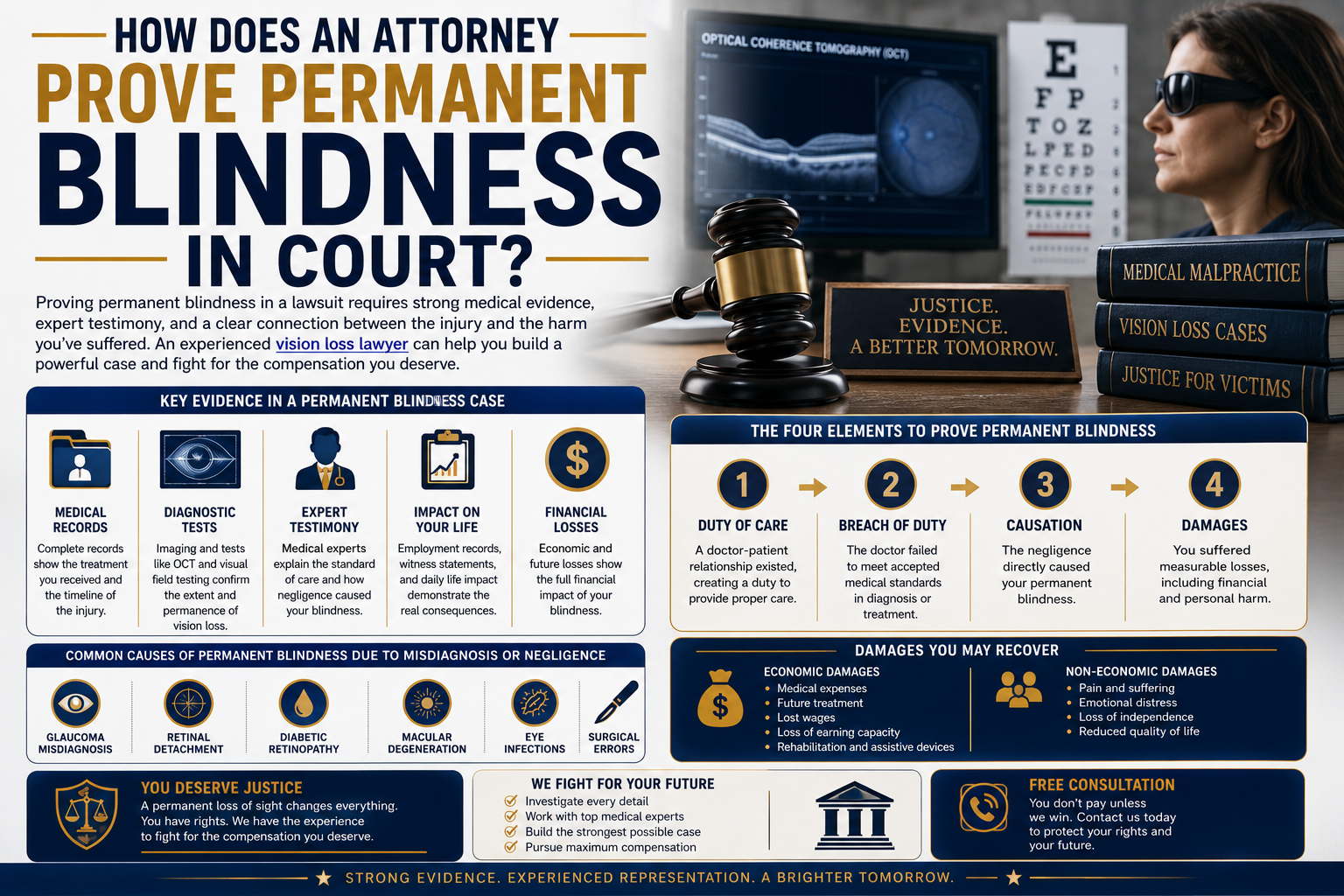
Permanent blindness is one of the most severe injuries a person can suffer. It affects nearly every aspect of life, including employment, mobility, independence, and emotional well-being. Whether blindness results from medical malpractice, a car accident, a defective product, or another act of negligence, proving the injury in court requires extensive evidence and expert analysis. If you or a loved one has experienced permanent vision loss, working with an experienced legal advocate for blindness injury lawsuits can help build a compelling case and pursue the compensation you deserve.
Because permanent blindness often leads to lifelong medical needs and financial losses, courts require clear, credible evidence demonstrating both the cause of the injury and its lasting impact on the victim's life.
Permanent blindness refers to vision loss that is not expected to improve with additional medical treatment. It may involve:
Complete blindness in both eyes
Blindness in one eye
Permanent loss of central vision
Significant peripheral vision loss
Irreversible optic nerve damage
Severe retinal damage
In legal claims, proving that the condition is permanent is essential because it directly affects the amount of compensation that may be awarded.
Unlike a broken bone or temporary injury, blindness involves complex medical issues.
An attorney must establish:
The injury exists.
The blindness is permanent.
Another party's negligence caused the injury.
The blindness has resulted in measurable damages.
Each of these elements requires substantial supporting evidence.
One of the first steps an attorney takes is collecting complete medical documentation.
Important records may include:
Emergency room records
Hospital records
Ophthalmology evaluations
Surgical reports
Prescription history
Vision rehabilitation records
Follow-up treatment notes
These records help establish the timeline of the injury and demonstrate the seriousness of the vision loss.
Objective medical testing is often critical in proving permanent blindness.
Common diagnostic tests include:
OCT provides detailed images of the retina and optic nerve, helping physicians identify permanent structural damage.
Visual field exams measure the extent of peripheral vision loss and document functional limitations.
Photographs of the retina help show damage caused by trauma, retinal detachment, diabetic retinopathy, or other eye diseases.
This imaging technique evaluates blood flow in the retina and can identify irreversible retinal damage.
If blindness resulted from head trauma or brain injury, imaging may reveal damage affecting the visual pathways or optic nerve.
Medical experts are often among the most important witnesses in blindness litigation.
An attorney may work with:
Ophthalmologists
Retinal specialists
Neuro-ophthalmologists
Optometrists
Neurologists
Vision rehabilitation specialists
These experts explain:
The cause of the blindness
Why the injury is permanent
The expected long-term prognosis
Future medical needs
Their testimony helps judges and juries understand complicated medical evidence.
An attorney must also connect the blindness directly to the defendant's negligence.
Depending on the case, this may involve proving:
A surgeon made an avoidable error during eye surgery.
A physician failed to diagnose glaucoma or retinal detachment.
A defective product caused catastrophic eye injuries.
A negligent driver caused traumatic eye trauma.
A workplace accident resulted in irreversible vision loss.
Without proving causation, compensation may not be available.
Courts also consider how blindness affects the victim's ability to function.
Evidence may include:
Employment records
Wage statements
Testimony from family members
Caregiver reports
Rehabilitation evaluations
Daily activity journals
This evidence demonstrates the real-world consequences of permanent vision loss.
Permanent blindness frequently affects a person's ability to earn a living.
Vocational experts evaluate:
Whether the victim can continue working
Career limitations
Necessary workplace accommodations
Future employment opportunities
Economic experts calculate:
Lost wages
Loss of future earning capacity
Medical expenses
Future care costs
Life-care planning expenses
These calculations help determine the full financial impact of the injury.
Not all damages are financial.
Blindness often causes:
Emotional distress
Depression
Anxiety
Loss of independence
Reduced quality of life
Social isolation
Attorneys may present testimony from:
Psychologists
Mental health professionals
Family members
Friends
Caregivers
These witnesses help explain the emotional impact that cannot be measured by medical bills alone.
Insurance companies often dispute catastrophic injury claims.
They may argue:
The blindness existed before the incident.
Another medical condition caused the injury.
The vision loss is temporary.
The victim exaggerated symptoms.
The defendant was not responsible.
An experienced attorney anticipates these arguments and gathers evidence to address them.
Preparing a blindness case involves far more than collecting medical records.
A skilled attorney can:
Investigate the incident
Preserve critical evidence
Obtain expert opinions
Review diagnostic imaging
Calculate future damages
Interview witnesses
Negotiate with insurance companies
Present persuasive evidence at trial
Comprehensive preparation increases the likelihood of achieving a favorable settlement or verdict.
Blindness claims are subject to legal deadlines known as statutes of limitations.
Early legal action allows your attorney to:
Preserve medical evidence
Obtain witness statements
Secure expert testimony
Prevent important records from being lost
Delaying your claim can make proving negligence significantly more difficult.
Proving permanent blindness in court requires a combination of medical evidence, expert testimony, diagnostic testing, and documentation showing how the injury has permanently changed the victim's life. Courts carefully evaluate both the medical diagnosis and the long-term financial and emotional consequences before determining compensation.
If permanent blindness resulted from medical malpractice, an accident, or another form of negligence, an experienced vision loss lawyer can help gather the evidence needed to establish liability and pursue full compensation for your present and future losses.
Medical records, diagnostic imaging, ophthalmology evaluations, expert testimony, employment records, and rehabilitation reports are commonly used.
Yes. Ophthalmologists and other medical specialists often provide expert testimony to explain the cause and permanence of the injury.
Yes. Permanent vision loss in one eye may still result in significant compensation depending on its impact on your life and ability to work.
Attorneys often work with vocational and economic experts to estimate future medical expenses, lost earning capacity, and long-term care needs.
A lawyer can collect evidence, work with medical experts, negotiate with insurers, and build a strong case to maximize your compensation.