English
 Arabic
 French
 Spanish
 Portuguese
 Deutsch
 Turkish
 Dutch
Dutch
 Italiano
 Russian
 Romaian
 Portuguese (Brazil)
 Greek
Greek
FYP Worthy The Killing Spell by Shay Kauwe
Sports |
2026-06-22 04:44:16
 Advertise With Us
 About Us
 Terms And Conditions
 Privacy Policy
Ver Todo
Privacy Policy
Ver Todo

Upgrade to Pro
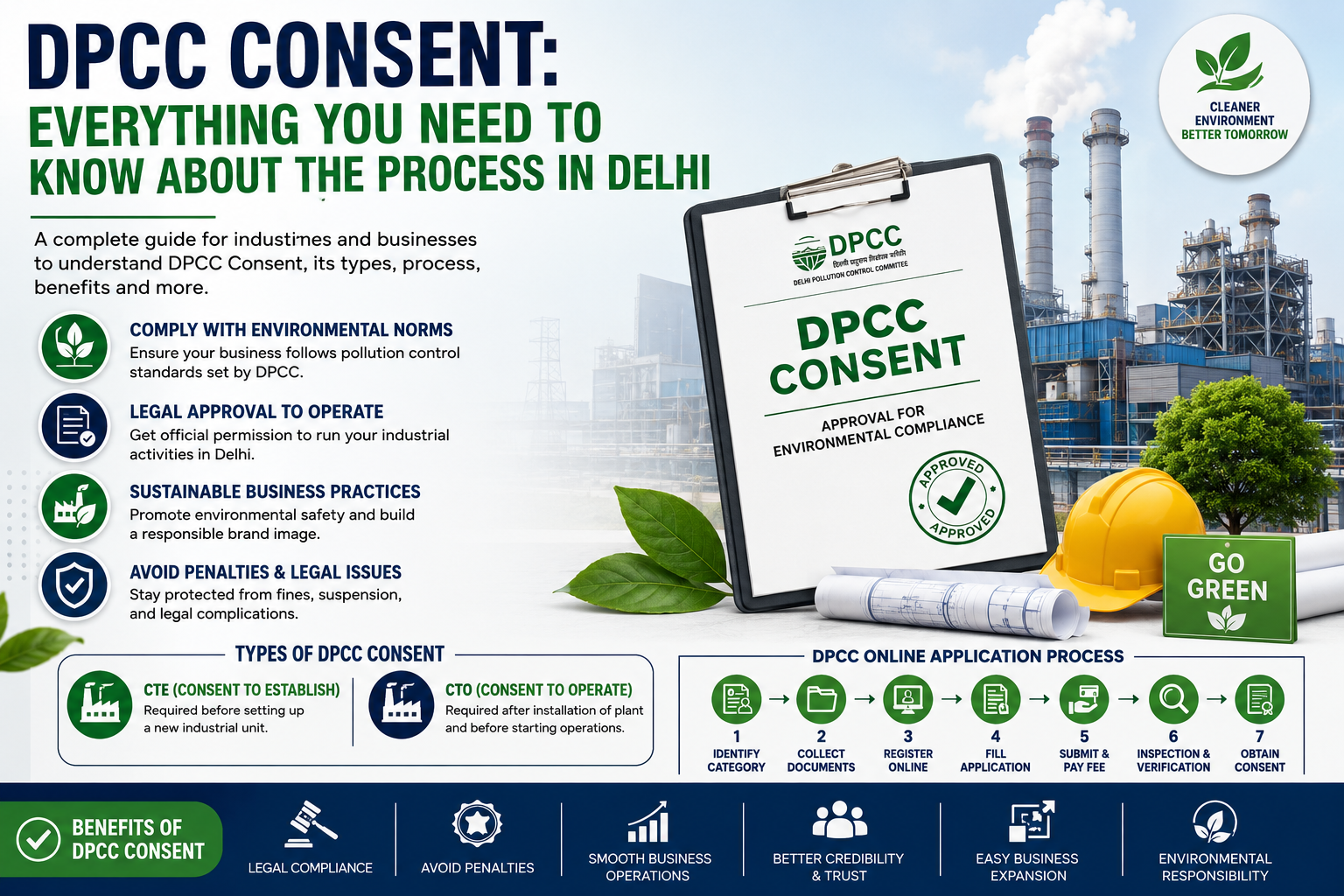
Introduction: Importance of DPCC Consent for Businesses in Delhi
Any establishment or industrial unit that plans to set up shop in Delhi needs to adhere to several laws related to the environment. One such requirement is obtaining DPCC consent from the Delhi Pollution Control Committee (DPCC).
The purpose of getting DPCC consent is to ensure that industries comply with pollution control norms and conduct their activities in an environmentally friendly manner. Irrespective of whether you are planning to establish a new industry or expand your existing one, DPCC license will help you stay on the right side of law.
With rising environmental norms in Delhi, there is a need for businesses to understand all aspects of DPCC consent process.
Consent of DPCC – Definition
The Consent of DPCC is an environment clearance issued by the Delhi Pollution Control Committee to the industries/ firms operating in Delhi.
In this context, it needs to be noted that the manufacturing procedure adopted by these industries/ firms meets the requirements of the pollution control act with respect to air emissions, water discharge, hazardous waste and environmental safety.
Consent of DPCC is mandatory for an industry in light of provisions of Water (Prevention and Control of Pollution) Act, 1974 and Air (Prevention and Control of Pollution) Act, 1981.
It is essential to seek proper legal consent in order to carry on business in accordance with the standards of the environment.
Is there any need for DPCC Consent of Industries?
The DPCC is needed by the industries since it:
Non-compliance of DPCC consent could invite various actions against the industry which include penalty or suspension of operations.
Types of DPCC Consent
There are two types of DPCC consents that are needed for the industries located in Delhi:
1. Consent to Establish (CTE)
The DPCC Consent to Establish (CTE) is the type of DPCC consent that is required for establishing a new industrial unit.
CTE is required for:
2. Consent to Operate (CTO)
DPCC Consent to Operate (CTO) is required after the industry is established and ready to begin commercial production.
It confirms that the industry has installed necessary pollution control systems and is operating according to environmental guidelines.
Industries Requiring DPCC Consent
Many industries and commercial activities require DPCC approval depending on their pollution potential.
Examples include:
The requirement depends on the type of activity, production capacity, and pollution category.
How to Apply for DPCC Consent via Online Application
The above-given application process will help you in obtaining DPCC consent.
Application Process Involved in Simple Steps
Step 1: Identify Category
First, identify the industry whether it is in Red, Orange, Green or White category.
Step 2: Collect Required Documents
Second, collect all the required documents in relation to your business and pollution control.
Step 3: Register at DPCC Official Website
Third, register yourself at the DPCC official website.
Step 4: Fill DPCC Application Form
Fill DPCC form containing the following information about your business activity:
Step 5: Submit Document & Pay Fee
Finally, submit the document along with fee according to instructions provided.
Step 6: Inspection & Verification
Inspection of industrial premises can be carried out by DPCC officials.
Step 7: Obtain DPCC Consent
After successful verification, obtain DPCC Consent.
Common Errors While Seeking DPCC Consent
Many firms tend to delay their applications due to improper submissions and inadequate paperwork.
Common errors include:
Well-documented paperwork and professional assistance can prevent unwanted delays.
Advantages of Securing DPCC Consent
There are several benefits that one can derive from a DPCC License:
DPCC Consent FAQ
1. How do I obtain DPCC consent via an online application?
Businesses can apply for DPCC consent online through DPCC portal by registering, submitting an application form for DPCC, documents and payment of fees as applicable.
2. Do I need a DPCC License for every industrial activity?
No. DPCC license criteria depend on industrial activity and pollutants generated. There are several industries and businesses which require DPCC consent.
3. How much time does it take for DPCC to approve the application?
The time will depend on industry type, document accuracy, inspections and completion of application.
4. What are the documents required for DPCC NOC?
The documents required are business registration, ID proof, address proof, layout of site, list of machines used and information on pollution.
5. Difference between DPCC CTE & CTO?
CTE is required before establishment of industry while CTO before commercial operations start.
Conclusion:
Hire Professionals for DPCC Consent in Delhi
DPCC Consent is a mandatory environmental clearance for all the companies working in Delhi.
Proper compliance from choosing the right category to filing the DPCC online application process ensures that businesses stay out of legal troubles.
In case you require assistance with DPCC License, DPCC CTE, CTO approval, renewal, and other such matters, then expert DPCC consultants can help you complete the whole process in a hassle-free manner.