English
 Arabic
 French
 Spanish
 Portuguese
 Deutsch
 Turkish
 Dutch
Dutch
 Italiano
 Russian
 Romaian
 Portuguese (Brazil)
 Greek
Greek
RRRRRRRRRRRRRRRRRRRRRRRRRRRRRRRRRRRRRRRRRRR
Health |
2026-04-17 10:35:54
 Advertise With Us
 About Us
 Terms And Conditions
 Datenschutzbestimmungen
Alle anzeigen
Datenschutzbestimmungen
Alle anzeigen

Upgrade auf Pro
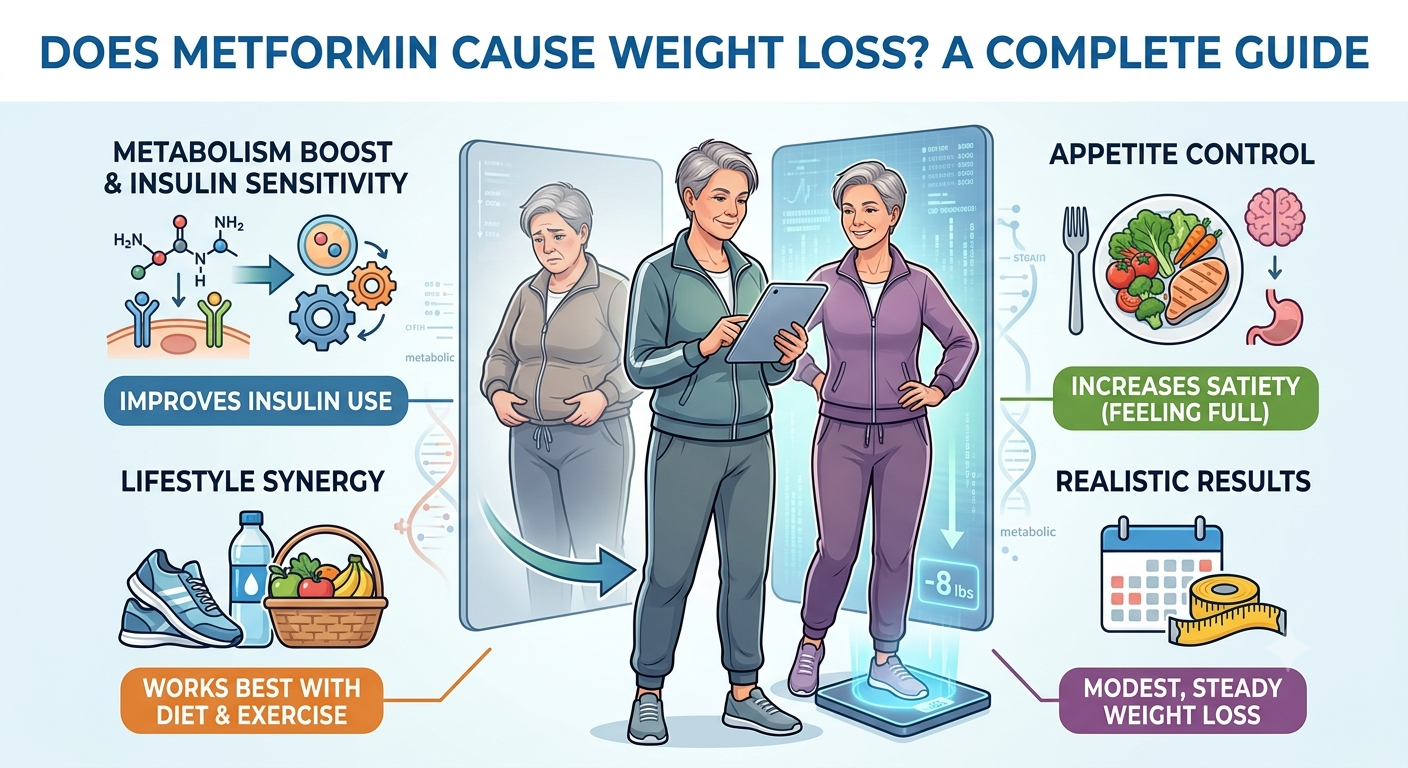
Metformin is one of the most commonly prescribed medications for Type 2 diabetes management. It helps control blood sugar levels by improving how the body responds to insulin and reducing glucose production in the liver.
Although metformin is primarily used for diabetes, many people notice weight loss while taking metformin, which has led to questions about whether it can be used as a weight-loss medication.
So, does metformin cause weight loss? The answer is yes, metformin may support modest weight loss in some people, especially those with insulin resistance or Type 2 diabetes. However, it is not officially a weight-loss drug and should only be used under medical guidance.
Metformin belongs to a class of medicines called biguanides. It is commonly prescribed to help manage high blood sugar levels in people with Type 2 diabetes.
Metformin works by:
Unlike some diabetes medications, metformin usually does not cause weight gain and may contribute to gradual weight reduction.
Metformin may influence body weight through several mechanisms:
Insulin resistance can make it harder for the body to use glucose properly and may contribute to weight gain.
Metformin helps improve insulin sensitivity, allowing cells to use glucose more efficiently and potentially reducing fat storage.
Some people taking metformin experience decreased hunger or reduced food cravings.
This may happen because metformin can affect appetite-regulating hormones and how the body processes energy.
Metformin reduces glucose production in the liver. When the body has better blood sugar control, it may reduce excess insulin levels, which can support healthier weight management.
Research suggests metformin may affect gut bacteria and digestive hormones involved in metabolism and appetite regulation.
Weight loss results vary from person to person.
Some people may lose a few pounds over several months, while others may experience little or no weight change.
Factors that influence results include:
Metformin generally leads to modest weight loss, not rapid or dramatic weight reduction.
Metformin is sometimes prescribed off-label for weight management in certain situations, such as:
However, taking metformin only for weight loss without medical advice is not recommended.
A healthcare provider can determine whether metformin is appropriate based on your health history and goals.
Metformin dosage depends on the condition being treated and individual health factors.
Common doses used for diabetes management include:
Doctors usually start with a lower dose and gradually increase it to reduce side effects.
Do not change your dose or start metformin for weight loss without consulting a healthcare professional.
Like all medicines, metformin can cause side effects.
Common side effects include:
These effects often improve as the body adjusts to the medication.
Rarely, metformin may cause a serious condition called lactic acidosis, which requires immediate medical attention.
Metformin may not be suitable for everyone.
Your doctor may avoid prescribing metformin if you have:
Always discuss your medical history before starting metformin.
Metformin is different from newer weight-loss medications such as GLP-1 receptor agonists.
While metformin mainly improves insulin sensitivity and blood sugar control, some newer medications are specifically designed for weight management and may produce greater weight loss.
The best option depends on your health condition, goals, and medical history.
For better results, combine metformin with healthy lifestyle habits:
Focus on:
Limit:
Physical activity can improve insulin sensitivity and support healthy weight management.
Recommended activities include:
Poor sleep can affect hunger hormones and metabolism, making weight management more difficult.
Metformin may contribute to overall weight reduction, but it does not specifically target belly fat. Fat loss depends on overall calorie balance, activity level, and metabolism.
Weight changes usually happen gradually over several months. Results vary depending on lifestyle, health condition, and individual response.
Metformin is generally considered weight-neutral or may cause mild weight loss. Significant weight gain is not a common effect.
No. Healthy eating and regular physical activity remain the foundation of weight management. Metformin may support weight control in appropriate patients.
Metformin can cause modest weight loss in some people, particularly those with Type 2 diabetes, insulin resistance, or related metabolic conditions. However, it is not a dedicated weight-loss medication and should be used only when recommended by a healthcare professional.
Combining metformin with a balanced diet, regular exercise, and healthy lifestyle habits can provide better support for long-term weight management.