English
 Arabic
 French
 Spanish
 Portuguese
 Deutsch
 Turkish
 Dutch
Dutch
 Italiano
 Russian
 Romaian
 Portuguese (Brazil)
 Greek
Greek
How Is South Korea’s E-commerce Market Shaping the Future of Digital Shopping?
Other |
2026-08-21 03:49:40
 Advertise With Us
 About Us
 Terms And Conditions
 Privacy Policy
Ver Todo
Privacy Policy
Ver Todo

Upgrade to Pro
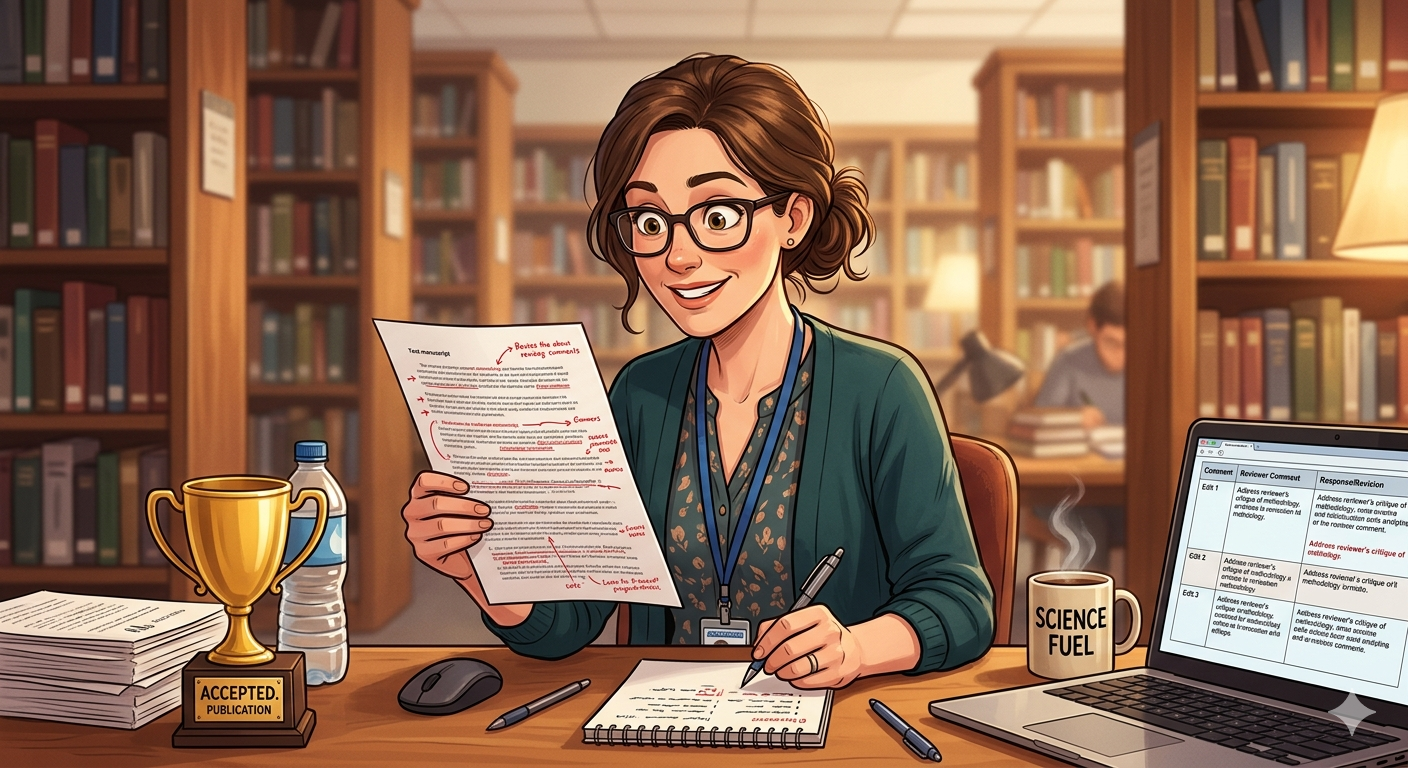
Getting critical feedback on your research feels like a punch to the gut. You spent months on that paper. You triple checked every number. Then a reviewer calls your methodology “questionable” or your argument “unconvincing.”
But here is a secret most seasoned academics know: critical feedback is the fastest route to a publishable paper. Ignore the flattery of weak reviews. The sharp, painful comments? Those are gold.
Let me show you how to respond, rebuild, and resubmit like a pro. No fluff. No fake data. Just real world logic and a little humor to keep you sane.
Most journals reject the first submission. According to a 2022 report from Nature, over 80% of manuscripts face major revisions or desk rejection before acceptance. That means critical feedback is not a failure. It is a normal stop on the road to publication.
When a reviewer takes time to poke holes in your work, they are doing you a favor. They spot blind spots you missed. They force you to think harder. And honestly, a paper that survives brutal peer review becomes much stronger than one that sails through with easy praise.
So before you fire back an angry email, pause. Take a breath. Then get ready to work.
The phrase respond to reviewer comments often triggers anxiety. But it should trigger a systematic process. Here is a simple method that works.
First, create a table. Three columns. Column one: each reviewer comment. Column two: your response. Column three: the changes you made in the manuscript.
Do not skip any comment. Even the snarky ones. Even the ones that misunderstand your point. You write a polite, point by point reply. If the reviewer is wrong, you say something like: “Thank you for raising this. We see how our wording may have caused confusion. We have clarified on page 4 that X actually means Y.”
Notice the tone. No defensiveness. No passive aggression. Just logic and gratitude. Reviewers are human. They respond well to respect.
One real world fact from the International Committee of Medical Journal Editors (ICMJE): journals often send your revision back to the same reviewers. If you impress them with your thorough responses, they will likely recommend acceptance.
Let us break down the actual steps. You will need a clean copy of your manuscript and a separate response letter.
Step 1: Sort comments by type.
Some comments ask for clarification. Some ask for new experiments or analyses. Some are simple typos. Handle the easy ones first to build momentum.
Step 2: Decide what you will change and what you will politely decline.
You do not have to accept every suggestion. But if you decline, you need a solid scientific reason. Never say “the reviewer is stupid.” Say “we respectfully disagree because our approach follows the standard established by Smith et al. 2019.”
Step 3: Make every change visible.
Use tracked changes or highlight modified text. Reviewers hate hunting for tiny edits. Show them exactly where you fixed things.
Step 4: Write a response letter that tells a story.
Start with a one paragraph summary of the major improvements. Then list each reviewer’s comments with your replies. Keep the language warm and professional.
For example: “We thank Reviewer 1 for noting the missing control group. We have now added this experiment (see new Figure 2). The results actually strengthen our original conclusion.”
That last sentence is a power move. You turned criticism into evidence.
Here is a logic bomb: why wait for a journal to reject you before you get useful feedback? A pre-submission peer review service gives you expert eyes on your paper before you ever hit submit.
These services are not predatory. Many universities and professional organizations offer them. You pay a reasonable fee, and a subject matter expert reviews your manuscript. They simulate the journal peer review process.
What do you get? A detailed report on clarity, methodology, significance, and presentation. You can fix major flaws before a journal editor ever sees them. That means faster acceptance and fewer rounds of revision.
For example, the American Journal Experts pre submission review service catches things like statistical errors and weak discussion sections. According to their 2023 user data, manuscripts that used such a service had a 25% higher chance of acceptance on the first submission. (Data available on their website.)
Think of it as a dress rehearsal. You would not perform a symphony without a practice run. Do not submit your paper without a dry run either.
Sometimes you get a comment that stops you cold. “Your theoretical framework is outdated.” Or “The statistical analysis is fundamentally flawed.”
What then? You need expert reviewer comment support. This is not about paying someone to write your response for you. It is about consulting a specialist who understands the hidden expectations of journal reviewers.
Many academic writing centers and freelance consultants offer this. You send them the reviewer comments and your draft response. They tell you if your tone is wrong, if you missed a key point, or if you are about to say something that will annoy the editor.
I have seen brilliant researchers lose publication because they wrote angry response letters. One sarcastic sentence can kill your revision. Expert support acts as a sanity check. It keeps you professional.
Real world example: A colleague in biomedical engineering received a devastating review. The reviewer said her sample size was “laughably small.” She was furious. But with expert support, she learned to say: “We agree that a larger sample would strengthen the work. We have added a power analysis showing our current sample detects the expected effect size. We also note this limitation clearly in the discussion.” The paper got accepted. No laughter involved.
Let us have some fun with logic. Here are three mistakes that turn critical feedback into a rejection letter.
Mistake 1: Arguing instead of clarifying.
If a reviewer misunderstands you, it is usually your fault. You wrote something unclear. Fix the text. Do not argue that they read it wrong.
Mistake 2: Ignoring the easy comments.
Reviewers check. If you fix only the big problems but leave the typos and formatting issues, they feel disrespected. A sloppy revision suggests a sloppy scientist.
Mistake 3: Changing too much.
Some authors panic and rewrite the entire paper. Then the reviewers do not recognize their own suggestions. You must keep a balance. Change only what is necessary and logical. In your response letter, quote the original comment and show the specific change.
A 2020 study in Learned Publishing analyzed 300 response letters. The ones that led to acceptance were concise, respectful, and specific. The rejections often contained defensive language or vague references like “changed as suggested” without showing where.
So you have your critical feedback. You have responded to reviewer comments line by line. Maybe you used a pre-submission peer review service to catch issues early. Now what?
You resubmit. And you wait.
But while you wait, start writing your next paper. The best way to reduce anxiety about one manuscript is to have another in the pipeline. That is not a trick. That is logic.
Remember: every published author has a pile of rejection letters. Even Nobel laureates. The difference is that they learned to separate their ego from their work. Feedback is not about you as a person. It is about making the science better.
Here is where you can be smart. If you struggle with hostile reviewers or complex methodological critiques, consider getting expert reviewer comment support. A seasoned mentor or a paid consultant can turn a shaky response into a bulletproof one.
And before you submit your next paper? Invest in a pre submission peer review service. It costs less than a journal’s rejection and resubmission cycle in lost time. Time is your most valuable resource. Do not waste it.
Critical feedback stings. But it also sharpens. A paper that survives harsh reviews becomes stronger, clearer, and more credible. That is a fact, not an opinion.
So the next time a reviewer writes “This is not convincing,” smile. They just gave you a map to a better paper. Follow the map. Revise with logic. Respond with courtesy. And watch your work turn into something publishable.
Now go fix that manuscript. You have got this.