English
 Arabic
 French
 Spanish
 Portuguese
 Deutsch
 Turkish
 Dutch
Dutch
 Italiano
 Russian
 Romaian
 Portuguese (Brazil)
 Greek
Greek
Sub 6Ghz Ptp-And-Ptmp-Proprietary-Solutions Market Trends: Technological Evolution and Architecture Trajectories
Other |
2026-06-25 07:13:39
 Advertise With Us
 About Us
 Terms And Conditions
 Privacy Policy
Ver Todo
Privacy Policy
Ver Todo

Upgrade to Pro
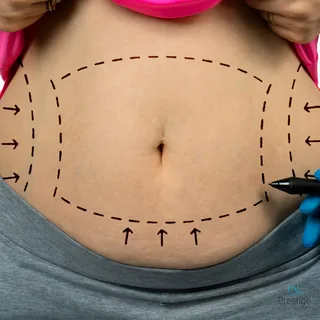
Choosing between autologous fat transfer surgery riyadh and hyaluronic acid (HA) fillers in Riyadh involves balancing your long-term aesthetic goals, budget, and tolerance for recovery time. Both methods are effective, but they serve different roles in a cosmetic plan.
| Feature | Fat Transfer (Autologous) | HA Fillers (Synthetic) |
| Longevity | Permanent once integrated (years) | Temporary (6–18 months) |
| Procedure Type | Minor surgery (requires harvesting) | Non-surgical (office-based) |
| Recovery | 1–2 weeks | Minimal to none |
| Material | Your own natural fat | Hyaluronic acid (gel) |
| Cost | Higher upfront | Lower upfront, higher long-term |
| Ideal For | Large-scale volume, natural feel | Fine-tuning, lips, quick fixes |
Fat Transfer: This is a long-term investment. Because the procedure involves transferring living cells, once those cells successfully connect to your body’s blood supply (the "take"), they remain permanently. While you should expect some initial volume loss (resorption) in the first 3–6 months, the volume that remains is effectively part of your body.
HA Fillers: These are a maintenance-based solution. Your body naturally breaks down HA over time. To maintain the same volume, you must return for repeat injections. If you are looking for a "set it and forget it" result, fillers will likely frustrate you.
Fat Transfer: Because it is your own tissue, the results are biologically indistinguishable from the rest of your body. It moves, feels, and ages exactly like natural anatomy. It is superior for large-volume restoration, such as filling out hollowed cheeks, augmenting breasts, or improving gluteal contours.
HA Fillers: Fillers are highly precise. They are excellent for specific, small-scale work—such as defining the philtrum of the lips, smoothing a very specific wrinkle, or creating sharp edges along the jawline. They allow for an immediate, "seen-before-you-leave" result that fat transfer cannot match.
Fat Transfer: Being autologous (your own tissue), there is zero risk of an allergic reaction or foreign-body rejection. This is a major benefit for patients in Riyadh who prioritize safety and the most natural possible outcome.
HA Fillers: While HA is naturally occurring in the body, it is manufactured. Adverse reactions are rare but possible. However, a significant advantage of HA fillers is that they are reversible—if you do not like the result, a specialist can inject an enzyme called hyaluronidase to dissolve the filler almost immediately. Fat is not reversible in this same way.
You want a permanent, once-or-twice-and-done solution.
You have a sufficient donor site (enough excess fat in another area).
You are okay with a surgical recovery period (1–2 weeks of downtime).
You prioritize using your own natural biological tissue.
You want zero downtime and immediate results.
You are nervous about surgery or don't want to commit to a permanent change.
You need precision for very small areas (like tear troughs or lip borders).
You prefer the ability to dissolve or adjust the volume easily.
The "Hybrid" Strategy: Many patients in Riyadh choose to use fat transfer to build the "foundation" or core structure of their face or body, and then use small amounts of HA fillers for periodic, minor refinements to touch up fine lines or facial features as they age.
Are you currently weighing these options for a specific area, such as facial rejuvenation or body contouring, or are you trying to decide which route fits your lifestyle best?