English
 Arabic
 French
 Spanish
 Portuguese
 Deutsch
 Turkish
 Dutch
Dutch
 Italiano
 Russian
 Romaian
 Portuguese (Brazil)
 Greek
Greek
Nail Salon Market Expands as Self-Care and Premium Beauty Services Gain Popularity
Other |
2026-07-17 09:01:03
 Advertise With Us
 About Us
 Terms And Conditions
 Privacy Policy
See All
Privacy Policy
See All

Upgrade to Pro
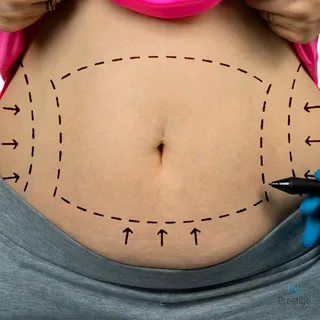
Fat Transfer Surgery in Riyadh has undergone a remarkable transformation over the past decade, evolving from a simple, experimental technique into a highly precise and predictable aesthetic procedure. As technology has advanced, so too has our understanding of fat cell biology, leading to innovations that significantly enhance the survival rates of transferred tissue. For patients seeking body contouring or facial rejuvenation, these technical refinements mean more consistent results, shorter recovery times, and a safer experience overall. Understanding how these techniques have evolved helps demystify the process and highlights why modern fat grafting is considered the gold standard for those desiring natural-looking, permanent volume restoration.
Historically, the early methods of liposuction and fat transfer were often traumatic to the delicate fat cells. Surgeons relied on aggressive suction pressures and manual tools that often damaged the structural integrity of the harvested tissue. The evolution of the field began with the move toward "gentle harvesting." Modern technology now utilizes low-pressure, specialized cannulas that effectively tease fat cells away from the donor site without subjecting them to excessive mechanical stress. By preserving the structural walls of the adipose cells during the extraction phase, surgeons ensure that a much higher percentage of the fat remains viable, ready to thrive in its new location.
Once the fat is harvested, the next critical hurdle has always been purification—separating the healthy fat cells from oils, blood, and lidocaine fluids that can hinder successful integration. Older methods relied on gravity-based decanting or simple mesh filtration, which were effective but time-consuming and prone to human error. Today, the industry has shifted toward advanced centrifugation and sophisticated closed-loop filtration systems. These tools allow surgeons to isolate the most pristine, concentrated fat cells with incredible speed and accuracy. By injecting only the cleanest, most robust tissue, the body can more easily revascularize the graft, leading to significantly higher survival rates and more predictable volume retention.
Perhaps the most significant leap in technique has been the shift toward micro-grafting. Surgeons no longer inject large "boluses" or clumps of fat, which can lead to irregularities or necrosis if the center of the clump fails to receive blood supply. Instead, modern techniques involve the precise, layered injection of micro-droplets. By depositing the fat in multiple small passes, the surgeon ensures that every single grafted cell is in close proximity to the existing, oxygen-rich tissue. This "scaffolding" effect is the secret to a smooth, natural-feeling result. Whether contouring the face or enhancing the buttocks, this method guarantees that the final outcome is free of lumps or asymmetries, creating a result that feels indistinguishable from natural anatomy.
The evolution of fat transfer has also brought about a greater appreciation for the regenerative nature of adipose tissue. It is now well-documented that harvested fat contains a wealth of stem cells and growth factors that are vital for tissue repair. Modern techniques are designed specifically to protect these components during the handling process. When this "enriched" fat is placed into target areas, it does more than just fill space; it promotes the health of the overlying skin, improves vascularity, and enhances overall tissue quality. This dual-action approach—restoring volume while simultaneously rejuvenating the skin’s appearance—is a major reason why many patients are now choosing advanced fat grafting over traditional synthetic fillers.
As techniques have matured, safety protocols have become more rigorous. The integration of ultrasound-guided mapping, for example, allows surgeons to visualize deep tissue layers, ensuring that fat is placed in the safest, most effective planes. This increased level of control has virtually eliminated the risks of complications that were once associated with less refined methods. Furthermore, the focus on patient-specific planning—analyzing donor site availability and recipient site anatomy—ensures that every procedure is tailored to the individual. By leveraging these modern advancements, patients can approach their procedure with confidence, knowing that they are benefiting from years of scientific progress, resulting in a safer, more efficient, and highly effective way to achieve their aesthetic goals.