English
 Arabic
 French
 Spanish
 Portuguese
 Deutsch
 Turkish
 Dutch
Dutch
 Italiano
 Russian
 Romaian
 Portuguese (Brazil)
 Greek
Greek
Plastic Healthcare Packaging Market Registering a CAGR of 7.7% Through 2036 | Rising Adoption of High-Performance Healthcare Packaging Fuels Growth
Networking |
2026-06-30 19:15:52
 Advertise With Us
 About Us
 Terms And Conditions
 Política de privacidade
Ver todos
Política de privacidade
Ver todos

Atualizar para Plus
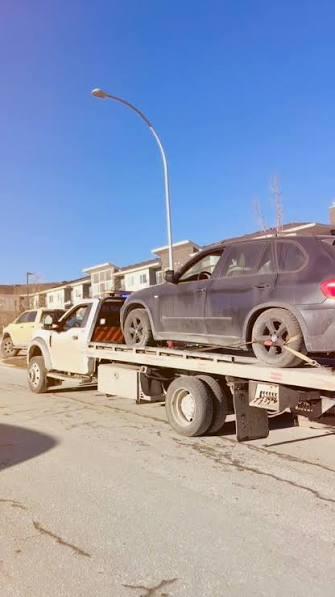
Maybe it's been sitting on the street for months. Maybe it's parked on your own property and you've just been ignoring it. Maybe you inherited it, it doesn't run, and you have no idea what to do with it. Whatever the situation — you're wondering if you can just... leave it. Walk away. Let it become someone else's problem.
Here's the straight answer: abandoning a vehicle is illegal in virtually every province in Canada and every state in the United States. And the consequences range from annoying fines to serious legal liability.
But here's the good news — you almost certainly don't need to abandon it. There are legitimate, often free ways to get rid of a car you don't want, and this article is going to walk you through all of them.
Before the consequences, let's define what abandonment actually means in legal terms — because it's broader than most people think.
An abandoned vehicle is generally defined as a vehicle that has been:
The key element is intent to relinquish — meaning the owner appears to have given up on the vehicle with no plan to return for it. Courts and bylaw officers look at the totality of circumstances: how long has it been there, what condition is it in, is the registration current, has the owner made any contact?
Importantly, abandonment laws apply to your own property too — in many municipalities, keeping a derelict, unregistered vehicle on your own driveway or yard for an extended period can trigger bylaw complaints and fines.
This is where people often underestimate the risk.
Most municipalities treat vehicle abandonment as a bylaw or traffic violation, with fines ranging from $200 to $5,000 depending on the jurisdiction and circumstances. In some cases, repeat offenses or abandonment in sensitive locations (near waterways, on highways, on private property without permission) can escalate to criminal charges.
When a vehicle is reported or identified as abandoned, the municipality or property owner can have it towed at the registered owner's expense. Towing fees, daily storage charges, and administrative fees stack up fast — sometimes into the thousands of dollars. And here's the painful part: you're still on the hook even after the car is gone. Your name is on the registration. The bill follows you.
If an abandoned vehicle leaks fluids — oil, coolant, brake fluid, fuel — into the ground or a nearby waterway, the registered owner can be held liable for environmental cleanup costs. This is not a theoretical risk. Vehicles that sit for extended periods deteriorate and leak. Environmental cleanup orders are serious and expensive.
In some provinces and states, outstanding fines tied to an abandoned vehicle can block you from renewing your driver's licence or registering a new vehicle until the debt is cleared. That abandoned car can follow you into your next vehicle purchase in ways you didn't anticipate.
These are the situations that lead most people to consider abandonment — not because they want to be irresponsible, but because they genuinely don't know what else to do.
If you've inherited a car from a deceased family member, you are not automatically the legal owner until the estate process transfers the title. This can feel complicated, but most provinces and states have streamlined processes for transferring title through an estate. A probate document or letters of administration, combined with the death certificate and a title transfer application, is usually sufficient. Call your local motor vehicle registry office and explain the situation — they deal with this regularly and can walk you through it.
If you bought a car privately and never received a title — or the seller couldn't produce one — you may feel stuck. But you're not without options. Depending on your jurisdiction, you may be able to apply for a bonded title, a court-ordered title, or a title through a statutory declaration process. These exist specifically for situations where ownership is unclear but legitimate.
This is the most common scenario and also the easiest to solve. A non-running vehicle is still a vehicle with value. Scrap yards and cash-for-cars companies deal with non-running vehicles every single day — they have flatbeds and tow trucks specifically for this purpose. You don't need the car to move. You just need to make a phone call.
Here are your legitimate options, from easiest to most involved:
This is the simplest path for the vast majority of unwanted vehicles. Reputable cash-for-cars companies will come to your location, tow the vehicle for free, and pay you on the spot. They handle non-running vehicles, vehicles with expired registration, and in many cases, vehicles without a title (with alternative documentation). The whole process can be completed in 24 to 48 hours. You go from problem to cash in two days.
Numerous charities accept vehicle donations, including non-running cars. The vehicle gets sold or scrapped, the proceeds go to the charity, and you receive a tax receipt. Services like Donate-a-Car in Canada handle the logistics — they pick up the vehicle and manage the paperwork. If you're not in a rush and want a tax benefit, this is a clean option.
If the car has specific components in good condition — a recently rebuilt engine, low-mileage transmission, rare body panels — you may be able to sell those parts privately before scrapping the shell. Facebook Marketplace, Kijiji, and specialized auto parts forums are good starting points. This takes more time and effort, but can yield more total return on a vehicle with genuinely valuable components.
If someone in your life wants the vehicle — even as a project car — gifting or selling it cheaply is a completely valid solution. A simple bill of sale and a title transfer at the registry takes care of it legally, and the car becomes their responsibility. Just make sure the paperwork is completed properly so the vehicle is no longer in your name.
If the title is missing and that's the only barrier, apply for a replacement through your provincial or state motor vehicle authority. The process is usually straightforward and inexpensive. Once you have a clean title, your options for selling expand significantly — and you'll likely get a better offer.
This is important. If the car is still registered in your name, any liability from abandonment falls on you directly. If it's registered in someone else's name — a previous owner, deceased family member, or seller who never transferred the title — the situation is more complicated but still solvable. Don't assume registration in someone else's name protects you if you're the one making decisions about the vehicle.
Call your local registry office. Confirm who is the registered owner. Understand your legal position before you take any action.
Abandoning a car is illegal, risky, and — critically — unnecessary. The fines, towing fees, environmental liability, and registration blocks that can follow an abandoned vehicle far outweigh the effort of doing things properly.
The legitimate alternatives are faster and easier than most people expect. A cash-for-cars company can have your unwanted vehicle gone within 48 hours, with money in your hand and zero legal headaches trailing behind you.
Whatever your situation — no title, no engine, no registration — there is a proper path forward. You just have to take the first step and make the call.