English
 Arabic
 French
 Spanish
 Portuguese
 Deutsch
 Turkish
 Dutch
Dutch
 Italiano
 Russian
 Romaian
 Portuguese (Brazil)
 Greek
Greek
SOBHA Scarlet Sarjapur Road: Premium Luxury Homes in Bangalore's Fastest-Growing Location
Other |
2026-07-30 06:24:13
 Advertise With Us
 About Us
 Terms And Conditions
 Privacy Policy
See All
Privacy Policy
See All

Upgrade to Pro
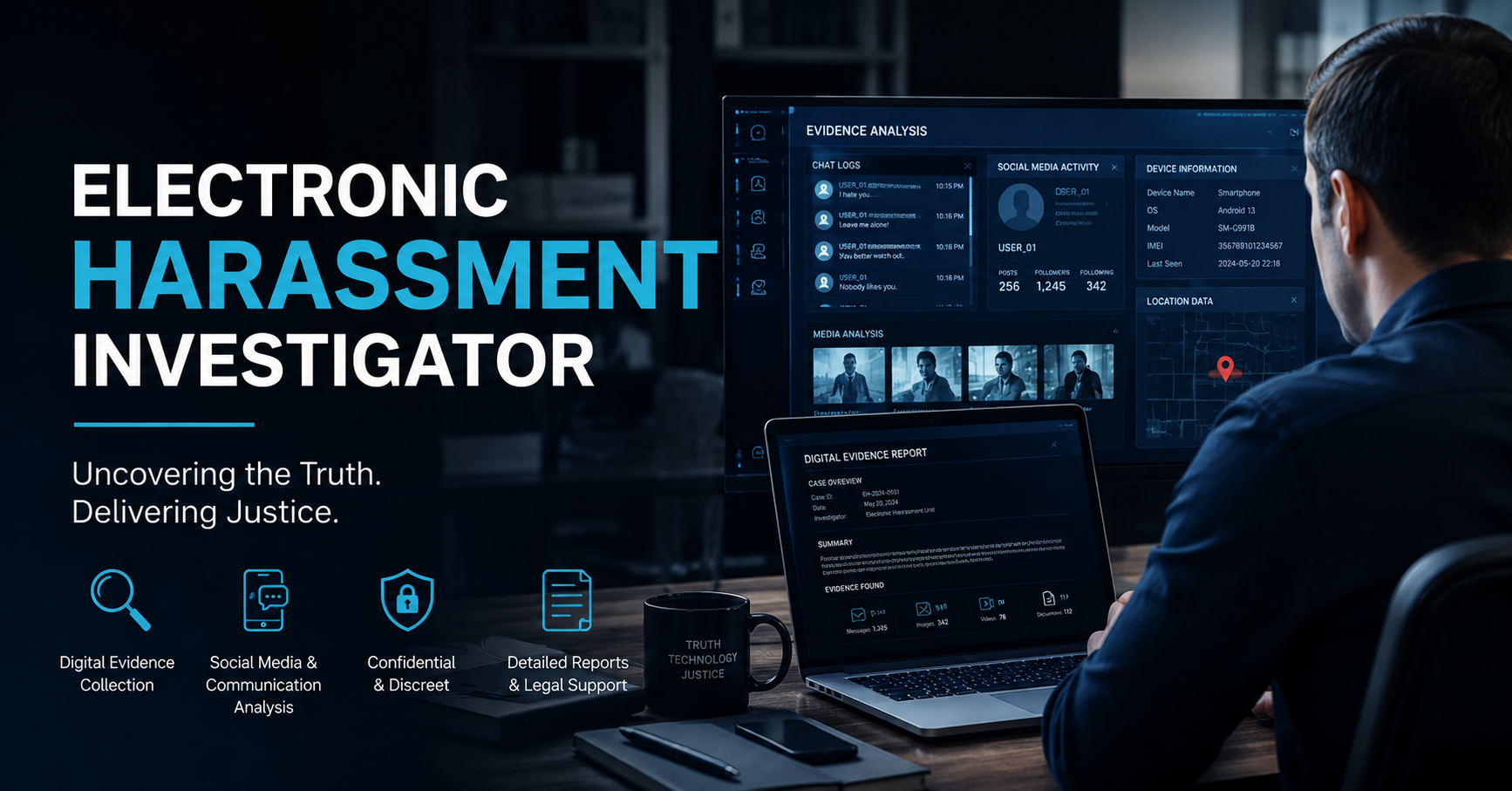
Technology has transformed the way people communicate, work, and live. While digital advancements offer countless benefits, they have also created new opportunities for online abuse, cyberstalking, and electronic surveillance. When individuals or organizations suspect that they are being targeted through electronic means, an electronic harassment investigator can help examine digital evidence, identify potential threats, and provide factual findings based on forensic analysis.
Understanding how these professionals work is essential for anyone concerned about digital privacy, cyber harassment, or suspicious electronic activity. This guide explains their responsibilities, investigative techniques, legal considerations, and when hiring an expert may be appropriate.
Electronic harassment refers to repeated or intentional actions carried out through electronic devices or communication systems that cause distress, intimidation, or disruption. These incidents may involve computers, smartphones, social media platforms, email accounts, messaging applications, GPS tracking devices, or other connected technologies.
Examples may include:
Each situation is unique, making careful evidence collection essential before drawing conclusions.
An electronic harassment investigator specializes in examining digital devices, communication records, network activity, and electronic evidence to determine whether suspicious or unlawful activity has occurred.
Rather than relying on assumptions, investigators focus on objective findings supported by technical analysis.
Typical responsibilities include:
The goal is to establish facts through verifiable evidence rather than speculation.
Many people seek professional assistance after noticing unusual behavior involving their electronic devices or online accounts.
Common scenarios include:
Repeated password changes, unknown login notifications, or unfamiliar devices connected to online accounts may indicate unauthorized access attempts.
Persistent unwanted communication across multiple digital platforms can sometimes escalate into serious harassment.
Unexpected battery drain, excessive data usage, unknown applications, or unusual system behavior may warrant further examination.
Businesses sometimes require investigations involving confidential information leaks, employee misconduct, or unauthorized system access.
Fake profiles, impersonation, or unauthorized use of personal information can affect both individuals and organizations.
Successful investigations combine technical expertise with analytical thinking and legal awareness.
Important skills include:
Investigators understand how to preserve electronic evidence without altering important data.
Monitoring network traffic can help identify unusual communication patterns or unauthorized connections.
Professionals analyze devices for spyware, keyloggers, ransomware, and other malicious software.
Every investigative step must be documented carefully to maintain credibility if evidence is later used in legal proceedings.
A strong understanding of operating systems, cloud services, encryption, and network security is essential.
Although every case differs, most investigations follow a structured approach.
The investigator gathers background information, discusses concerns, and determines what devices or accounts require examination.
Relevant electronic devices are examined using forensic methods designed to preserve data integrity.
Examples include:
Digital evidence is analyzed using specialized forensic software to identify suspicious activity, deleted files, login history, malware, or communication records.
A detailed report explains the findings, methodology, and supporting evidence in a clear and organized manner.
Professional investigators often rely on industry-standard forensic tools rather than ordinary antivirus software.
Common categories include:
These create exact copies of storage devices while preserving original evidence.
Used to examine active processes, running applications, and temporary system data.
Help identify unusual traffic patterns or unauthorized communications.
Allows recovery of messages, call logs, deleted files, application data, and location information where legally permitted.
One of the biggest mistakes individuals make is attempting to investigate suspected digital incidents themselves.
Actions such as:
may permanently destroy valuable evidence.
Proper evidence preservation increases the likelihood of identifying what actually occurred.
Electronic investigations must comply with applicable laws regarding privacy, consent, and digital evidence.
Professional investigators generally follow established forensic procedures to ensure evidence remains reliable and legally defensible.
Important principles include:
Failure to follow legal standards may reduce the usefulness of collected evidence.
Digital investigations often reveal broader cybersecurity weaknesses.
These may include:
Addressing these issues helps reduce future security risks.
Although no system offers complete protection, adopting good cybersecurity habits significantly lowers the risk of digital compromise.
Recommended practices include:
Create unique passwords for every important account.
An additional verification step improves account security.
Regular updates fix known vulnerabilities.
Check login history for unfamiliar devices or locations.
Many cyberattacks begin with phishing emails or fraudulent websites.
Use strong Wi-Fi encryption and change default router credentials.
When selecting a qualified investigator, consider several important factors.
Look for professionals who demonstrate:
Choosing an experienced specialist improves the quality and reliability of investigative findings.
Electronic investigations are valuable across many sectors.
Examples include:
Each environment presents different digital security challenges requiring specialized expertise.
As technology continues evolving, digital investigations are becoming increasingly sophisticated. Artificial intelligence, cloud computing, Internet of Things (IoT) devices, encrypted communications, and remote work environments continue expanding the digital evidence landscape.
Future investigators will likely rely more heavily on automation, advanced threat intelligence, and forensic analytics while maintaining strict standards for evidence integrity and privacy protection.
Organizations and individuals alike will continue to benefit from professionals capable of interpreting complex digital evidence accurately and responsibly.
Digital technology has created tremendous opportunities, but it has also introduced new forms of cyber abuse and electronic misconduct. Whether dealing with suspicious online activity, unauthorized account access, or potential cyberstalking, obtaining reliable evidence is far more valuable than relying on assumptions.
A qualified electronic harassment investigator combines forensic expertise, cybersecurity knowledge, and evidence-based analysis to examine digital incidents objectively. By preserving electronic evidence correctly, following legal procedures, and identifying potential security risks, these professionals help individuals and organizations understand what happened and make informed decisions about the next steps.
As digital threats continue to evolve, awareness, cybersecurity best practices, and professional investigation remain essential tools for protecting privacy, maintaining trust, and ensuring that electronic evidence is handled with accuracy and integrity.