English
 Arabic
 French
 Spanish
 Portuguese
 Deutsch
 Turkish
 Dutch
Dutch
 Italiano
 Russian
 Romaian
 Portuguese (Brazil)
 Greek
Greek
Consumer Robotics Market Forecast: Predicting the Path to 2030
Networking |
2026-05-22 05:54:39
 Advertise With Us
 About Us
 Terms And Conditions
 Privacy Policy
See All
Privacy Policy
See All

Upgrade to Pro
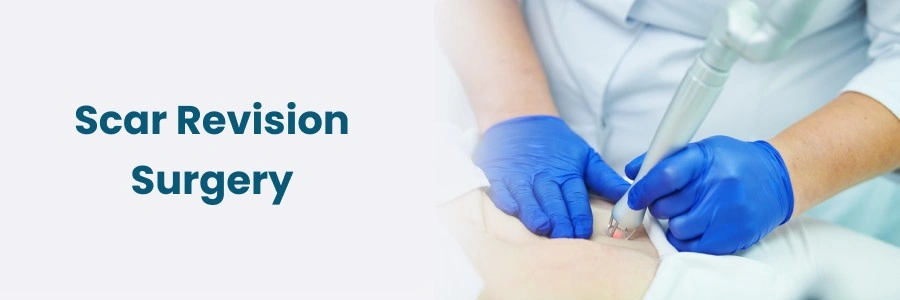
Is Surgical Scar Revision in Riyadh the correct choice for your unique situation? Deciding to undergo a procedure to modify an existing scar is a deeply personal choice that balances aesthetic goals with realistic clinical outcomes. While modern reconstructive techniques have become incredibly effective, it is essential to approach the decision with a clear understanding of what surgery can achieve and what it cannot. An expert perspective on this process involves evaluating the nature of your scar, your medical history, and your expectations for the healing journey ahead.
The first step in determining if you are a candidate for scar revision is identifying your primary motivation. Are you seeking to restore function to a joint limited by a contracture, or are you primarily concerned with the cosmetic appearance of a scar on the face or body?
It is important to remember that scar revision is designed to improve the appearance of a scar, not to make it disappear entirely. The goal is to make the scar less noticeable, softer, or better positioned so that it blends more naturally with the surrounding skin. Patients who have a clear, objective understanding of these goals typically report the highest levels of satisfaction. If you are looking for perfection, it is helpful to shift the mindset toward "improvement," as every individual's skin heals differently based on genetics and lifestyle factors.
One of the most critical factors a surgeon will consider is the maturity of your scar. Fresh scars are still in a state of active biological flux. The body is continuously depositing and remodeling collagen, a process that can take up to 18 months.
Attempting to surgically revise a scar that is still "immature"—meaning it is still red, raised, or hard—can sometimes lead to complications, such as wider scarring or an overreaction from the body’s healing system. Most experts advise waiting until the scar has stabilized, usually at least one year after the initial injury or surgery. During this waiting period, non-surgical interventions like silicone therapy, massage, and sun protection are often recommended, as they can sometimes yield enough improvement that surgery becomes unnecessary.
Not every scar reacts the same way to surgical intervention. Your surgeon will take a detailed medical history to assess your risk factors. For instance, individuals with a history of keloid formation require a very different, more cautious surgical approach compared to someone who heals with fine, thin lines.
Your skin type, elasticity, and even your history of smoking can impact how well you recover from a revision. Smoking, in particular, restricts blood flow and slows down the body's ability to knit the skin back together, which can jeopardize the final aesthetic result. A thorough consultation is the time to be completely transparent about your health habits, as this allows the medical team to optimize your pre-operative preparation and post-operative recovery plan.
Is surgical revision the only path forward? Often, the best results are achieved through a combination of techniques rather than surgery alone. For example, some patients may benefit from a combination of a surgical excision to refine the scar’s border, followed by laser therapy to address pigment irregularities, or microneedling to improve skin texture.
By thinking of scar management as a comprehensive plan rather than a single event, you are more likely to achieve the smooth, uniform skin you desire. A qualified professional will guide you through these options, helping you decide if you are ready for a surgical step or if non-invasive dermatological treatments might be a more suitable starting point for your specific case.
If you have decided that you are ready to pursue surgical scar revision, the next step is finding a provider who prioritizes both technical precision and patient education. A good candidate for this procedure is someone who is in good overall health, has realistic expectations, and is prepared to follow a diligent post-operative care routine.
The healing process requires commitment—from protecting the incision from the sun to using prescribed topical treatments consistently. When the patient and the medical team are aligned on the process and the expected evolution of the scar, the outcome is almost always a positive one. By carefully evaluating your needs and seeking expert guidance, you can make an informed decision that enhances your skin’s appearance and helps you feel more at ease in your own body.
Please provide the next title whenever you are ready.