English
 Arabic
 French
 Spanish
 Portuguese
 Deutsch
 Turkish
 Dutch
Dutch
 Italiano
 Russian
 Romaian
 Portuguese (Brazil)
 Greek
Greek
Trending on BookTok Transcription by Ben Lerner
Travel |
2026-06-25 05:30:23
 Advertise With Us
 About Us
 Terms And Conditions
 Privacy Policy
See All
Privacy Policy
See All

Upgrade to Pro
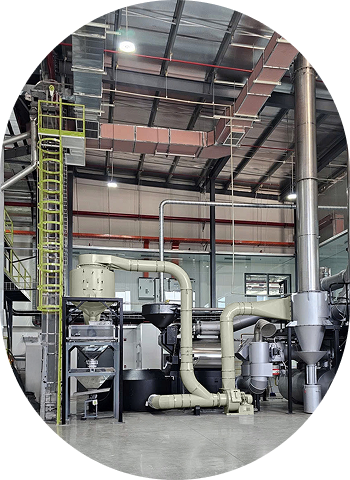
The modern specialty coffee industry continues to grow at an unprecedented pace, and at the heart of this expansion lies the commercial coffee roaster the essential machine responsible for crafting flavor, quality, and consistency in every batch. From small cafés aiming to roast in-house to large roasting facilities producing hundreds of kilos daily, the demand for high-performance roasting machines has never been higher. A commercial coffee roaster not only enhances flavor development but also enables businesses to exercise complete control over their production, cost efficiency, and roast profiles. As brands prioritize freshness and authenticity, roasting coffee in-house has become a defining competitive advantage.
A commercial coffee roaster is a professional-grade machine designed to roast large quantities of raw green coffee beans with precise control. Unlike hobby or home roasters, commercial machines focus on stability, thermal efficiency, airflow control, and repeatability. Businesses investing in commercial roasters aim to produce consistent batches with reliable flavor development and efficient throughput.
Commercial roasters vary in size from compact 1kg units suitable for cafés and test batches to industrial roasters handling 30kg to 120kg per cycle. Regardless of size, their purpose remains the same: transforming green coffee into a product with aroma, sweetness, and flavor suitable for sale or brewing. Coffee Pro Direct supplies durable, modern solutions tailored to roasters, coffee shops, labs, and growing professionals worldwide.
Understanding how a commercial coffee roaster works is essential before purchasing one. Roasting is a controlled thermal process that involves converting dense, grassy green beans into aromatic roasted coffee through a series of chemical reactions.
Most machines use drum roasting technology, where a rotating drum heats beans through a balance of conduction and convection. Heat gradually builds inside the bean, activating reactions like Maillard browning, caramelization, and pyrolysis. Roasters adjust heat, airflow, drum speed, and batch size to shape the final flavor profile. Modern machines also feature digital control panels, roast logging systems, and advanced sensors. With the right machine such as those offered by Coffee Pro Direct—roasters can achieve perfect repeatability across different roast styles, from light to dark.
A commercial coffee roaster delivers advantages far beyond basic production capacity. It allows businesses to elevate product quality, control every variable, reduce reliance on third-party suppliers, and create unique signature coffee blends.
Roasting in-house provides direct cost savings, fresher products, and brand differentiation. For cafés, it enhances storytelling and customer loyalty. For wholesale roasters, it ensures consistency, scalability, and premium-quality batches. Investment in a commercial roaster becomes a foundation for business growth, quality control, and innovation. Coffee Pro Direct supports businesses at every stage with reliable machinery and expert guidance.
When choosing a commercial coffee roaster, buyers must understand the two main categories: drum roasters and fluid-bed roasters. Drum roasters use a heated rotating drum, offering deep, complex flavor development and precise profile control. Fluid-bed roasters use hot air to suspend and roast beans, creating brighter, cleaner flavor notes with rapid heat transfer.
Each roasting style has its own strengths, and the right choice depends on the business model and preferred flavor profiles. Drum roasters remain the most popular due to their versatility, consistent batches, and support for a wide range of roast levels. Coffee Pro Direct provides advanced drum roasters for cafés, micro-roasters, and commercial operations seeking durability and precision.
Choosing a commercial coffee roaster requires careful evaluation of features that ensure performance, safety, and longevity. A high-quality machine includes adjustable airflow control, accurate temperature sensors, strong drum insulation, smooth drum rotation, and safety protection systems. Digital automation, roast profiling software, and the ability to save roast curves are essential for consistency.
Stainless steel construction, strong bearings, and stable burners improve lifespan and efficiency. Consider maintenance accessibility, exhaust design, and chaff collection systems as well. With Coffee Pro Direct, customers receive machines engineered for stability, durability, and repeatable quality.
Owning a commercial coffee roaster offers unmatched advantages for coffee businesses. It provides complete control over roast levels, flavor notes, and customization of blends. In-house roasting reduces dependency on external suppliers, ensuring fresher coffee and lower operating costs.
Roasters gain flexibility in sourcing green beans, experimenting with origins, and adjusting profiles based on customer preferences. For coffee shops, roasting becomes a powerful marketing tool that sets them apart from competitors. For roasteries, it enables batch consistency and scalability. Coffee Pro Direct machines help businesses capture these benefits with ease.
A commercial coffee roaster must fit the scale and needs of the business. Small coffee shops often rely on compact roasters like 1kg or 3kg units for in-house production. Medium-sized roasteries use 5kg to 12kg machines for growing demand and wholesale supply. Large commercial operations require 15kg to 30kg+ machines capable of continuous operation.
Each roasting capacity brings its own advantages and operational costs. Coffee Pro Direct offers size options for beginners, established roasters, and industrial-level production, ensuring the perfect fit for your roasting ambitions.
Most commercial coffee roaster models use LPG or natural gas due to superior heat control, efficiency, and rapid response times. Gas roasters create deeper flavor development, better roasting curves, and more powerful heating.
Electric commercial roasters offer convenience and easier installation but may lack the high heat power needed for larger batch sizes. Businesses must also consider exhaust requirements, location restrictions, and electricity costs. Coffee Pro Direct assists customers in selecting the ideal configuration based on regional infrastructure and roasting goals.
A major advantage of a commercial coffee roaster is the ability to create, save, and repeat roast profiles. Profile control includes adjusting heat application, airflow, and drum speed to shape bean development. Roasters monitor key stages like drying, Maillard reaction, first crack, and development time ratio (DTR).
Modern machines include integrated software that logs temperature curves and helps maintain consistency across batches. Skilled roasting requires both art and science, and with the right machine, businesses can produce flawless results. Coffee Pro Direct machines deliver reliability, accuracy, and excellent thermal stability for roasting precision.
Selecting the correct size of commercial coffee roaster is one of the most important decisions for a coffee business. Undersized roasters hinder production while oversized machines waste energy and increase costs.
A 1kg or 2kg roaster suits small shops or sample roasting needs. A 3kg–6kg roaster serves micro-roasteries or growing businesses. A 12kg–30kg machine supports high-demand commercial production. Coffee Pro Direct offers a range of capacities designed to match your business goals perfectly.
Maintaining a commercial coffee roaster ensures long operational life, quality consistency, and safety. Daily tasks include emptying chaff collectors, cleaning cooling trays, and inspecting exhaust airflow. Weekly tasks include lubrication, checking belts, and cleaning sensors.
Proper maintenance reduces the risk of fires, improves thermal consistency, and enhances efficiency. Quality machines from Coffee Pro Direct are built for easy access, simple cleaning, and long-term durability, helping businesses minimize downtime.
The price of a commercial coffee roaster varies depending on size, technology, materials, and automation features. Small 1kg–3kg machines cost significantly less than 15kg–30kg industrial-grade roasters. Buyers must also factor in installation costs, exhaust systems, ventilation, gas fittings, and electrical requirements.
Although initial investment is substantial, long-term savings from in-house roasting quickly offset costs. Coffee Pro Direct offers affordable, premium-quality roasters with excellent value, making professional roasting accessible to businesses of all sizes.
A high-quality commercial coffee roaster enhances flavor development by providing precise heat control, stable airflow, and consistent roasting environments. Beans develop sweetness, aroma, body, and acidity through controlled thermal progression.
Artisanal roasting focuses on achieving balance, clarity, and complexity. Specialty coffee roasters rely on consistent machine performance to highlight natural characteristics of origins like Ethiopia, Colombia, Brazil, and Kenya. With Coffee Pro Direct, businesses can easily produce café-quality and market-ready batches.
Choosing Coffee Pro Direct for your commercial coffee roaster means choosing quality, expertise, and global reliability. The brand provides durable roasters engineered for consistent results, modern technology, and long service life.
The company offers comprehensive guidance—from selecting the right roaster size to installation, maintenance tips, and roast profile training. With worldwide support, high-performance machinery, and competitive pricing, Coffee Pro Direct stands as a trusted partner for cafés, roasteries, and commercial coffee businesses everywhere.
A commercial coffee roaster is the backbone of any successful coffee business, enabling consistency, flavor control, customization, and cost efficiency. Whether you are a growing café looking to roast in-house or a large operation scaling production, choosing the right roasting machine is crucial. With advanced drum technology, durable construction, and precision engineering, Coffee Pro Direct offers machines that meet the needs of modern coffee professionals.
Investing in a quality commercial roaster is more than purchasing equipment it is building the future of your brand. With the right machine and the expertise of Coffee Pro Direct, you can elevate your production, improve flavor quality, and stand out in the global specialty coffee market.
Most beginners start with a 1kg–3kg commercial coffee roaster to test the market and develop profiles before scaling up. Larger operations may start with 6kg–12kg machines depending on demand.
Yes. Owning a commercial coffee roaster reduces costs, increases freshness, and allows complete control, making it highly profitable for cafés and roasteries.
Space requirements depend on roaster size, ventilation, and cooling systems. Small units require 1–2 square meters, while larger machines need dedicated roasting rooms with proper airflow management.
Yes. A commercial coffee roaster must be connected to a proper exhaust and airflow system to remove smoke, chaff, and hot air safely.
A high-quality roaster from Coffee Pro Direct can last 10–20 years with proper maintenance, cleaning, and routine inspections.